Seoul's Hormuz Gamble Signals a New Era for the US-ROK Alliance
South Korea is seriously weighing a troop deployment to the Strait of Hormuz — a dramatic pivot that could redraw alliance obligations and complicate Seoul's delicate balance between Washington and Beijing.
Seoul’s Quiet Overstretch
A senior official at the Blue House told reporters last week that South Korea is actively weighing whether it can spare military forces for a deployment to the Strait of Hormuz — without severely degrading the Korean Peninsula’s own defensive posture. That single qualifier, “without major damage to readiness,” is where the entire question hinges. And it is a line that could easily fray.
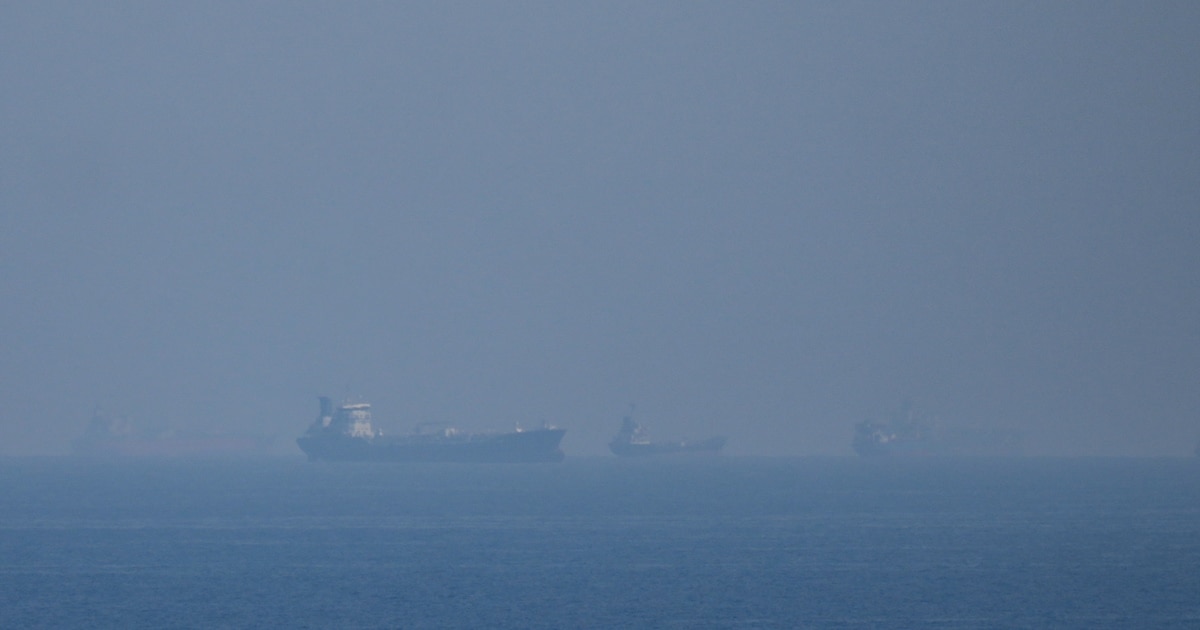
The Strait of Hormuz is not adjacent to Korea. It is not even in the same region. Yet South Korea is now seriously considering committing combat-ready troops, P-8 maritime patrol aircraft, military supply vessels, and mine countermeasure equipment to secure one of the world’s most congested chokepoints. That is not a routine contribution. That is a structural shift in how Seoul defines its security interests.
The Trump Catalyst
The pivot did not emerge organically. It was forced. President Donald Trump has used social media and press interviews to openly criticize the South Korean government for withholding support on Middle East security matters. The message was unambiguous: alignment on trade and defense economics will be harder to achieve if Seoul sits out what Washington considers a core alliance obligation. Several observers have noted that stalled US-ROK economic and security negotiations may trace directly to South Korea’s initial reluctance to engage in the Hormuz conversation.
This is the pressure-cooker dynamic that has come to define the alliance’s newest phase. The United States no longer asks for partnership — it demands proof. And South Korea, caught between its treaty obligations and its own strategic ambiguity toward China, is being asked to demonstrate loyalty at the furthest geographic remove from its own borders.
The Readiness Calculus
The Blue House official framed the deployment as conditional — operational only if Korean Peninsula readiness is not significantly compromised. That language matters. South Korea already maintains roughly 500,000 active-duty personnel on or near the peninsula, with the 5th Infantry Division and numerous special operations units in forward positions facing North Korea’s estimated 1.2 million-strong military. Any rotation of troops, aircraft, or ships southward introduces a gap. Even a temporary one.
Here is what the math quietly suggests: a meaningful contingent capable of operating in the Gulf would run several hundred to over a thousand personnel, plus supporting aviation and naval assets. Removing that slice from the Korean Theater of Operations is not cost-free. It is a recalibration of deterrence credibility at a time when Pyongyang continues advancing its nuclear and missile programs with little external friction.
Why China Watches Closely
Beijing has long viewed South Korea’s security architecture through a narrow lens: the US military presence on Korean soil is an instrument of American containment. A South Korean deployment to the Middle East, however, sends a different signal to Chinese strategists. It suggests Seoul is willing to project power far beyond its immediate neighborhood — and to do so in lockstep with Washington, not as an autonomous regional actor.
That possibility unsettles the equilibrium China has found in the region. For years, South Korea pursued a strategy of hedging: deepening economic ties with Beijing while relying on the US for security. Hormuz would represent the thinnest possible layer of that hedge. It commits Seoul to a US-led operational framework in a theater where China has increasing commercial and strategic stakes — particularly around energy supplies that transit the same waters.
The Parliamentary Hurdle
Domestically, the government plans to submit a deployment approval bill to the National Assembly this month. That is not a formality. South Korea’s constitution requires legislative consent for overseas military operations, and the Assembly has historically been a skeptical gatekeeper — especially for deployments that lack a direct connection to Korean territorial defense. The current ruling party may hold a working majority, but the opposition is likely to frame any Hormuz commitment as a distraction from the existential threat on the peninsula. Expect public debate, not rubber-stamp approval.
What Happens Next
Several outcomes are plausible. The deployment proceeds with a modest contingent — a battalion-sized element and a handful of P-8s, primarily tasked with maritime surveillance and mine clearance support. In this scenario, Washington gains a tangible ally presence and Seoul earns political credit, but the operational impact remains limited. The readiness risk to the Korean Peninsula stays manageable.
Alternatively, the Assembly rejects or大幅 scales back the proposal. In that case, Trump’s frustration intensifies, and the broader US-ROK negotiation landscape hardens further. The alliance enters a period of visible strain.
A third, less discussed possibility is that the deployment unlocks a fourth: Seoul begins accepting — however reluctantly — that its security future is increasingly globalized, not merely regional. Every ship that sails to the Gulf, every squadron that rotates to the Central Command area of responsibility, makes that trajectory harder to reverse. The Korean Peninsula will always remain priority one. But the margin for that priority is shrinking.
The Bigger Picture
South Korea’s consideration of Hormuz is not just about one waterway. It is about what kind of military partner Washington wants from Tokyo-Seoul-Pyongyang’s southern neighbor. The United States has been restructuring its Indo-Pacific command for years — pulling resources from older bases, investing in distributed operations, and pressing allies to carry more weight. Hormuz is the first major test of whether South Korea is willing to operate as a global security stakeholder, not just a peninsula guardian.
The answer will reshape more than bilateral defense talks. It will redefine how Seoul positions itself in a region where American alliance expectations are expanding and Chinese influence is deepening — simultaneously. Choosing to deploy to the Gulf is choosing a side in a question that South Korea has tried, for decades, to avoid answering.