Seoul's Calibrated Hormuz Mission Signals a Security Shift
South Korea's dispatch of a fact-finding team to the Strait of Hormuz is not a deployment decision — but it is a deliberate first step toward a broader Gulf security role. The timing, the Paris conversations with France, and Iran's muted response all tell a story English wires are missing.
The Quiet Step Toward the Gulf
Seoul sent a fact-finding mission to the Strait of Hormuz. It did not announce a troop deployment. That distinction matters more than it might appear.
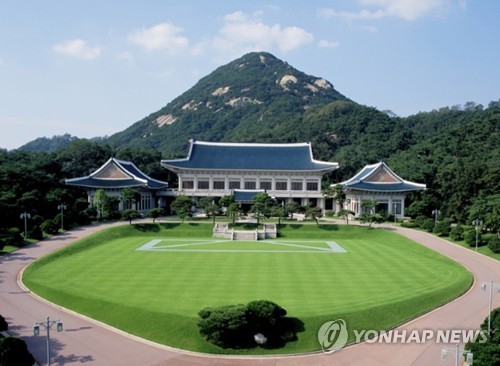
On September 8, a senior Blue House official speaking to reporters in Paris drew a careful line. The mission was a review step, not a decision. The government had not determined whether to send forces. It was exploring. This matters because the language itself reveals the mechanics of how South Korea is learning to project security influence beyond its immediate neighbourhood — and why the Gulf is now on its radar.
What Was Actually Said
The official confirmed that discussions with France had taken place along the lines of Hormuz stability and international cooperation. Emmanuel Macron repeated publicly that France would work toward a multinational mission once other countries agreed. The Blue House official pushed back against framing the current dialogue as preparation for deployment. “Today’s discussions should not be called troop deployment,” the official said.
The National Security Council could move the issue through working-level coordination, the Standing Committee, and ultimately a National Assembly consent bill. No timeline was offered. The government described the overall direction — contributing to international cooperation on Hormuz — but stressed that specifics remained under review.
When asked whether the military contribution would involve combat, non-combat, or reconnaissance concepts, the official dismissed the categorisation entirely. None of those three had been confirmed. The phrasing is notable: Seoul is laying out possibilities without committing to any of them.
The Iran Angle — And the Lack of One
Iran’s reaction, so far, has been thin. The Blue House official acknowledged that Iran became aware through media reports and showed some interest, but offered no meaningful diplomatic response. It is a telling gap.
Tehran has seen South Korean vessels transiting the Hormuz corridor for years, carrying goods to and from the Gulf. Seoul has historically avoided military entanglement in the region. The fact that Iran has not mounted a formal objection suggests either complacency or a belief that the probe mission carries no operational weight yet. That assessment could shift quickly if Seoul signals a real contribution is coming.
Why This Is Not Business as Usual
South Korea receives a substantial share of its energy imports through the Strait of Hormuz. Disruption there — whether from conflict, sanctions enforcement, or regional escalation — would hit the Korean economy directly. The government has long treated Hormuz stability as an abstract strategic interest. The fact-finding mission marks the first concrete step toward treating it as an operational one.
The framing is deliberately cautious. But caution is not inaction. A fact-finding team on the ground in the Gulf changes the calculus. It establishes contacts, gathers intelligence, tests diplomatic receptivity, and builds the institutional knowledge that a deployment would require. It is the opening move of a longer game.
The French Connection
Macron’s public comments about a multinational mission are significant. France has been pushing European partners to consider a stabilising presence in the Gulf, particularly as US commitment to the region appears increasingly conditional. South Korea’s exploratory dialogue with France suggests Seoul sees an opportunity to slot into a emerging European-led framework rather than wait for a US-led one.
That is a strategic choice. Aligning with a European coalition gives Seoul a multilateral cover that a unilateral or bilateral arrangement would not. It also signals to Washington that Korea is willing to contribute globally — a point that carries weight in trade and alliance negotiations at home.
Who Wins, Who Loses
Seoul wins if the mission converts into a modest, multinational contribution that raises Korea’s profile without entangling it in a costly commitment. It gains diplomatic leverage, intelligence access, and a foothold in Gulf security architecture that can be expanded or scaled back depending on regional conditions.
The US wins if a Korean presence relieves pressure on American naval resources in the Strait. Even a non-combat contribution — logistics, maritime surveillance, search and rescue — frees up assets elsewhere.
Iran loses if the mission normalises a foreign military presence it has not previously tolerated in the corridor. Tehran’s muted response today may well be a prelude to a sharper reaction tomorrow.
China loses indirectly. A strengthened Western-aligned security architecture in the Gulf reduces Beijing’s ability to present itself as the region’s stabilising economic partner without bearing security costs.
What Comes Next
The National Assembly consent process is the critical hurdle. Seoul will need to build public support before any deployment materialises. The government has emphasised that national interest and public consensus must underpin any contribution. That is a realistic constraint — Korean public opinion remains deeply sensitive to overseas military engagements that lack a clear threat to the peninsula.
A timeline is unlikely to emerge before late 2026 at the earliest. The Blue House has refused to provide specific dates. The NSC will need to move through inter-agency coordination and parliamentary consultation before a formal request reaches the Assembly.
What is clear is that the door is open. Seoul has decided to look. Whether it walks through remains to be seen. But the fact that the question is now being asked — in Paris, in Seoul, in the Gulf — is itself a shift.
The Hormuz fact-finding mission is not a deployment. It is something potentially more consequential: the moment South Korea begins to treat the Gulf as a security arena worth engaging with directly.