Shenzhen Summit: Who Really Won at Trump's Expense
Trump touted a historic trilateral nuclear meeting, but Beijing and Moscow extracted real concessions while walking away with the narrative. Here's what the Shenzhen summit reveals about who actually holds leverage.
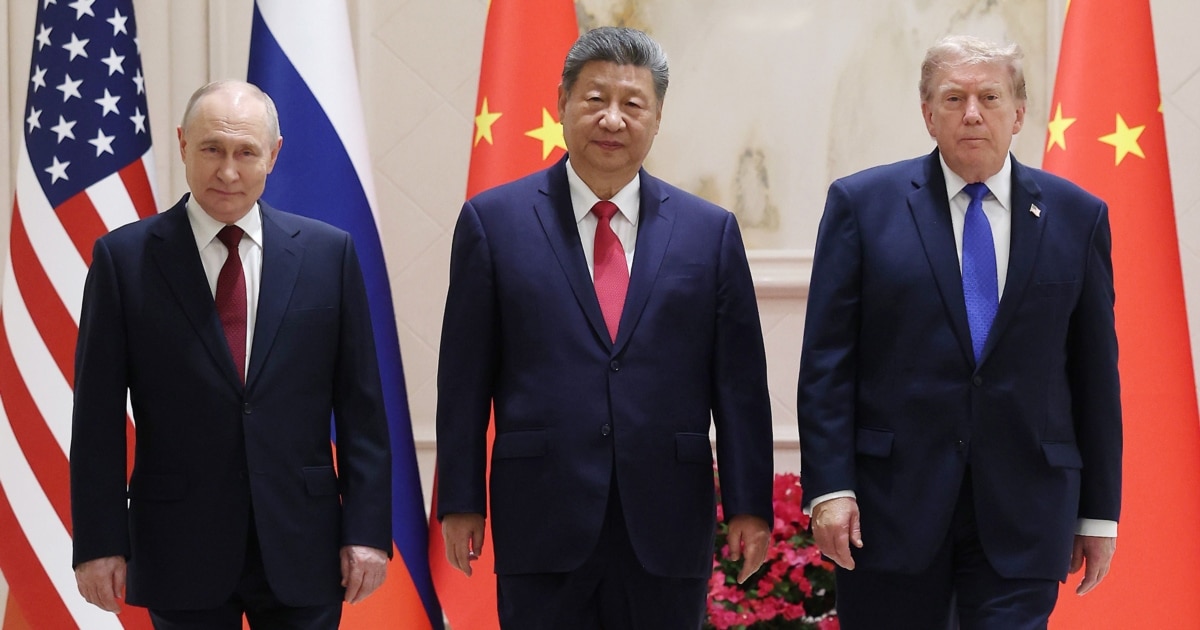
The Photograph That Changes Everything
Donald Trump stood at a podium in Shenzhen and told the world that America, China, and Russia — the three countries possessing the vast majority of nuclear weapons — now had a shared responsibility to reduce them and lower the risk of their use. The image itself was extraordinary: a sitting American president sharing a stage in mainland China with Xi Jinping and Vladimir Putin, with no joint press conference at the end.
What happened behind closed doors matters more than what was said in front of cameras. And the record so far suggests that while Trump walked away with a photo opportunity, Beijing and Moscow walked away with something far more durable: trilateral legitimacy they have sought for years, and visible cracks in the unified Western security architecture around both Taiwan and Ukraine.
What Trump Gets — and What He Sacrifices
Trump’s opening statement framed the moment carefully. He acknowledged the difficulty of arms control, reaffirmed opposition to Iranian nuclear weapons, and stressed that dialogue — not isolation — was the path forward. He also credited his own administration with rebalancing the trade relationship with China, calling past ties “very uneven” and insisting a fairer arrangement now exists.
None of that is trivial. A公开 commitment to keep Iran from going nuclear is a rare point of alignment between Washington and Beijing. And pushing China to buy more American agricultural products is classic Trump diplomacy — transactional, personalized, and designed to produce a visible domestic win.
But the price may be steeper than he realizes. By agreeing to treat China as a peer in nuclear arms control discussions, the United States effectively acknowledges what Chinese strategists have argued for years: that China’s nuclear arsenal belongs in the same category as those of Washington and Moscow. Beijing has consistently refused this framing, arguing that its stockpile remains small relative to the other two. Accepting the premise — even rhetorically — shifts the conceptual ground under decades of American nonproliferation policy.
Xi’s response made the implication unmistakable. He called for the “complete prohibition and total elimination” of nuclear weapons, invoking the image of a Damocles sword hanging over humanity. The language echoed the position China has advanced at the UN for years. But it also positioned China as the moral voice advocating radical disarmament, a posture that subtly paints Washington and Moscow as the holdouts clinging to arsenals built during the Cold War — regardless of the actual size or posture of any country’s stockpile.
Taiwan: The Quiet Concession
Perhaps the most consequential exchange occurred during Trump’s bilateral meeting with Xi, where Taiwan appeared on the record for the first time in a way that breaks from recent American practice. Xi reportedly told the president that the United States must make “the right choice” on Taiwan to avoid “serious conflict” between the two countries.
No administration officially concedes that a ally’s status is negotiable. Yet the fact that this argument was made directly by a Chinese leader in the presence of the American president — and that it was reported at all rather than buried — signals a significant shift. The question is whether Trump heard a warning or an invitation. His stated desire for more balanced economic ties and fewer flashpoints suggests he may be receptive to some recalibration, even if full abandonment of the one-China policy remains politically toxic in Washington.
For Seoul and Tokyo, the subtext is plain: the United States is willing to discuss Taiwan at the same table where it discusses Ukrainian peace with Putin. That creates anxiety no amount of bilateral promises will ease.
Putin’s Threefold Gain
Vladimir Putin secured three concrete benefits from Shenzhen that will outlast the headlines. First, he sat across from both Xi and Trump in a single setting, granting the Russian president the visual parity that sanctions and battlefield attrition have denied him domestically. Second, he locked in a direct bilateral conversation with Trump on Ukraine — separate from the trilateral session — reinforcing Moscow’s argument that the conflict requires negotiation among great powers, not simply collective containment. Third, by keeping the three leaders together without a joint communique, Putin ensured there was no formal Western coordination on how to manage either Ukraine or China; ambiguity favors Moscow.
Kremlin sources confirmed that Trump and Putin discussed the Ukraine war, bilateral relations, and the trilateral meeting itself. That sequence — bilateral first, then trilateral — follows a pattern Moscow has used repeatedly: secure the American president’s attention individually before facing a group where consensus might constrain him.
The Architecture Is Already Changing
The most important structural consequence of the Shenzhen meeting may not emerge for months or years. It is this: the post-Cold War assumption that the United States would lead arms control discussions alone or through NATO alliances is being replaced by a new reality in which any meaningful reduction framework requires direct engagement with both Beijing and Moscow simultaneously.
That does not mean an agreement is imminent. The technical gaps are enormous. China’s nuclear forces number in the low hundreds, with a modernization program still accelerating. Russia’s arsenal exceeds 5,000 warheads and is expanding again. The United States maintains roughly 3,800 active and reserve warheads. Verifying reductions across these asymmetries — while managing concurrent disputes in Europe and the Pacific — is extraordinarily difficult. Trump himself called arms control “a very hard challenge.”
But the door is open in a way it has not been since the START era. And once opened, closing it becomes harder than leaving it ajar.
What Seoul Should Hear
South Korea follows every development in Sino-American relations with acute anxiety, and today’s summit offers few reassurances. Trump’s willingness to discuss Taiwan alongside a Russian president discussing Ukraine in the same city suggests that the United States may view both issues through the same lens: as bargaining variables rather than absolute commitments. For Seoul, that means relying more heavily on its own deterrence capabilities and deeper coordination with Tokyo — not less.
Beijing, meanwhile, has achieved exactly what it wanted publicly: recognition as a nuclear superpower equal to the United States and Russia. Moscow has achieved what it could not accomplish through force alone: the integration of the conflict in Ukraine into a broader great-power framework that legitimizes its territorial gains. Trump has achieved what he promised his base: a deal-making moment captured on camera, with no binding obligations attached.
History rarely records these distinctions when the photograph flashes. But the next decade of strategic calculations will.