SK Hynix's Japan Fab Bet Could Fund Its Own Strangulation
SK Hynix is quietly evaluating Japanese sites for a memory chip plant, a move that could boost short-term profits but would permanently elevate Japan's semiconductor revival and weaken Korea's strategic position. The math only works in an upcycle.
The profitable trap
SK Hynix is sitting on an extraordinary profit window. HBM demand from the AI boom has pushed memory margins to levels the industry has not seen in decades. That same windfall is now being used as the justification for a counterintuitive expansion: building a memory fab in Japan.
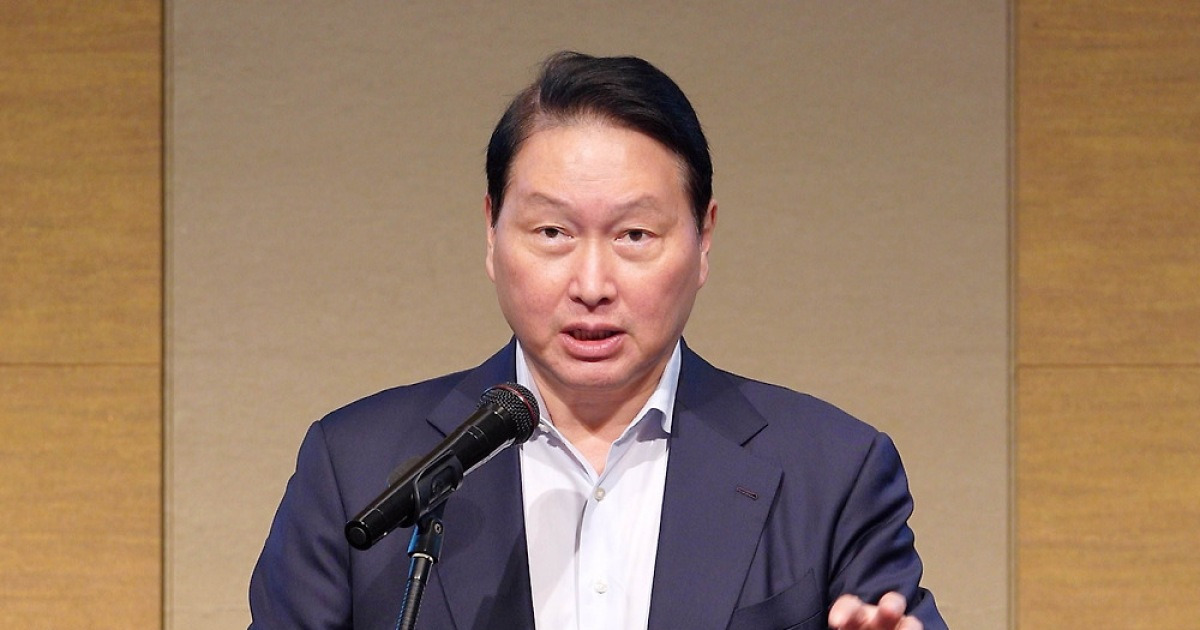
According to Bloomberg, SK Group Chairman Choi Tae-won confirmed last month at a Korea-Japan Business Council meeting in Sendai that the company is evaluating multiple Japanese locations for a new memory chip plant. This is not a first rumor. Nihon Keizai Shimbun reported similar plans back in February, and Hankyoreh broke a story in August. Each time, SK Hynix denied the reports. The denial stopped this time around.
The logic behind the move is seductive on paper. SK Hynix already holds a significant stake in Kioxia, Japan’s former Toshiba memory division now owned largely by private equity. A SK Hynix fab sited near Kioxia’s existing operations would create a proximity shortcut — shared supply chains, talent pools, and R&D spillovers between two Korean-capital-linked memory giants on Japanese soil.
Choi Tae-won has long preached the idea of a “Korea-Japan economic community,” a framework combining Korean manufacturing prowess with Japanese materials, components, and equipment strength. In his telling, the plant would not be a Korean concession — it would be the keystone of a bilateral industrial bloc capable of dominating global memory markets.
The framing is elegant. The economics are a trap.
Why the cost math fails
Memory semiconductor is one of the most brutally cycle-dependent industries in existence. Profitability today tells you nothing about survivability tomorrow. The industry runs on periods of severe oversupply followed by brutal price wars. When the downcycle hits — and it always does — the lowest-cost producer wins. Everyone else bleeds.
This is precisely why SK Hynix built its fab in Wuxi, China, in 2006 and why Samsung followed with a massive facility in Xian in 2012. Both moves carried serious technology-transfer risk. Both were undertaken anyway, because Chinese labor costs, infrastructure subsidies, and tax incentives made them the only rational play for cost leadership in a commoditized product category.
The opposite lesson lives in Texas. Samsung’s Austin fab opened as a memory production site and was forced to pivot to foundry operations when high U.S. operating costs made memory production unviable. Samsung’s next greenfield project in Taylor, Texas, is also foundry-only. Even Micron, which is building a subsidized memory fab in the United States, is simultaneously constructing a separate memory facility in Singapore — a jurisdiction chosen specifically for its lower cost structure.
Japan’s cost structure sits squarely in the Texas range, not the Singapore range. Labor, land, energy regulation, and compliance overhead are all materially higher than in Korea. During a supercycle, those costs are absorbable. That is the illusion currently driving this debate. The moment HBM margins compress — and they will — a Japanese fab becomes a structural liability, not an asset.
Who really wins if SK Hynix builds in Japan
The most consequential winner would not be SK Hynix. It would be Japan.
Tokyo has spent billions attempting to resurrect its semiconductor industry. Renesas, Rapidus, and Kioxia have all received massive government subsidies. What Japan has lacked is advanced memory fabrication capability — the actual know-how for producing cutting-edge chips at scale. If SK Hynix locates a fab on Japanese soil, it imports precisely that missing piece. Korean talent, Korean yield-management expertise, Korean process IP — all nested inside Japan’s existing materials and equipment ecosystem.
The result is a complete domestic memory semiconductor industry. Korea would have effectively handed Japan the final component it needed to become a self-sufficient memory producer.
History offers a blunt precedent. South Korean memory fabs built in China two decades ago became the training ground and technical foundation for China’s current semiconductor ambitions. ChangXin Memory Technologies (CXMT) for DRAM and Yangtze Memory Technologies (YMTC) for NAND both trace their capabilities to knowledge transfers that occurred when Korean firms operated on Chinese soil. Building in Japan risks repeating this pattern with a richer partner.
The security dimension
There is a geopolitical layer that makes this decision even more dangerous than a purely commercial miscalculation.
Taiwan’s strategic importance to global security derives almost entirely from the fact that TSMC’s most advanced fabs are located there. That geographic concentration gives Taiwan leverage it would not otherwise possess. South Korea enjoys a similar, quieter form of leverage: its domestic concentration of advanced memory fabrication. Chinese and American policymakers both treat South Korea’s chip plants as assets that must be kept on Korean soil.
Relocating even a single advanced memory fab to Japan disperses that concentration. It signals that Korea’s most critical industrial asset is negotiable. For a country that has repeatedly navigated between competing superpowers by holding onto its technological sovereignty, this is a signal with lasting consequences.
The corporate-political confusion
Choi Tae-won occupies two roles simultaneously: chairman of SK Group, a privately held conglomerate, and president of the Federation of Korean Industries, the country’s most influential business advocacy organization. Decisions made in the first capacity carry corporate risk. Decisions framed in the second carry national weight.
The line between them has blurred throughout this episode. Choi’s public advocacy for the Japan plant reads less like a confidential boardroom strategy and more like a lobbying position designed to shape public opinion before the investment committee meets. SK Hynix has walked back his comments, stating he never discussed a joint-plant proposal. But the Bloomberg attribution stands, and the Sendai remarks were made in his official capacity as FKI president.
This is not merely a transparency issue. It raises a question about whose interests the proposal actually serves — SK Hynix shareholders, the Korean state, or Choi’s personal vision of Korea-Japan economic integration.
What Korea already has
South Korea retains the world’s most optimized memory production ecosystem. Decades of accumulation have created a talent pool, a supplier network, and yield-management discipline that no other country can replicate at comparable cost. Gwangju is currently being developed as a new semiconductor cluster, though the government has yet to publish a detailed roadmap or timeline.
Before committing to a high-cost Japanese expansion, the logical sequence is straightforward: finalize the Gwangju plan, deploy remaining Korean capacity at home, and only consider overseas expansion when the downcycle makes the cost differential irrelevant rather than critical.
The real test
The AI memory supercycle will not last forever. HBM pricing will normalize. When it does, SK Hynix will face a choice: absorb the Japanese fab’s structural costs or write it down. Either outcome damages the company. Japan gains an irreversible industrial asset. Korea loses a piece of its strategic geography.
The plant makes sense only if you believe the upcycle is permanent. Every historical cycle in memory semiconductors suggests otherwise.