SK Hynix Workers Reject Stock-Heavy Pay as Share Price Halves
SK Hynix's full-time union narrowly voted down a tentative labor deal just 25 ballots away, exposing deep friction between Korea's chip giant and its workforce over stock-heavy compensation during a downturn. Meanwhile, the technical office union approved the same deal at 66%.
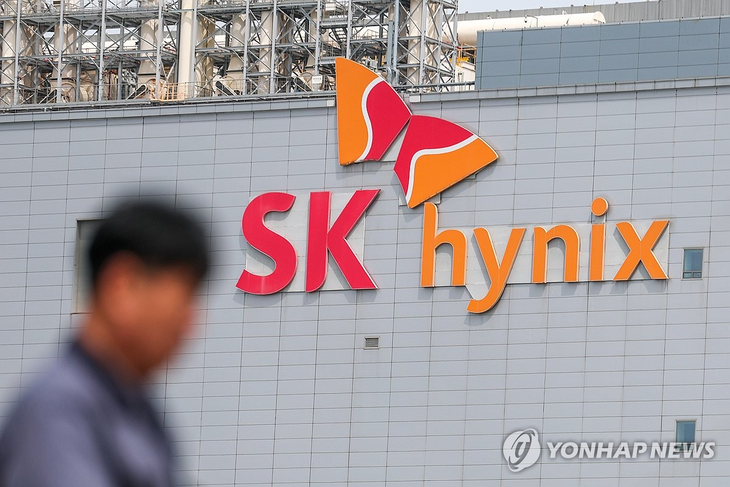
The 25-Vote Chasm
Just twenty-five ballots separated SK Hynix from a labor agreement. That was it.
On August 24 and 25, the full-time worker union — affiliated with the Korean Confederation of Trade Unions (KCTU) — held an electronic vote on the company’s tentative labor deal. The result: 7,535 against, 7,510 for. A margin of 0.16 percentage points. Turnout was 93.81 percent, meaning roughly 15,045 members cast ballots in what amounts to one of the tightest union votes in recent South Korean corporate history.
Meanwhile, the technical office workers’ union — affiliated with the Korean Federation of Trade Unions — approved the same deal on August 25 with 66 percent in favor.
Two unions. Two dramatically different answers to the same offer.
What Was on the Table
The tentative agreement included a 6.3 percent wage increase and a revamped excess-profit-sharing (EPS) payment system. The EPS structure paid out 40 percent in cash and 40 percent in immediately sellable stock, with another 20 percent deferred into stocks vesting at one and two years. Employees could opt to receive up to 100 percent in stock if they chose.
For the first year only, workers could convert that initial 40 percent stock portion into cash, pushing the maximum cash payout to 80 percent of the EPS award. The deal also included a downside floor: if the stock’s closing price on payment day fell below the promised bonus value, the company would make up the difference. Deferred portions gave employees the choice between fixed share counts or fixed cash amounts.
There was also a clause allowing up to 3 percent of wages to be deferred if the company posted losses, payable once profitability returned. Retirees would receive 50 percent of their EPS in cash during their final year.
Why It Matters Beyond Icheon
SK Hynix’s share price has roughly halved from its peak. That context changes everything about a deal that leans heavily on stock as compensation.
When equity value drops this sharply, offering workers a payout structure weighted toward shares doesn’t read as generous. It reads as the company trying to preserve cash while shifting risk onto employees whose portfolios are already exposed to the same stock. Workers watching their home-company shares lose half their value are not feeling the pull of “aligning interests with shareholders.”
The technical office workers’ more favorable vote — 66 percent approval — likely reflects a different risk calculus. Their roles may carry less day-to-day exposure to production-floor volatility, making stock-based compensation feel less threatening. Or they may simply value the 6.3 percent wage increase more than the full-time workers do, given different base salary structures.
The full-time workers’ near-rejection, however, carries a sharper signal. These are the people on the fab floor. They understand SK Hynix’s financials in ways that make a stock-heavy deal feel especially out of touch when the stock has cratered.
Who Wins, Who Loses
SK Hynix now faces an awkward split obligation. It will proceed with the technical office union’s ratified deal while entering renewed negotiations with the larger full-time union. The company cannot simply ignore 7,535 workers who voted no. But it also cannot easily concede on the stock-heavy structure without appearing to back down from its original positioning.
The union gains leverage it did not expect. A 25-vote rejection forces management back to the table under conditions that favor the workers — especially on the central issue of how much compensation comes in stock versus cash. Whatever the union’s specific demands in renegotiation, the company now knows its previous offer crossed a line.
Workers who voted no also bear a cost. Extended negotiations risk delays in implementation, uncertainty over winter bonus payments, and the possibility that management hardens its stance after being rejected. The union has not yet publicly stated its reasons for the rejection or outlined a specific list of renegotiation demands, which leaves its next moves somewhat opaque.
What Comes Next
Renegotiation will focus on at least three variables: the cash-to-stock ratio in the EPS system, the degree of employee choice over payout form, and possibly the wage increase percentage itself. The loss-deferral clause and benefits provisions could also surface as sticking points, though the stock weighting is the most likely flashpoint.
SK Hynix has a structural disadvantage in these talks. The semiconductor cycle is still uncertain. Demand for memory chips has been volatile, and the company cannot afford to escalate labor costs significantly without a clear revenue outlook to justify them. At the same time, the near-rejection proves that compression-driven cost-cutting through equity has limits when share price performance undermines the very instrument being offered.
The broader implication for Korea’s tech industry is significant. SK Hynix is one of the country’s most important exporters and a cornerstone of the semiconductor ecosystem. If its labor model fractures during a downturn — rather than holding together as it might have during the boom years — other Korean firms will take note. Samsung Electronics, which has faced its own labor tensions, will be watching closely.
There is also a governance dimension. Korean conglomerates have historically managed labor through a combination of paternalism and financial incentives tied to company performance. That model assumed rising stock prices would make equity compensation feel like a genuine reward rather than a deferral of real money. When the cycle turns, the math flips instantly, and workers see through it.
The 25-vote margin is small in absolute terms but enormous in what it reveals. SK Hynix’s full-time workers are not rejecting a deal because they oppose all compromise. They are rejecting a deal because the terms feel like a bet against their own financial security at a moment when the company’s stock has already bet against them. How SK Hynix responds — whether it adjusts the payout mix, preserves the stock-weighted structure, or finds a middle ground — will set a tone for Korean labor relations in the semiconductor sector that extends well beyond Icheon.