The Skull Just Got a New Organ — And It Changes Everything About Brain Immunity
Japanese researchers have found a lymph-node-like immune outpost inside the skull bone marrow that Western neuroimmunology never saw. The discovery could reshape how we think about meningitis, Alzheimer's, and whether the blood-brain barrier is as impenetrable as we assumed.
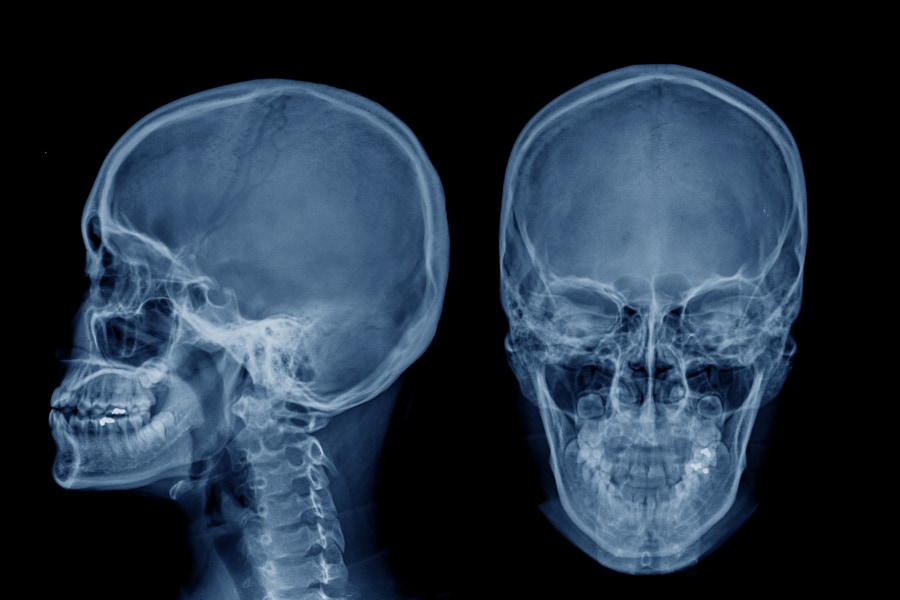
The skull has been hiding a command center.
For centuries, anatomy textbooks treated the skull as nothing more than armor — a hard casing built to protect the brain from impact. Inside, researchers assumed, was bone marrow functioning as a quiet factory: churning out immune cells, sure, but doing so in isolation, disconnected from the elaborate defensive logistics that organize the rest of the body.
That assumption is now wrong.
A team at Johns Hopkins University’s Kipnis Lab, working with researchers including lead author Jang Hyun Park, used tissue clearing to render mouse skull bones transparent — a technique that strips away the light-scattering lipids and calcium that make bone opaque — and peered inside. What they found was a structured, lymph-node-like immune outpost sitting in the bone marrow of the skull, specifically at the back of the head.
This is not a minor anatomical curiosity. It is a structural reorganization of how we understand the relationship between the immune system and the central nervous system.
What exactly was found, and why it matters
Inside the skull bone marrow, the researchers identified the same three cell types that define a lymph node: B cells, which manufacture antibodies; T cells, which coordinate and amplify immune responses; and antigen-presenting cells, which identify and display characteristics of invaders to the rest of the immune system. In the periphery, these cells gather in lymph nodes — hundreds of checkpoint stations placed along the lymphatic drainage network, where they inspect fluid filtered from tissues throughout the body.
Lymph nodes are positioned deliberately. They sit along the routes that interstitial fluid takes as it travels, carrying cellular debris and pathogen fragments from wounds and infections. When you get a cut on your hand and your neck glands swell, that swelling is a lymph node actively processing information about what entered your body.
Bone marrow, by contrast, was never thought to be part of this inspection circuit. It is encased in bone, separated from the lymphatic drainage routes that serve the rest of the body. Yet here it was, in the skull, running the same organizational playbook as a lymph node.
Crucially, the researchers checked other bones — the sternum and femur — and found no equivalent structure. This is not a generic bone marrow phenomenon. It is localized to the skull.
Why Western neuroimmunology missed this
The Kipnis Lab itself had previously discovered the meningeal lymphatic vessels that connect the brain’s protective membranes to the body’s immune system, publishing work that showed immune cells and waste products flowing between the brain and bone. That research should have set the stage perfectly for looking inward along that corridor.
Instead, the prevailing framework in Western neuroscience treated the skull bone marrow as structurally and functionally inert when it came to brain defense. The assumption was that any immune activity near the brain had to originate within the brain tissue itself or arrive via the bloodstream or meningeal vessels — not self-organize inside the bone.
The researchers acknowledge plainly: “We have never seen a structure like this in healthy bone marrow before,” said Park. That understatement is deliberate. This is not a pathological anomaly. It is a normal, organized immune structure that existed in plain sight and was systematically overlooked because the conceptual map of neuroimmunology did not include it.
Who wins and who loses from this discovery
For patients with meningitis, the implications are direct. If the skull bone marrow houses an active immune command center positioned between the brain and the bloodstream, it is the first line of defense when pathogens breach the meninges. Understanding its architecture could mean identifying new targets for early intervention — before an infection reaches the brain tissue itself.
For Alzheimer’s research, the stakes are even higher. The Kipnis Lab’s earlier work on meningeal lymphatics helped establish that the brain has its own waste-clearance system, and that dysfunction in that system correlates with amyloid accumulation. A newly recognized immune structure inside the skull could be the missing link explaining how immune surveillance in the meninges connects to immune activity in the bone — and how that connection breaks down in neurodegeneration.
Pharmaceutical companies developing immunotherapies for neurological diseases are the ones who will feel the disruption most acutely. Trial designs, biomarker selection, and target identification all assumed a certain model of CNS immune architecture. That model is now incomplete.
What happens next
The immediate question, raised in the source material itself, is how information about peripheral infections reaches this hidden structure. Lymph nodes receive their intelligence because they sit on the lymphatic highway. The skull bone marrow does not. Something must be delivering antigens or signals through the bone itself — or along a route the researchers have not yet mapped.
Solving that transport problem will determine whether this structure is truly independent or simply a satellite of a larger immune network that includes the meningeal vessels the lab already characterized.
The more profound consequence is conceptual. The blood-brain barrier has long been the dominant metaphor for how the brain protects itself. This discovery suggests that the brain is better understood as part of a multi-layered immune ecosystem that extends beyond the meninges and into the skeleton itself. The skull is not just shelter. It is an active participant in brain defense.
Whether this structure exists in humans remains unconfirmed. Mouse skulls and human skulls differ in several anatomical details that could affect whether the same organization is possible. But the Kipnis Lab’s prior work has repeatedly shown that mouse meningeal lymphatics are more robust than previously believed in humans, which raises the possibility that this finding will translate.
What is clear is that a structure sitting inside the skull, running the operational logic of a lymph node, went unnoticed because the field was not looking there. That is the kind of gap that defines the next decade of neuroimmunology — or leaves another decade of trials running on an incomplete map.