SNK's NEOGEO AES+ proves retro hardware revival still has legs
SNK's NEOGEO AES+ isn't another emulation mini-console — it's a full hardware reissue with genuine cartridge backward compatibility and new releases. Can it find buyers in a saturated retro market?
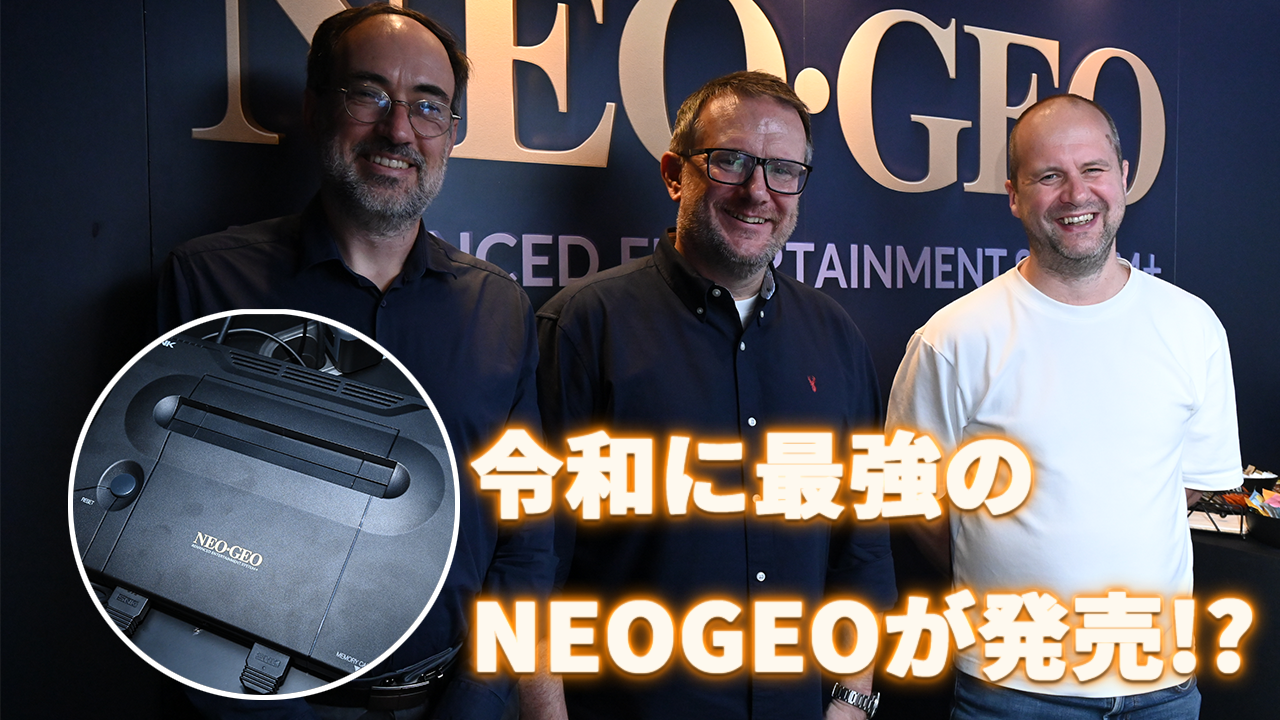
The hardware argument
SNK just made a bet against the entire direction the retro console market has taken over the past half-decade.
At Tokyo Game Show 2026, the company unveiled the NEOGEO AES+, a full hardware reissue of its legendary 1990 home console — not an emulation device, not a curated software package, but a machine built to run original NEOGEO cartridges natively. That distinction matters more than it should.
Every successful retro mini-console since the NES Classic Edition has been software first: a microcontroller running emulated code with a handful of pre-loaded titles. The hardware is incidental. The NEOGEO AES+ flips that script entirely. It is, as developers put it at their press briefing, a dream machine for people who simply want the original experience, reissued for the modern era.
Why this timing is either brilliant or reckless
The retro mini-console market is crowded. Nintendo has sold tens of millions of mini units across three generations. Analogue and other boutique hardware makers have carved out dedicated followings. Sega’s Mega Drive Minis, the PlayStation Classics, the evergreen Game & Watch lineups — the shelf space for nostalgia hardware is near maximum capacity.
Yet SNK is launching in September 2027, roughly a year from announcement, at a price point of 32,800 yen for the base console and 9,980 yen per cartridge. That is not cheap for a retro reissue, but it is brutally cheap compared to the original. The NEOGEO AES cost 58,000 yen at launch in 1990 — roughly 116,000 yen in today’s money when adjusted for Japanese inflation over three decades. A single NEOGEO cartridge ran 30,000 yen. This was the luxury segment of home gaming, the console you bought if money was no object.
SNK is not targeting the mass nostalgia market. It is targeting the people who grew up unable to afford a NEOGEO and now can, plus the collectors who have spent decades chasing original hardware and blank cartridges at inflated prices.
The technical story everyone is missing
The AES+ does what no previous retro reissue has managed cleanly: it maintains full backward compatibility with original peripherals. Testers confirmed it runs over 160 released titles natively, including mahjong controllers and memory cards. The memory card saving functionality — long extinct on original hardware — works as intended.
HDMI output covers 1080p and 720p. An analog component output is included for purists who still run CRT monitors. The dip switches under the bottom panel let you adjust resolution, aspect ratio, screen rotation, and even overclock the CPU — a deliberate design choice that mirrors the feel of arcade cabinet maintenance rather than a menu-driven modern interface.
There is a hybrid wired/wireless controller released simultaneously. Wireless latency is present but minimal, according to developers who demonstrated it with Metal Slug. It is a practical compromise, not a technological breakthrough.
The new software is the real differentiator
What separates the AES+ from a straightforward hardware reissue is the software strategy. SNK is releasing new titles specifically for the platform, and some of them carry genuine historical weight.
Samurai Shodown Zero Special will finally receive its uncut, arcade-accurate version — the original home release censored violent finishing moves. This is a title that Western collectors have paid premium prices for years to obtain in uncensored form.
Zero Wing is perhaps the most surprising announcement. The game was never officially released on NEOGEO AES. A fan-created homebrew port circulated for years. SNK found it, licensed it formally from TATSUJIN (which now controls the Toaplan catalog), and is including it as part of the launch lineup. That is a complete loop — fan creation, official discovery, formal licensing, commercial release. Few retro launches have this kind of story attached.
Additional titles include a two-in-one cartridge combining Magical Drop 2 and 3, Fighters History Dynamite, and Dunk Dream — all formerly licensed under the Data East umbrella, now formally secured through TATSUJIN.
Stage select additions and secret content tweaks appear on several titles. Metal Slug gains access to the Scotland stage, originally exclusive to the NEOGEO CD version, for the first time on the standard cartridge format.
The packaging detail that reveals the intent
Developers described the box design as intentional layering: the outer packaging mimics the original NEOGEO AES box, but removing it reveals the actual product box designed in the same style. Two boxes, two eras. It is a small detail, but it signals that SNK’s team understands what this product is — not a souvenir, not a novelty, but a legitimate continuation of a hardware line.
The market question
The retro console market operates on a simple rule: limited editions sell out, and nobody cares who buys them. The AES+ targets a different psychology — the buyer who wants authenticity, not curation.
If SNK can sustain this license acquisition strategy — pulling Data East, Toaplan, and other formerly orphaned libraries into a coherent release schedule — the AES+ could become the definitive NEOGEO platform. Cartridge-based backwards compatibility means collectors can use their existing libraries. Memory card saves work. Original controllers work. The ecosystem that existed in 1990 largely exists today, just fragmented across expensive二手 markets.
The risk is timing. Announcing in September 2026 with a September 2027 launch means competitors will have had a full year to release their own retro offerings. Every major publisher is working on something nostalgia-adjacent. The novelty window for a hardware reissue closes faster than most companies admit.
What happens next
SNK and PLAION REPLAI did not announce pricing for titles beyond the initial launch window. Whether the 9,980 yen per cartridge model holds or scales will determine whether the AES+ becomes a sustainable platform or a one-generation curiosity.
What is clear is that the concept works. The hardware is sound. The licensing pipeline is active. The Zero Wing story alone proves there is material worth excavating in the retro vaults that emulation-based mini-consoles cannot touch.
Whether the market has room for one more premium retro reissue remains the open question. SNK clearly believes there is.