South Korea's $100B Bet on US Nuclear and Texas Gas
Seoul is negotiating a roughly $100 billion investment in US nuclear reactors and Texas natural gas plants, marking the first major project under its $350 billion commitment to Washington. The deal would reshape both countries' energy landscapes and signal a new chapter in their economic alliance.
A $100 Billion Energy Pivot
South Korea is on the verge of becoming one of the most consequential foreign investors in American energy in decades. According to a September 10 report by The Wall Street Journal, Seoul is in advanced talks with Washington to pour more than $100 billion into US nuclear reactors and natural gas power plants across Texas — infrastructure built to feed the insatiable electricity demands of artificial intelligence data centers.
The numbers are staggering. Up to eight new reactors could enter the US market. Texas alone would absorb roughly $20 billion in natural gas generation capacity. The total would likely be the first visible兑现 of South Korea’s $350 billion investment pledge to the United States, negotiated under the trade deal last year that saw Washington lower tariffs on Korean goods from 25 percent to 15 percent.
But the deeper story is not about money. It is about alignment.
Two Reactor Designs, One Deal
Perhaps the most revealing detail in the report is what comes next for reactor design. The first units would use Westinghouse’s AP1000 — an American design that has struggled to gain traction in the US market due to cost overruns and delays. Subsequent units would adopt South Korea’s APR1400, a proven, export-ready reactor that already runs safely at home.
That sequencing matters. It suggests Washington and Seoul have struck a compromise that serves both sides: the US secures jobs and domestic supply chains around a familiar American design, while Korea exports its own reactor technology and gains a foothold in the US nuclear market — an arena from which it has been largely locked out.
For Westinghouse, a subsidiary of Hitachi, the deal could be a lifeline. The AP1000 program has been a financial anchor, with projects like Vogtle in Georgia taking far longer and costing far more than projected. A $100 billion commitment from a single foreign buyer would transform that narrative — though it would also tie the program’s fate tightly to geopolitics rather than pure market competition.
For Korea, the APR1400 entry into the US is a strategic breakthrough. Seoul has long marketed its reactor technology to the Middle East and Southeast Asia. Breaking into the American market, even partially, would validate the design and give it credibility in regions where US nuclear endorsement carries weight.
Texas Gas and the AI Power Crunch
The Texas natural gas angle deserves as much attention as the nuclear side. The state is already the epicenter of American shale gas production and home to much of the country’s growing cluster of AI data centers. But it faces a chronic problem: its grid cannot reliably supply enough electricity to meet the surge in demand.
Google, Meta, and Amazon have all signed power purchase agreements with Texas gas developers in the past two years. The new Korean investment would accelerate that trend. With roughly $20 billion heading toward gas-fired generation tied to AI infrastructure, Texas gains capacity but also locks in long-term fossil fuel dependency at a scale that will draw environmental scrutiny.
The irony is thick. South Korea — a country with one of the world’s most aggressive carbon reduction targets — is investing heavily in US natural gas. The logic is pragmatic: AI data centers need stable, dispatchable power, and nuclear construction timelines of a decade or more cannot meet near-term demand. Gas fills the gap. But it also cements a fossil fuel architecture at precisely the moment the US and Korea are trying to position themselves as leaders in clean energy technology.
The $350 Billion Question
The full context is the 2025 US-Korea trade deal, under which Seoul committed $350 billion in investment to the United States. The breakdown was specific: $150 billion toward the shipbuilding sector and $200 billion toward semiconductors, nuclear energy, and biotechnology. Nearly a year later, no projects have been formally announced.
That silence has created uncertainty on both sides. American politicians wanted visible兑现 to justify the tariff concession. Korean businesses wanted clarity on regulatory hurdles, site approvals, and profit protections. The WSJ report suggests those negotiations are finally producing results — and that an initial $2 billion tranche could move as early as the end of this month.
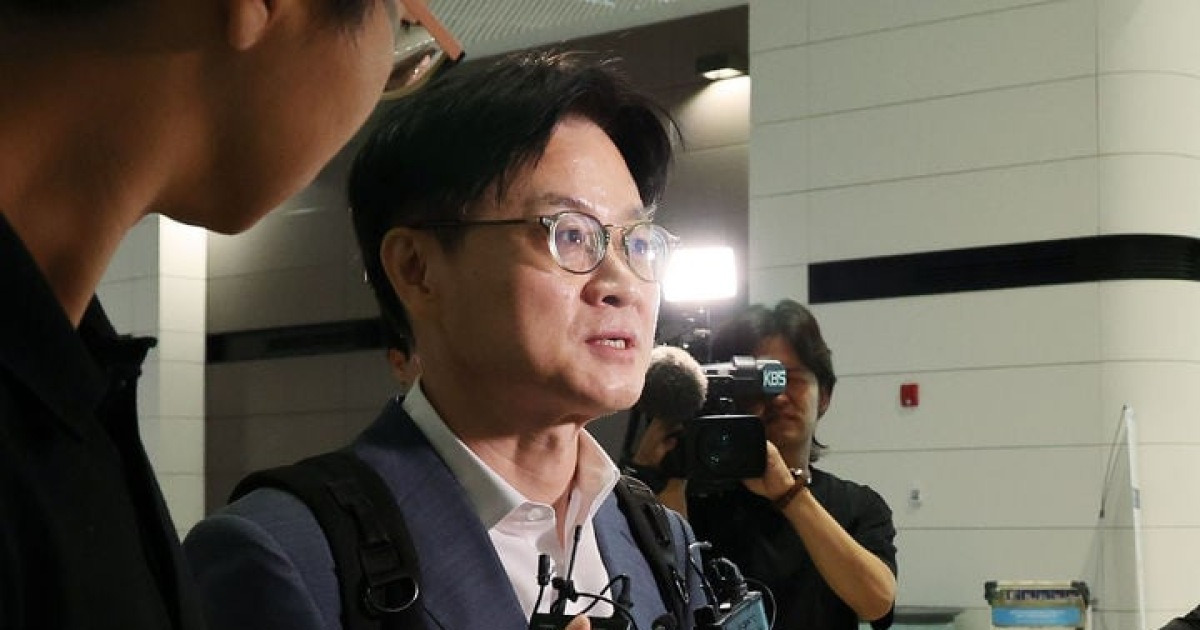
Kim Jeong-gwan, South Korea’s minister of trade, industry and energy, confirmed he traveled to the US specifically to finalize the investment talks. He declined to comment on specifics, telling reporters only that discussions are in their final phase. The White House pushed back harder, dismissing the report as speculation before any formal announcement.
That diplomatic hedging is typical but not reassuring. When governments dance around deals this size, it usually means something is still unresolved — whether pricing, ownership stakes, regulatory consent, or political risk in a state like Texas where energy policy is fiercely independent.
Who Wins, Who Loses
The winners are clear. Westinghouse gets a buyer. Korean construction and engineering firms standing to benefit from the APR1400 units — likely Samsung C&T, Doosan Enerbility, and KEPCO E
c — gain entry into the US market. Texas gas producers secure a major new customer. The US government can point to job creation and energy independence rhetoric. South Korea’s government can claim it delivered on its $350 billion pledge without writing a blank check.
The losers are less obvious but real. American nuclear competitors who do not win reactor orders lose access to a market they were already struggling to enter. US environmental groups will view the Texas gas investment as a betrayal of climate commitments. Korean carbon-intensive industries face pressure at home to explain why Seoul is financing fossil fuel expansion abroad while pledging decarbonization domestically.
Perhaps most importantly, the deal sets a template for how middle powers can leverage capital to reshape energy markets. Korea is not an energy superpower. It does not control oil fields or major shipping lanes. But it does have savings, engineering capability, and a government willing to deploy capital strategically. That model — capital plus technology, deployed through diplomatic negotiation rather than military or resource dominance — could prove influential in other regions.
What Comes Next
If the deal closes, it will likely unfold in stages. The initial $2 billion tranche at month’s end signals momentum. The full $100 billion will take years to deploy, with nuclear projects moving on timescales measured in decades and gas plants delivering capacity in three to five years.
The sequencing of AP1000 followed by APR1400 will determine whether the project is seen as a true partnership or a buyout. If Westinghouse delivers on time and budget, the American design retains credibility. If it stumbles — as it has before — the APR1400 may quietly become the centerpiece and the Korean design wins the longer game.
Either way, the era of Korea as a passive investor in American energy is ending. Seoul is choosing to build its own footprint inside the US nuclear and gas markets, and in doing so, it is rewriting the rules of its alliance with Washington — not as a junior partner receiving protection, but as a capital exporter with its own technological portfolio on the table.