South Korea's Army Convicts Its Own: What the Martial Law Sentences Mean for Civilian Control
South Korea's highest court has handed down landmark sentences to former military commanders for their role in the 2024 martial law crisis — a ruling that redefines the boundary between military service and political subordination in one of Asia's most consequential democracy tests.
A Court That Looked the Army in the Eye — and Found It Guilty
South Korea’s most consequential political trial of the decade did not end with a bang. It ended on a Tuesday, with a judge reading a sentencing order that amounted to a constitutional lesson.
The Seoul Central District Court’s Criminal Division 26 found three former military commanders guilty of participating in what the court explicitly characterized as “premeditated rebellion” — not a spontaneous emergency response, not a legal misstep, but an act the judges called an insurrection that was planned at least two months before it was executed.
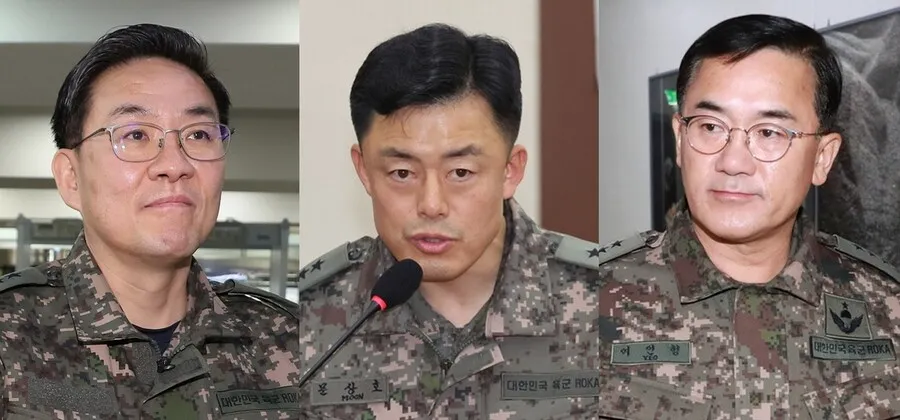
The verdict, delivered on the 21st, sentenced former National Military Intelligence Command Commander Yeo In-hyung to 18 years, former Capital Defense Command Commander Lee Jin-woo to 18 years, and former Special Warfare Command Commander Park An-su to 10 years. Additional commanders received terms ranging from nine to twelve years. The sentences came in well below the prosecution’s request — the special prosecutor’s office had asked for terms up to 25 years — but the legal reasoning inside the judgment was sharper than the penalty itself.
The court’s language was striking. It did not frame the case as mere disobedience to unlawful orders. It framed it as the betrayal of the military’s fundamental contract with the state: that the army exists to defend the Constitution, not to serve whichever political actor happens to hold power.
“The military commanders abandoned the mission and duty of the armed forces, along with political neutrality, and used military force for the political interests of a specific faction,” the judgment read. The implication was unambiguous — this was not a question of following orders. It was a question of choosing sides.
The Memo That Tipped the Scale
Perhaps the most legally significant element of the ruling was how the court treated evidence that earlier judgments had dismissed.
Yeo In-hyung’s phone notes — a list of items including detention facility preparations, iron pry bars, and blank flash rounds — had been considered insufficient by the first-instance trial of former President Yoon Suk-yeol, who was tried as the principal architect of the insurrection. That court had dated the conspiratorial mindset to just two days before the December 3 declaration of martial law.
This court reached the opposite conclusion. It found that the notes were not merely casual lists. They were evidence of preparation for the execution of a rebellion, drafted in coordination with Yoon and former Defense Minister Kim Yong-hyun, and discussed well before the emergency was declared.
The timeline matters. The court found that Yoon had signaled his intent as early as October 1, 2024 — during a meal with military officials following National Armed Forces Day celebrations — when he raised the need for emergency powers citing parliamentary gridlock. The commanders, the court said, were not caught off guard. They were preparing.
That distinction — between a coup born in panic and one born in planning — is the difference between a procedural error and a constitutional crisis.
Why This Matters Beyond South Korea
The trial took place against a backdrop of global anxiety about democratic backsliding. From Hungary to Turkey to Venezuela, the pattern is familiar: a leader claims emergency powers to bypass institutional checks, and the institutions that could resist — above all, the military — choose compliance over principle.
What makes South Korea different from those cases is that the military chose, in the end, to be held accountable. Not all of it. Not without resistance. But the court’s willingness to characterize the martial law declaration as premeditated insurrection — and to punish the generals who carried it out — represents a moment many democratic theorists would call rare.
The precedent is being set in real time. If the military can be convicted for executing unlawful orders, then the doctrine of “just following orders” loses its shield in one of Asia’s most important military alliances. That sends a signal to every armed force in the region where civilian-military relations remain fragile.
The Sentencing Gap That Speaks Volumes
The court’s decision to impose sentences eight to fifteen years below the prosecution’s request drew immediate attention. The judges did not justify the reduction on grounds of leniency. They justified it on grounds of proportionality — comparing the generals’ sentences to those given to other defendants in related cases, including civilian co-conspirators.
The message was clear: the court wanted the punishment to fit the crime, not the outrage. In a trial that could have become a spectacle of retribution, the judges chose consistency instead. That restraint is itself a democratic signal — that the rule of law applies equally to those who wield power and those who enforce it.
One commander, former Special Operations Command Leader Kwak Jong-geun, received the lightest sentence — nine years — because he turned himself in and made a public statement confessing his moral responsibility during the early stages of investigation. The court credited this as a statutory mitigating factor under the Insurrection Special Prosecution Act. Leniency for candor; severity for silence. A hierarchy of remorse built into the judgment.
What Comes Next
Yoon Suk-yeol’s own trial continues. He faces charges as the ringleader of the insurrection, and the convictions of his military allies will be cited as evidence of the scope and planning of the conspiracy. The generals’ sentences are not final — appeals are expected — but the legal characterization of events is already being absorbed into the broader narrative of what December 3rd meant.
For South Korea’s democracy, the stakes go beyond one verdict. The question now is whether the military as an institution internalizes the court’s reasoning — that its loyalty belongs to the Constitution, not to the executive — or whether the next political crisis will test whether that lesson has truly been learned.
The army’s commanders have been punished. The question is whether the institution has been reformed.