South Korea's Presidential Gamble: Can a Cabinet Shake-Up Save a Troubled Term?
President Lee Jae-myung's six-ministry reshuffle is the latest attempt to arrest a free-falling approval rating, but deep structural headwinds — a contested real estate agenda, a prosecution controversy, and mounting personal legal risk — make recovery uncertain.
A Government Rearranging Its Chairs
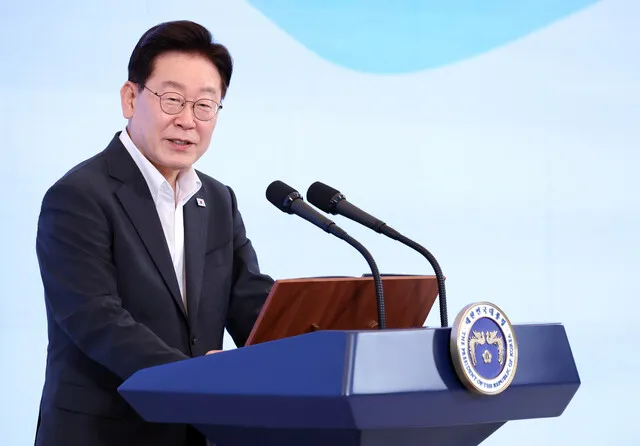
President Lee Jae-myung has ordered a six-ministry reshuffle. The Ministry of Justice, Finance, Land, Defense, SMEs and Startups, and Gender Equality and Family are all rotating. In Seoul political shorthand, this is a “renewal card” — a high-profile gesture meant to reset public perception before the next wave of bad news arrives.
The timing is telling. Lee’s approval rating sits at 38.9 percent, according to Real Meter, and 42 percent per Gallup — both post-inauguration lows. Negative assessments trail at 58.7 and 50 percent respectively. The government’s attempt to project competence is colliding with a presidency that is simultaneously under legal threat and struggling to answer for a housing market that has turned sharply against it.
What makes this reshuffle noteworthy is not the move itself — cabinet shuffles are routine in South Korean politics — but what it reveals about the narrow space Lee has left to maneuver.
The Real Estate Problem That Won’t Go Away
The most politically damaging issue is also the most familiar: South Korea’s property market. Rent and home prices have become a daily complaint in public life, and the government’s tax overhaul — specifically the differential treatment of one-household owners who are not residents — has only deepened anxiety among homeowners who were hoping the current administration would deliver relief. The new finance and land ministers, both career bureaucrats elevated from vice-minister ranks, signal policy continuity rather than disruption. That may stabilize administration delivery. It will not comfort voters who feel priced out of their own cities.
Lee has tried to personalise the housing question. He took to social media to declare that his government would crush speculative investment at any cost, and directed the construction of large-scale public housing purchases for lower-priced homes. The message is clear. The political risk is heavier still: every failure on housing now lands directly on the president. One ruling party insider admitted privately that the Blue House views a president who directly drives housing messaging as a liability.
The Prosecution Controversy That Undercuts the Reshuffle
The appointment of Kim Seung-won as justice minister nominee has added fuel to an already combustible situation. Kim was co-chair of an lawmakers’ group whose stated purpose was advancing the dismissal of criminal indictments against President Lee himself. The opposition People Power Party has seized on the appointment, calling the entire reshuffle a “court-dismissal cabinet.” Even some lawmakers within Lee’s own Democratic Party warn that naming someone tied to the indictment-dismissal effort is politically self-harming.
This is not simply a domestic row. The president of South Korea is currently the subject of an active criminal investigation. That creates a class of risk that most peer nations do not face: a sitting chief executive whose legal exposure could limit decision-making autonomy, invite judicial scrutiny of policy choices, and distract from governance at a time when regional tensions are escalating.
Why the World Is Watching Seoul Right Now
A weakening government in Seoul is not abstract. South Korea is the world’s second-largest semiconductor producer and the leading manufacturer of memory chips. It is a critical node in the technology decoupling strategy that the United States and its allies have been building to limit China’s access to advanced manufacturing capabilities. When the political center in Seoul trembles, supply chain planners in Tokyo, Washington, and Taipei take note.
The US-Korea alliance remains one of the most operational security partnerships in Asia, and the combined force structure on the Korean Peninsula is among the densest in the world. But alliance reliability depends on a predictable partner. Political instability in South Korea can slow coordination on export controls, complicate budgeting for shared defense infrastructure, and create openings for Beijing to exploit divisions between Seoul and Washington on trade and technology policy.
North Korea’s military posture adds urgency. The regime has accelerated weapons development and rhetoric in recent years. A president who is simultaneously managing a prosecution battle and unpopular domestic policies is less equipped to manage crises decisively. The calculus in Pyongyang will not go unnoticed.
Who Wins, Who Loses
The immediate winners in this reshuffle are the bureaucratic appointees who get promoted. Lee Hyung-il at finance and Hong Ji-seok at land bring continuity. The government wants to avoid the image of panic-driven personnel changes. Continuity is a valid choice when the policy direction is already set and only implementation needs steadying.
The losers are the voters who expected shock and awe. The reshuffle signals caution, not transformation. Younger voters — the demographic the government has courted with youth-oriented budget initiatives — may be alienated further by the appointment of Yong Hye-in, who has been targeted by the opposition for her history with proportional representation candidacies. The opposition has framed that record as privilege, a narrative that resonates with younger voters who feel the economy has moved against them.
The largest loser may be the president himself. By making the reshuffle widely perceived as aimed at managing his legal troubles rather than solving governance problems, Lee risks confirming the opposition’s narrative that the presidency is using institutional power for self-preservation.
What Happens Next
The first concrete test comes this week. The government plans to submit its tax overhaul package to the National Assembly on the third, with amendments expected during deliberation. How the assembly handles the housing provisions will determine whether the reshuffle looks like a reset or a deflection.
The prosecution question will not go away. If the indictment dispute advances, it will dominate the news cycle and consume political bandwidth just as the government needs to be delivering on the economy.
On the security front, the defense ministry appointment is the one that carries the strongest international signal. A coherent defense posture matters more to allies and adversaries alike than the exact composition of the family affairs portfolio. How quickly the new defense team convenes and communicates will be watched closely in Washington and Tokyo.
The Bottom Line
Lee’s cabinet reshuffle is a rational political move in an irrational political moment. Rearranging six ministries cannot fix a bad housing narrative or undo a prosecution controversy. But it does buy the government a few weeks of breathing room — time to show results on the economy, time to steady the alliance signal, and time to avoid looking entirely reactive.
The real question is whether South Korea’s political system can absorb another year of presidential instability without costs that spill beyond its borders. The world depends on Seoul for semiconductors, regional security, and a functioning democratic anchor in East Asia. Those dependencies make domestic political turbulence in South Korea a global concern, not just a Korean one.