South Korea's Constitutional Crisis Over a Supreme Court Seat
President Lee Jae-myung's office is threatening to reject a Supreme Court justice nomination after the Court bypassed consultation entirely. The clash over process could redefine executive-judicial relations in East Asia's fourth-largest economy.
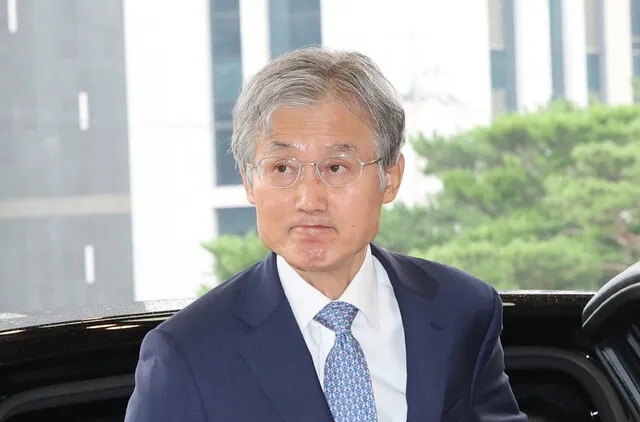
The seat that started a crisis
South Korea is staring at its most serious executive-judicial standoff in decades, and it began with a phone call that nobody wanted to take.
According to the Blue House, Noh Kyung-pil — the administrative chief of the Supreme Court — phoned the presidential office on June 18 to deliver unwelcome news: the Court was nominating Judge Son Bong-gi, a 22nd cohort Judicial Research Institute graduate and currently a division chief at the Daegu District Court, as the successor to former Justice Noh Tae-ak. Noh had already nominated two other candidates, Kim Sung-su of the Seoul High Court and Lee Heung-gu, for a separate vacancy. But Son Bong-gi’s nomination was different. It arrived as a written submission with no prior consultation.
The Blue House is treating that procedural gap not as bureaucratic friction but as a constitutional rupture.
What happened next
Chung Il-hwa, the presidential spokesperson, told OhmyNews TV on June 21 that the administration views the nomination process as unprecedented in South Korea’s post-1987 constitutional history. The core grievance: the president holds the formal appointment power under the Constitution, and the Court’s decision to bypass consultation entirely effectively treated that power as ceremonial.
Noh Kyung-pil pushed back, claiming he had sought a meeting with President Lee Jae-myung but was denied one, and that he had coordinated with the presidential office’s chief of staff before proceeding with the written nomination. Chung dismissed both claims as “completely untrue.” She acknowledged that general discussions about Supreme Court justice nominations had occurred, but insisted no consultation took place on the specific process or timing of Son Bong-gi’s nomination.
The White House is now seriously considering rejecting the nomination outright. That would be the first time a sitting South Korean president has formally refused a Supreme Court justice nominee — a move with no clear legal framework guiding what happens next.
Why this matters beyond Seoul
Supreme Court justices in South Korea serve six-year terms and are nominated by the Chief Justice and appointed by the president. The current Court has 14 seats. Each vacancy is politically charged because justices shape everything from labor rights to chaebol regulation to presidential immunity claims. The balance of the bench has shifted multiple times in recent years, and every appointment is a signal.
But this isn’t really about any single nominee. It’s about who gets to decide how nominees are selected — the Court or the Executive. The Chief Justice’s office appears to have operated on the assumption that the nomination process is internally driven and that the president’s role is largely formal. The Blue House is saying that assumption is unconstitutional.
For investors watching South Korea’s institutional stability, the stakes are tangible. The country’s corporate governance framework depends on predictable rules about power distribution. When the executive and judiciary can’t agree on basic procedures, it signals a system where outcomes become unpredictable — and unpredictability carries a risk premium.
The numbers behind the clash
South Korea’s economy is the world’s fourteenth-largest and East Asia’s fourth-largest. The Supreme Court handles roughly 3,000 cases per year, with significant authority over civil, criminal, and administrative appeals. A single justice can swing decisions on cases that affect billions in corporate litigation and regulatory enforcement.
The current vacancy rate is already elevated. With multiple justices approaching retirement age and the nomination process stalled, the Court risks operating below full capacity during a period when its docket is expanding — particularly in cases involving government policy and corporate regulation.
What happens next
If the Blue House rejects the nomination, the Court will likely nominate someone else. The president can reject again. There is no statutory limit on how many times this can happen, and no mediation mechanism. The last time a South Korean president declined a Supreme Court nominee was in 1994, during a politically volatile period that preceded major judicial reforms. That episode was resolved within weeks. This one could drag.
The Court Administration Office could attempt to restore communication through the presidential chief of staff, but the trust deficit is immediate and raw. Both sides are framing this as a matter of principle, which makes compromise harder.
There is also a secondary controversy brewing. Chung used her television appearance to advocate for youth housing on the Yongsan Park site — arguing that degraded portions of the park, previously contaminated by U.S. military use, could be developed for residential purposes without sacrificing green space. The administration is positioning this as a complementary priority, though it’s unclear whether housing development at Yongsan has any direct bearing on the judicial appointment dispute.
Who wins, who loses
If the president holds firm and the nomination is rejected, the Executive branch reasserts its constitutional authority — but at the cost of further estranging the judiciary. If the president accepts the nomination without consultation, the Executive appears weak and the Court’s internal nomination process becomes the de facto standard, reinforcing the very dynamic the Blue House is protesting.
For the public, the risk is institutional paralysis. Supreme Court vacancies linger, lower courts face heavier burdens, and the message goes out that procedural norms are negotiable rather than fixed.
In a political system where courts have historically been viewed as either subordinated to or independent from executive pressure, this confrontation will be read as a defining moment. How South Korea resolves it will shape the relationship between its branches of government for years.