South Korea's New Crime Agency Eats Its Own as Prosecutor Turns
The Major Crime Investigation Agency's first internal disciplinary probe targets a regional director who publicly opposed its leadership — revealing institutional fault lines in Park's flagship law enforcement overhaul.
The First Blow From Within
South Korea’s Major Crime Investigation Agency — known locally as Jungsu-cheong — has opened its first internal disciplinary probe, and the target is one of its own regional directors. Im Eun-jeong, who runs the Gwangju branch, faces forensic examination of her work computer after publicly opposing Kim Ji-yong, the agency’s founding director.
The move signals something global readers rarely see in stories about institutional reform: the moment when a newly created body turns its investigative teeth inward. It is also, perhaps inevitably, a story about power, loyalty, and what happens when you hand a prosecutor the means to punish dissent.
Who Are These People?
Kim Ji-yong, 58, became the agency’s inaugural director in July 2026 when President Yoon Suk Yeol’s administration launched the 13-year campaign against major crime. His appointment came with expectations of swift, decisive action on organized crime and corruption.
Im Eun-jeong, 52, commands the Gwangju regional office that covers southwestern South Korea. She is one of the few female prosecutors in the country’s senior ranks — and, apparently, one willing to speak publicly about problems she sees.
The conflict began on October 5, when Im took to Facebook. She accused Kim of failing to properly investigate sexual assault allegations against former prosecutor Jin Dong-gyun during his 2018 tenure as director of the Supreme Prosecutor’s Office’s Inspection Division. “A person who should learn from this mistake should not become the first director of the Major Crime Investigation Agency,” she wrote.
The statement went viral in legal circles. Kim did not respond publicly to Im’s claims directly, but his office signaled clearly enough: what Im called truth-telling, they called insubordination.
The Investigation That Started It All
On October 15, Heo Seong-hwan, the inspection official acting in a deputy role, visited Im at her Gwangju office. They spoke. Four days later, Im voluntarily submitted her work computer and related materials to the central agency in Seoul.
By October 16, forensics teams were examining her devices. The procedure is standard for internal disciplinary cases: extract data, review communications, determine whether the statements she made violated professional conduct rules or crossed into unauthorized disclosure of ongoing investigations.
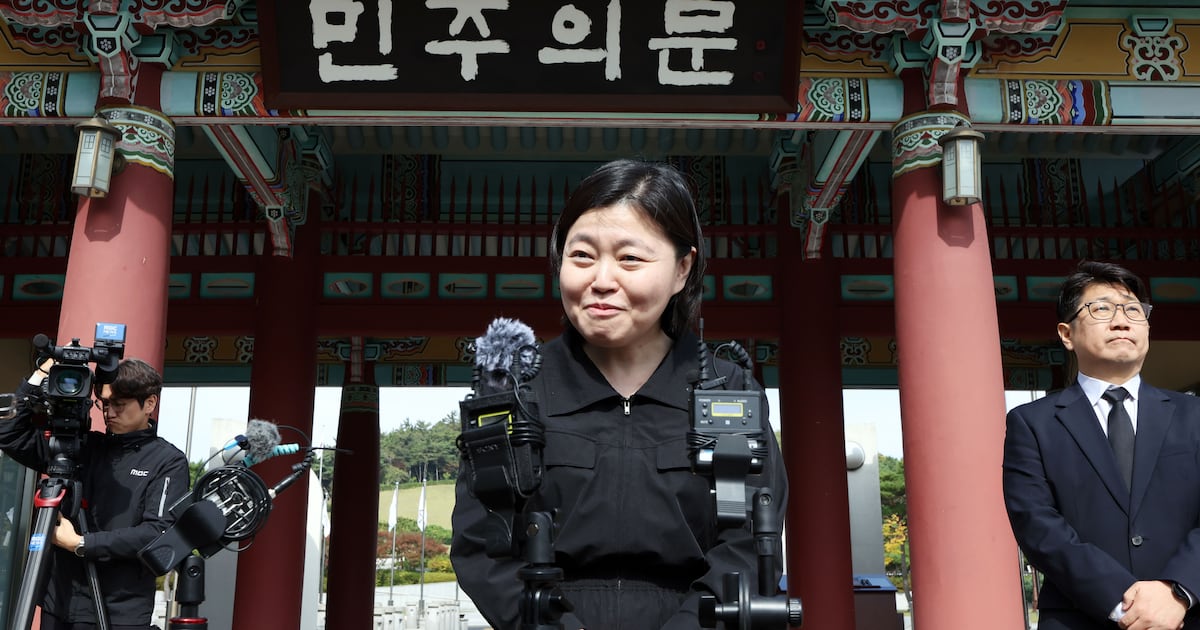
Im did not resist. When asked about the process at a press gathering outside the National May 18 Democratic Cemetery — where she had laid flowers earlier that morning — she spoke of duty and correction.
“When I say I serve my subordinates, the character for ‘serve’ means correcting mistakes when they occur,” she said. “If Director Kim does something wrong, I will not withhold sharp criticism or candid advice, as I have done until now.”
She also invoked precedent. “There are already court decisions on the boundaries of freedom of expression and the rights and duties of public officials and citizens,” she said. “As someone who helped shape such precedents during my years in the prosecution service, I expect this to be a meaningful case.”
The Mechanism Behind the Probe
The procedural pathway matters. Under current law, the Ministry of the Interior and Safety oversees disciplinary action against inspectors and prosecutors. If the internal probe concludes that Im deserves punishment, it can request the ministry to initiate proceedings. The ministry then refers the case to a disciplinary committee under the Prime Minister’s Office, which decides whether sanctions follow.
This is not a court trial. It is an administrative process, one that operates under different standards of evidence and due process. But for a regional director — someone with the authority to direct investigations across an entire province — the consequences can be career-ending.
Kim Ji-yong’s position is equally telling. In written responses to the National Assembly’s personnel hearings, he acknowledged that “public criticism by a subordinate investigative officer is inappropriate conduct that undermines organizational discipline.” But he also said he would “work together with Director Im to succeed” if she were appointed.
That contradiction — between institutional loyalty and professional duty — is exactly the kind of tension that makes this story matter beyond South Korea’s borders.
Why This Matters Beyond Korea
South Korea has long struggled with the relationship between prosecutors and political power. The 2016 impeachment of Park Geun-hye, the 2020 conviction of former President Lee Myung-bak, and the 2024 arrest of President Yoon himself all centered on prosecutorial authority. What makes the current moment distinct is that the machinery itself has changed.
The Major Crime Investigation Agency was created to consolidate anti-corruption and major crime work under a single body, separate from the traditional prosecution service. The idea was efficiency. The result, so far, appears to be a new center of power with new mechanisms for enforcing loyalty.
The Im case is not about Kim Ji-yong vs. Im Eun-jeong. It is about what happens when an institution designed to be independent becomes the thing that disciplines its own critics.
Global readers watching this story should note two things. First, Im did not flee. She did not go silent. She submitted her computer and spoke publicly about her expectations. Second, she invoked precedent — court decisions that shape the boundaries of speech and duty. That suggests she believes the system can hold her accountable without destroying her.
Whether that belief is justified remains to be seen.
What Comes Next
The forensics work is ongoing. If the internal probe concludes that Im violated professional conduct rules, the agency can request disciplinary proceedings. The ministry would then decide whether to refer the case to the Prime Minister’s Disciplinary Committee.
The timeline is uncertain. Disciplinary cases in Korea can take months, sometimes years. But the political implications are immediate: this is the first major internal conflict at an agency that has existed for less than a year.
For Kim Ji-yong, the stakes are personal. If Im’s claims about his handling of the Jin Dong-gyun case gain traction, they could undermine his credibility as the agency’s founding director. If they do not, she faces disciplinary action that could end her career.
Either way, the story is already out. The question now is whether the system can contain it.