South Korea's suspended sentences for forced repatriation reveal
A Seoul appeals court handed former security chief Chung Yi-yong and intelligence chief Seo Hun suspended sentences for forcibly returning North Korean fishermen, marking the most consequential reckoning yet with inter-Korean policy and constitutional duty. The verdict exposes how executive power has long eclipsed rights in Seoul's security calculus.
Why this matters outside Seoul
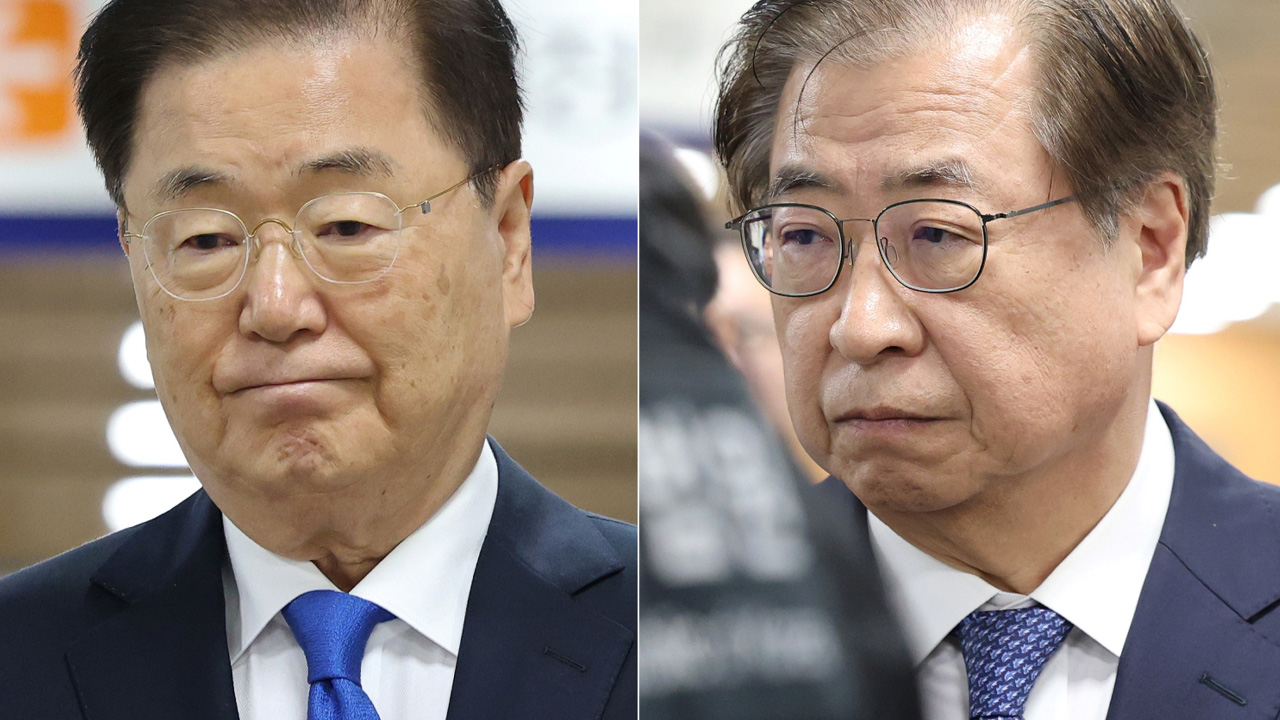
The November 21 ruling by the Seoul High Court on appeal in the forced repatriation case — where two North Korean fishermen, after expressing willingness to defect, were returned against their will to Pyongyang — delivers the most direct judicial signal yet that the Yoon administration’s approach to defectors crossed a constitutional line. Former National Security Chief Chung Yi-yong and former Intelligence Chief Seo Hun each received one year and six months in prison, suspended for three years. Former Unification Minister Kim Yeon-cheol was sentenced to one year suspended for two. Former presidential secretary Roh Young-min was acquitted, the court finding insufficient evidence he conspired to the abuse of authority or participated in the repatriation decision. For an international audience, the verdict is worth watching because it touches a live nerve in South Korea’s democratic self-image: how long can the state treat North Koreans arriving on its shores as subjects of a security priority rather than citizens owed constitutional protection?
What the court actually said
The judgment is notable for its constitutional reasoning, not just its punishment. The court found that despite legal ambiguities requiring careful review, the previous administration proceeded with the repatriation within five days. More significantly, it held that the state failed its duty to protect North Korean residents deemed equivalent to South Korean citizens under the constitution. This language matters. The Yoon government had framed the operation as routine law enforcement — a decision made by competent authorities on a narrow reading of jurisdictional rules. The appeals court rejected that framing. By emphasizing that officials acted without legal basis and with inadequate deliberation, the ruling elevates defector rights from bureaucratic discretion to constitutional obligation. The difference between the two is not academic; it reshapes what future administrations must justify.
The facts behind the case
In November 2019, two North Korean fishermen were intercepted in South Korean waters. They declared their intention to defect. Rather than processing their asylum claims through standard channels, senior officials directed subordinate personnel to arrange their forced return to North Korea. The indictment charged abuse of authority and ordering subordinates to perform duties not required by law. The first-instance court had suspended shorter sentences — ten months for Chung and Seo, six months for Kim and Roh. The appeals court increased the penalties slightly but maintained the suspended format. Suspended sentences are not trivial in South Korean law. They carry reputational consequences, trigger conflict-of-interest restrictions in future public office, and create a formal record of wrongdoing that opposition parties and civil society can cite. They also leave open the possibility of actual imprisonment if new violations surface.
Who wins, who loses
For Chung Yi-yong and Seo Hun, the verdict is a professional restraint rather than a career end. Suspended sentences allow them to avoid immediate custody while attaching a stain to their records. Their political future remains constrained, particularly if the upcoming 2027 administrative reforms incorporate stricter oversight of intelligence and security agencies. For Kim Yeon-cheol, the one-year suspended term is the most politically significant outcome. As former Unification Minister, his sentencing signals that the executive branch’s inter-Korean policy apparatus is now subject to judicial review rather than immune to it. For Roh Young-min, acquittal preserves his reputation but raises questions about evidentiary standards for accessory liability. The court’s finding that his involvement was too remote to constitute conspiracy suggests prosecutors overreached in charging him alongside the principal actors.
What comes next
The ruling will reverberate through three domains. First, the Ministry of Unification must revise its operational guidelines for handling North Korean defectors arriving in South Korea. The court’s emphasis on constitutional duty implies that future cases require documented legal review before any repatriation decision. Second, the opposition and civil society groups are likely to cite the verdict in debates over Yoon’s 2027 reform agenda, particularly proposals to strengthen oversight of the National Intelligence Service. Third, Pyongyang’s treatment of returned defectors will attract renewed scrutiny. The two fishermen faced an uncertain fate after repatriation; the verdict implies South Korea acknowledges some responsibility for outcomes following forced returns.
The broader constitutional question
At stake is not merely whether two officials should have been imprisoned, but what the state owes to North Koreans who arrive on South Korean soil. The constitution protects all persons under South Korean jurisdiction, and the court treated that protection as binding rather than discretionary. That distinction matters for inter-Korean policy. If defectors are entitled to constitutional safeguards, then administrative actions against them cannot be justified by blanket security arguments. The verdict forces every future administration to articulate a legal basis before ordering repatriation, and to document that basis for judicial review. It is a small but consequential shift from executive discretion to legal accountability.
Why outside coverage will be sparse
Most international outlets will treat this as a domestic legal matter with limited relevance beyond Seoul. That is a mistake. The case touches the intersection of human rights, constitutional law, and inter-Korean relations — themes that will intensify as South Korea debates whether to strengthen or relax its stance on defectors amid regional geopolitical shifts. The suspended sentences also reflect a broader pattern in South Korean jurisprudence: courts often punish officials symbolically through record-staining verdicts rather than actual imprisonment, preserving institutional stability while registering disapproval. Understanding that pattern is essential to reading what the verdict does and does not change.