SpaceX Starship Flight 15 Shows Where Full Reusability Actually Stands
Starship Flight 15 reached orbit, kept a second stage aloft for 22 hours, then lost the first stage in the Gulf of Mexico. The Korean media read it as proof that full reusability is impossibly hard. The data tell a different story.
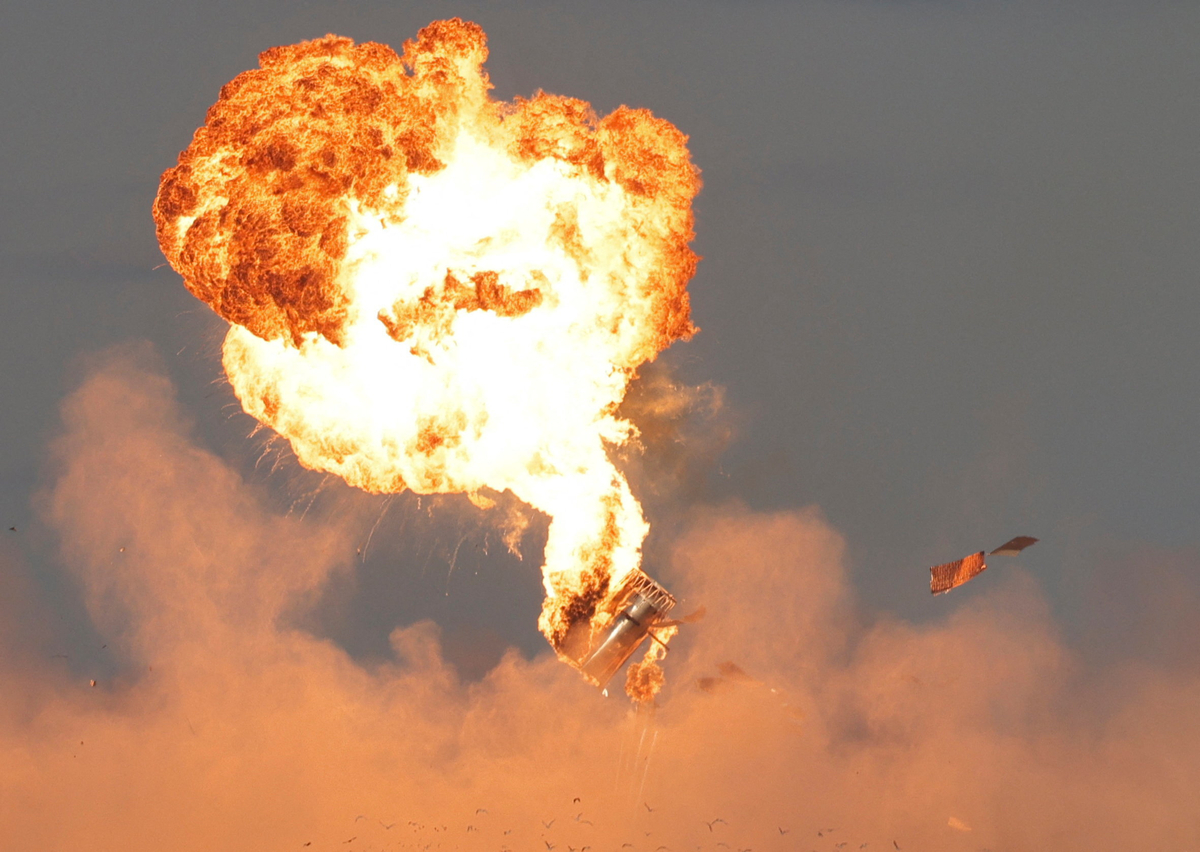
The Booster Did Not Land. Almost Everything Else Worked.
On December 13 local time, SpaceX launched its fifteenth Starship test from Starbase in Texas. The rocket cleared the tower, reached orbit, and then ran into a snag most people are still misreading. The lower stage, Super Heavy, came back after six minutes of powered flight but could not perform the flip maneuver required for the vertical catch. SpaceX called off the attempt at the last possible moment and let the booster sink into the Gulf of Mexico, where it broke apart on impact. It looked terrible on camera. It does not mean the vehicle failed.
The upper stage, the Ship, told a different story. It injected into orbit, spent twenty-two hours circling Earth, and only then began its own descent. That duration is extraordinary for this phase of the program. It meant the thermal protection held, the avionics survived repeated attitude updates, and the guidance system stayed on target long enough to plan an intentional landing run rather than accepting a ballistic reentry. Twenty-two hours is what a working vehicle looks like before it tries to come home.
Every test since the first static fire has confirmed the same pattern: the vehicle behaves as designed until someone asks it to do something new. This flight asked the first stage to execute a precision landing on mobile launch towers. The hardware could not finish that sequence cleanly. The second stage did not get asked to do anything the prior flights did not already prove. Its job was simply to stay alive and point at the right coordinates while the world watched.
Why the Gulf Splashdown Looks Worse Than It Is
When a booster hits the water instead of staying standing on land, the headline writes itself. A multi-billion-dollar vehicle explodes offshore, flames reflect off the sea, and nobody gets to see it walk away. That image travels faster than context.
But the recovery was cancelled at low altitude after operators recognized the kinematics would not support a safe catch. There is no mystery about what happened inside SpaceX’s control room. They ran the numbers, saw the trajectory drift outside the acceptable window, and chose to abort rather than gamble with the stage or endanger personnel and equipment below. That decision costs the current flight a dramatic ending. It saves years of future flights by avoiding a precedent where bad physics becomes acceptable practice.
A splashdown is failure in a press photo. In engineering terms, it is disciplined abort execution at the final step of a procedure that normally ends on steel. SpaceX has practiced this kind of call before. This time the cost of the mistake became visible because the media captured the moment of impact. The underlying behavior — recognize a problem early, stop before damage spreads — is exactly how you win a development program that is flying prototypes every few weeks.
Two Stages Up, One Stage Down, Zero Stages Recovered — But Not Equal To Zero
Before this flight, SpaceX had brought the first stage back three times in total. Each of those cases reused that engine section on a later test. The Ship had never returned. No vehicle in human spaceflight history has flown both stages and then retrieved both stages on a single mission. That distinction matters because it defines the line between reusable and operationally interesting.
Flight 15 crossed both thresholds in sequence. Orbit insertion succeeded. Extended coast in orbit succeeded. The second stage then initiated a controlled atmospheric entry targeting the launch site — still in progress as I write — while the first stage went into the water at speed. Even without capturing Super Heavy this round, the combined profile proved that a dual-stage stack can complete an orbital mission, split apart predictably, and each element follow independent trajectories toward different recovery zones. The architecture is sound. The individual landing sequences still need polishing.
This is normal developmental velocity. Not normal public perception. Public perception treats each flight as a binary success or failure event measured against the ideal of perfect recovery on day one. That frame distorts how the program actually progresses. Each flight answers one or two specific questions and leaves others open. This flight answered: can the Ship survive a long-duration thermal cycle and target a soft landing? Preliminary telemetry says yes. Can the Super Heavy execute a powered retrofire and precise lateral offset after separation? Still no.
How Asian Media Read the Same Footage Differently
Korean outlets covered the landing loss using language that treats full reusability as an almost unreachable target. The narrative emphasizes impossibility and frames SpaceX’s ambition as overly aggressive. That tone comes from a place where heavy-lift vehicles remain government-run and recovery is rarely attempted at all. When your baseline is capsules that fall into the sea and spend decades on shelves, a booster making it across the sky and then hitting the water reads like a breakdown rather than a routine learning cycle.
The difference is not national sentiment. It is institutional experience. SpaceX measures progress by counting iterations per year. Most aerospace ecosystems measure progress by comparing each flight against a gold standard that has not been built yet. Those two clocks run at different speeds.
Reading the Korean framing literally leads to the wrong conclusion about Starship. Reading it sociologically explains why the coverage exists. Markets outside the United States that have never launched an affordable heavy-lift system watch a private company claim to solve a problem governments have deferred for thirty years, fail visibly in one component, and assume the whole project is drifting toward mythic status. That assumption protects domestic programs from being exposed as slow. It also ignores how quickly the iteration rate can change outcomes.
What the Numbers Say About Cost Per Launch
Recoverable hardware only lowers cost per flight if the recovered hardware flies again within a timeframe that amortizes refurbishment below the cost of building new. Three successful Super Heavy catches demonstrate the capture sequence. Three reflights demonstrate the maintenance pipeline. One additional flight lost to the Gulf demonstrates that edge cases exist even after multiple successes. The trend line points downward. One data point does not invert it.
The second-stage recovery has no established record. If it lands intact, the total number of successful stage retrievals rises from three to four in a single season. That shift alone warrants attention, because no program has done it before. The cost argument turns on whether the second stage spends less time in orbit than the first stage spends on the pad between flights. Twenty-two hours is short. Forty-eight hours of ground processing is long. Sixty-four hours is manageable. Every hour shaved from turnaround compounds across a fleet of identical vehicles.
If SpaceX closes that gap, even partially, the math behind Mars class transportation changes overnight. Starship was never going to be cheap because it is big. It will be cheap because it flies often, lands softly, and launches again before rust sets in. Today’s headline only proves one variable remained unbalanced. The other variables are moving forward in parallel.
What Competitors and Customers Should Take From This
China’s state-space program tracks Starship developments closely and has accelerated its own heavy-lift efforts as a result. Commercial launch providers in Europe and Japan are recalibrating their roadmaps around a vehicle that could undercut every existing price list once regular operations begin. NASA’s Artemis team is watching every thermal cycle, every guidance update, and every landing attempt because the Moon lander depends on a system that must fly reliably and come home safely on demand.
None of those observers should be startled by a partial recovery. They should be startled by a vehicle that stops learning because one test looked bad. This flight did neither. It provided high-value data on second-stage survivability, demonstrated correct abort sequencing under time pressure, and set up the next iteration with a clearer boundary condition around first-stage flip timing.
The most durable insight from Flight 15 is that the hardest part of full reusability is not putting both stages in orbit. Both stages survived that. The hardest part is catching them in sequence, maintaining vehicle health across months of storage, and repeating the process often enough to drive marginal cost toward zero. SpaceX passed the first gate. It stumbled at the second. The program continues past that stumble.