SpaceX Recovered a Starship From the Ocean. Its Economics Matter More Than The Photo
SpaceX pulled an intact Starship upper stage out of the Indian Ocean after 24 days afloat — a first. The image is striking; the economics are sharper.
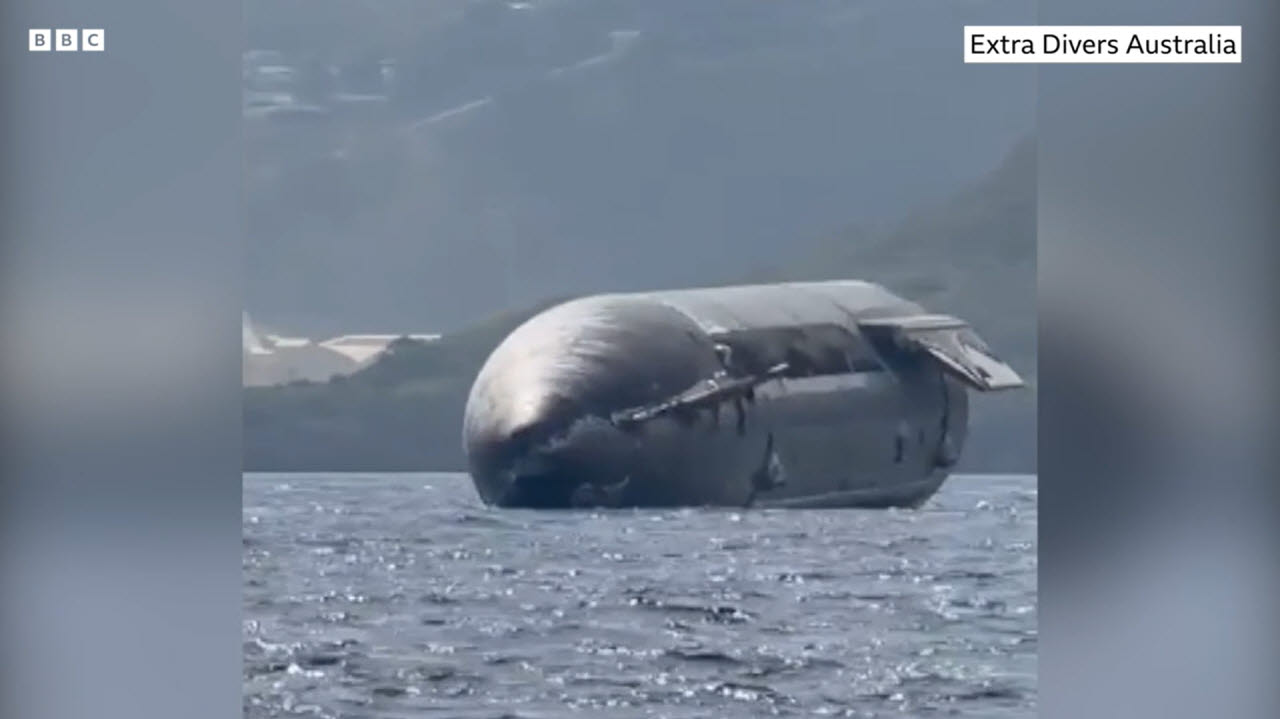
A Rocket Floating Upright — For Once
A 52-meter Starship upper stage sat upright on the surface of the Indian Ocean, 150 kilometers off Christmas Island. It had been drifting there for 24 days. This was Ship 40, the vehicle that flew SpaceX’s 13th integrated test of its next-generation launch system. It launched from Starbase in Texas on April 24, delivered 20 Starlink satellites to orbit, reignited its Raptor engines in space, survived reentry, and landed gently enough in the water to stay afloat rather than capsize or sink — the way earlier iterations did.
On May 19, a recovery crew towed it to shallower waters near the island. Engineers will now inspect its heat shield tiles, engine nozzles, and primary structure. Elon Musk had posted on X on May 7 that recovery looked unlikely given worsening sea conditions. He was wrong. The recovery happened anyway.
This sounds like a minor moment — a broken rocket, found intact, towed to an island nobody maps prominently. But it is one of the few data points that actually matters for the economics of orbital launch right now.
Why This Recovery Matters More Than the Image
The photograph is compelling. Residents of Christmas Island watched twin tugboats drag a black cylindrical rocket past their horizon. Photographers captured it from the air. The three large engine nozzles and three smaller vernier nozzles were still attached. Panels were scuffed but the structure held.
What the image does not show is the calculation underneath it.
SpaceX has spent roughly eight years building Starship with the assumption that the upper stage would be expendable — either by design, or because recovery after a hot landing or uncontrolled splashdown was too risky. Every prior Starship ocean landing ended with the vehicle tipping over, taking on water, or submerging entirely. An intact recovery was not in the plan. It turned out to be possible anyway, and that shifts the entire cost equation for the vehicle.
An expendable upper stage destroys a core selling point of Starship: full reusability. If the upper stage can survive reentry long enough to float and then be towed back, its turnaround time and refurbishment cost move from unknown to measurable. That changes how SpaceX prices each flight, and how competitors price against it.
The Real Test Is Not Whether They Can Float It, But Whether They Can Fly It Again
SpaceX has repeatedly demonstrated first-stage booster recovery since 2015. Those boosters splash down, are caught or towed, flown back to Cape Canaveral or Vandenberg, inspected, and relaunched — sometimes within weeks. The economics of that model depend on rapid cycle times.
The Starship upper stage faces a harder problem. It encounters far higher thermal loads during reentry than a first stage, because it is traveling at orbital velocity when it begins its descent. Its heat shield is ceramic tile, not the ablative coating used on crew capsules. Tiles can be reused if they do not crack or delaminate during reentry and splashdown. But they degrade. Inspecting every tile on a 52-meter vehicle is not a trivial task.
SpaceX says it will analyze the ship in calm waters near Christmas Island before deciding whether to tow it all the way back to Starbase in Texas. The journey would take more than a year at current speeds, according to the company. That timeline is already a sign that full turnaround is not solved. The company may instead opt for regional inspection and eventual scrapping, which would bring the upper stage closer to expendable status than its marketing suggests.
Neither outcome is a failure. Both are data. But the gap between them is where the economics live.
What This Means for Launch Costs — If You Read Between the Numbers
A fully reusable two-stage Starship is supposed to drive launch costs below one hundred dollars per kilogram to low Earth orbit. That target assumes both stages can be recovered and reflown repeatedly. If only the booster is recovered and the upper stage is written off after one flight, the cost per kilogram climbs sharply. Even partial reuse of the upper stage — one or two flights before retirement — improves the math considerably compared with total expenditure.
The fact that SpaceX could recover this stage at all suggests the reentry trajectory control was precise enough to preserve the thermal protection system. That is the opposite of a lucky splashdown. It points toward flight heritage for future missions, including crewed lunar landings under NASA’s Artemis program, which depend on the upper stage being returned to flight status after every trip to cis-lunar space.
The Asia-Pacific Launch Zone Is Now Part of the Equation
This recovery also highlights a shift in where launch hardware ends up. SpaceX has increasingly used trajectories that drop spent stages in the Indian Ocean or southern Pacific rather than the Atlantic, to avoid populated areas and simplify range safety. Christmas Island is Australian territory, administered from Perth, and roughly 1,500 kilometers west of the Western Australian coast. It is remote, sparsely populated, and logistically accessible from Australia’s existing maritime infrastructure.
The island became a local spectacle. Tour operators launched boats to get closer. People gathered on cliff viewpoints. A travel association official said the rocket dominated social media feeds. This is not the first time debris has fallen near Australian waters. In October 2024, suspected Chinese rocket debris was found near the mining town of Newman in Western Australia. This time, the object was intact, and the owner was willing to retrieve it.
That willingness is itself a change. In previous eras, recovered hardware was left in the sea or treated as a hazard. SpaceX now treats its hardware as an asset worth towing across ocean swells. The behavior signals a transition from testing to operations, even if the operational timeline is longer than ideal.
Who Wins, Who Loses, and What Comes Next
SpaceX wins by proving that an upper stage can survive reentry and be recovered intact — a milestone no other private company has reached, and only the Soviet and American programs achieved in limited forms decades ago. NASA wins because Starship’s operational viability moves closer to reality. Australian authorities win by showing they can coordinate with a foreign commercial space actor on salvage operations inside their maritime zone.
Competitors lose credibility by comparison. No other launcher can claim an upper-stage recovery in this generation. Rocket Lab’s Neutron, Blue Origin’s New Glenn, and China’s Long March 9 variants are still years from comparable operations. Even NASA’s own SLS spends its core stage on each flight. The gap between SpaceX and everyone else is widening on reusability, not narrowing.
What happens next depends on whether SpaceX can turn this recovery into a repeatable process. The company must decide how to transport the vehicle, how many flights the heat shield can sustain, and whether the turnaround time justifies the logistical cost. The decision will shape Starship’s unit economics more than any slogan ever could.
The image of a rocket floating upright in an ocean off a tiny Australian island is striking. But the real story is simpler and less poetic: SpaceX is learning how to save its most expensive hardware, and that changes the price of getting to orbit.