Starship Double Catch: The Economics of Full Rocket Reuse
SpaceX's Flight 15 attempt to catch both Starship stages isn't just a stunt—it's a leap toward orbital economics that could redefine launch markets and trigger a global race.
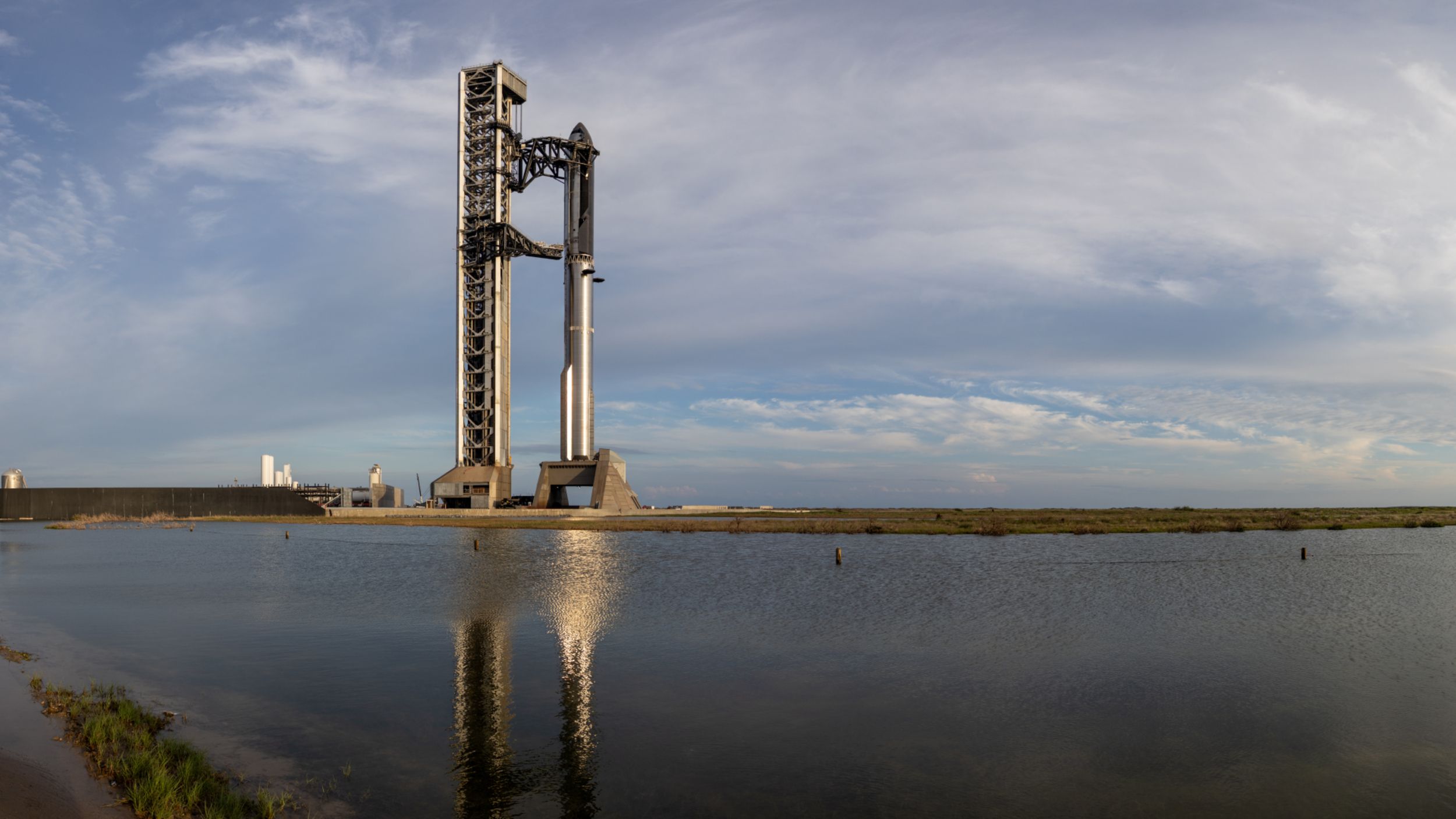
The Chopstick That Could Redefine Launch Pricing
SpaceX is lining up two towering aluminum structures at Starbase in South Texas this Friday—not just to launch the world’s most powerful rocket, but to try catching it twice.
Flight 15 of the Starship program attempts something the space industry has never done before: recover both the 120-meter Super Heavy booster and the Ship upper stage using the same mechanical arms that held them aloft during stacking. If successful, it would mark the first full recovery of an orbital rocket system, a milestone that separates theoretical reusability from operational reality.
The mission launches at 5:45 p.m. EDT fromLC‑39A’s newer twin‑tower setup, carrying 26 Starlink V3 satellites into low Earth orbit. Twenty‑two hours later, the upper stage is scheduled to return—descending through the atmosphere, firing its Raptor engines, and dropping into the embrace of the “chopsticks” for a second time.
For casual observers, this is yet another SpaceX spectacular. For anyone watching the economics of getting mass into orbit, it is the moment when the company may finally demonstrate that a fully reusable heavy‑lift vehicle is commercially viable.
Why the Second Catch Changes Everything
Falcon 9 landings have proven that the first stage of a medium‑lift rocket can be recovered and reflown dozens of times. That alone drove launch costs down to roughly $2,000–$3,000 per kilogram to low Earth orbit. Starship promises a different order of magnitude.
Super Heavy’s twelve Raptor engines are designed for full‑throttle shutdown, boost‑back, entry burn, and landing—all within minutes after liftoff. Catching the booster rather than letting it splash down removes the need for marine recovery ships, refurbishment of salt‑water‑soaked hardware, and the logistical overhead that limits turnaround rates.
The upper‑stage catch, however, is the harder half of the problem. A vessel that has orbited the planet at 17,500 mph, endured thermal loads above 1,600 °C, and then performed a powered descent from space presents a far more demanding targeting and control challenge than a first‑stage return.
Success on Flight 15 would show that both stages can be brought back in one piece, inspected, and refitted for future flights. It would also imply that the entire stack—the core hardware responsible for most of the vehicle’s mass and cost—can be treated as a single reusable unit.
That shift moves the cost equation from “reusable first stage, expendable upper stage” toward “fully reusable launch system.” The math behind Starship’s target price of under $10 million per flight hinges on that assumption.
The Hidden Economics of Rapid Turnaround
Even more important than the raw cost figure is what rapid reflight enables. Current Falcon 9 operations achieve a cadence of roughly one launch every few days. Starship’s design envisions a much tighter loop: land the booster, flip the tower, catch the upper stage, remove the hardware, inspect and regenerate engines, and reload within a day or two.
Such a rhythm turns a launch site into something closer to an airport ramp than a dedicated range. It multiplies the number of missions per year per pad, spreads fixed infrastructure costs over more flights, and drives down the marginal cost of each additional kilogram launched.
For a company like SpaceX, whose primary revenue driver is expanding its own Starlink constellation, faster turnaround directly increases payload capacity and subscription growth. For customers ranging from national‑security payloads to lunar landers, it means access to heavy‑lift capacity on demand rather than on a scarce schedule.
Global Reaction: Not Just Amusement, Urgency
When SpaceX announces a test date, engineers around the world pause their work. This flight is no exception.
China’s commercial rocket scene—marked by entities such as LandSpace, iSpace, and Galactic Energy—is already developing methalox engines and reusable first stages. But none have approached dual‑stage recovery, let alone chopstick catches. State‑backed programs like the Long March 9 heavy‑lift vehicle are still in early design phases, and their schedules remain opaque.
Europe is feeling similar pressure. Airbus, ArianeGroup, and ESA have talked for years about next‑generation reusable boosters, including the Prométhée engine and the ArianeNext study. Funding streams are fragmented, and regulatory approval for frequent testing remains slow. A successful Starship double catch raises the question: why hasn’t a comparable demonstration been attempted?
Defense analysts in Washington and Brussels are privately noting the strategic dimension. A U.S. provider capable of launching tens of tons to orbit repeatedly and unpredictably transforms force‑projection calculations. It enables rapid replacement of damaged satellites, fast delivery of modular space‑station components, and scalable logistics for cislunar military assets.
China’s recent surge in launch activity—with more orbital missions in 2025 than any prior year—reflects an awareness that launch density matters. But matching Starship’s proposed cadence and cost structure would require a step change in vehicle design, manufacturing philosophy, and range safety protocols.
What Happens Next Depends on Two Days
If Flight 15 succeeds, the immediate story will be the celebration of human engineering prowess. Over the following months, SpaceX will likely attempt multiple reflights of the recovered hardware, tightening turnaround times with each iteration.
Failed attempts tell a different story. A lost booster, a burned‑out upper stage, or a chopstick miss would delay the full‑reuse timeline by quarters. Hardware damage during high‑speed contact, thermal‑protection tile loss, or guidance errors could expose weaknesses in the system’s robustness.
Most observers expect SpaceX to learn incrementally. Even if the exact “catch and reuse” goal slips by a flight or two, each attempt refines sensor calibration, trajectory shaping, and structural dynamics. The company has shown a pattern of embracing rapid failure as data acquisition.
What does not change is the competitive landscape. China’s launch cadence is accelerating. India’s Agnikul and Skyroot are pushing small‑launch innovations. New entrants continue to emerge. But Starship’s scale remains unmatched—if it ever flies.
The Bigger Picture: From Launch Service to Space Economy
Beyond the press releases and rocket catches lies a question of industrial strategy. The ability to move large masses between Earth’s surface and orbit cheaply and frequently unlocks entirely new capabilities.
It allows assembly of large spacecraft in orbit rather than launching monolithic stacks. It makes in‑space servicing, refueling, and construction economically plausible. It opens the door to crewed missions to Mars that depend on massive cargo shipments ahead of human arrival.
All of those futures rest on the assumption that a rocket can fly, return, and fly again without expensive rebuilds. Flight 15 tests whether that assumption holds for a vehicle three times taller than a Saturn V and ten times heavier than a Falcon 9.
Even if the double catch doesn’t happen on Friday, the attempt signals where the industry is heading. Reusability was once the dream of science fiction writers and aerospace engineers. Now it is being tested with steel, aluminum, and liquid methane—catch or fall, the rocket will either become a tool we use daily or a monument to ambition.
The chopsticks are waiting.