Starship's First Orbit Success Reshapes Commercial and Lunar Plans
SpaceX Starship achieves its maiden Earth orbit insertion while deploying 26 high‑capacity V3 satellites. The milestone accelerates Starlink’s revenue outlook and bolsters confidence in NASA’s Artemis lunar landing timeline.
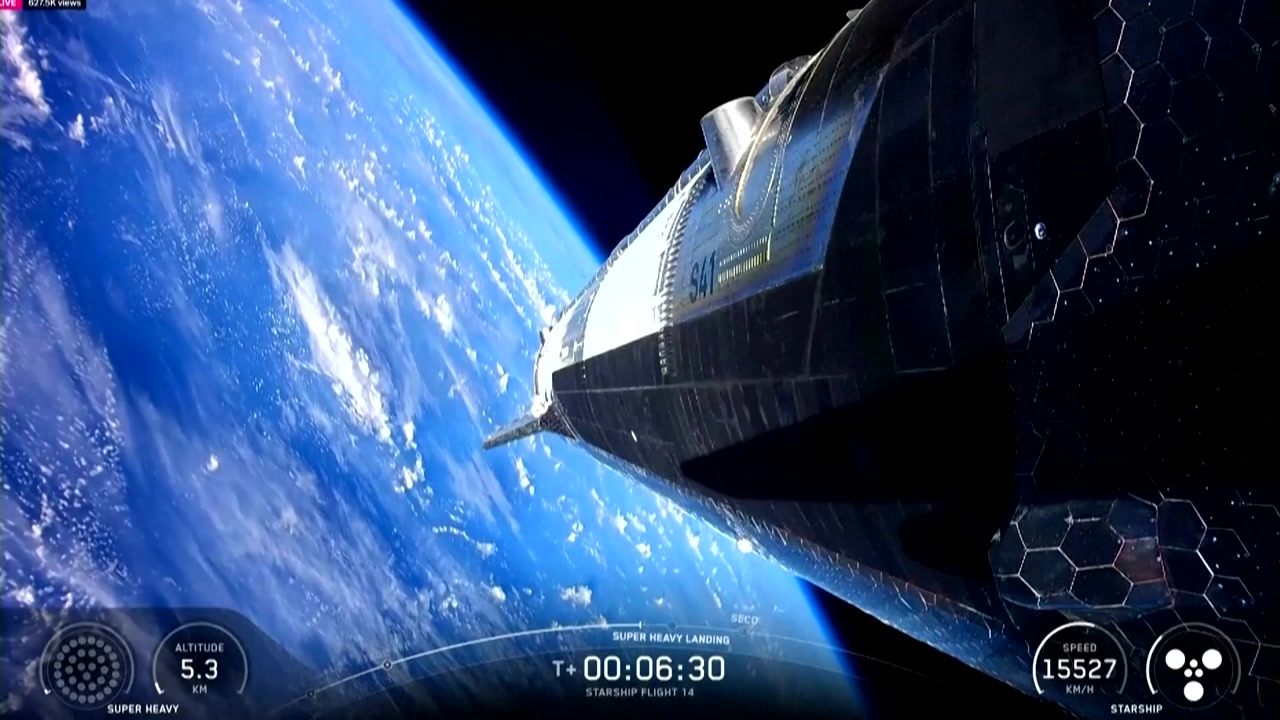
Starship’s Orbital Milestone: A Commercial and Scientific Turning Point
SpaceX’s Starship has reached a pivotal moment in its development, successfully entering Earth orbit for the first time while deploying 26 next‑generation Starlink V3 satellites. The flight—launched on September 28 from Star Base in Texas—marks the transition of the super‑heavy lift vehicle from experimental demonstrator to operational system, with direct consequences for both the commercial satellite market and NASA’s Artemis lunar program.
The ascent was not without tension. One of Starship’s six Raptor engines shut down earlier than planned, a anomaly that could have grounded the mission. Engineers quickly analyzed telemetry and concluded that core engines could be reignited for orbit insertion, opting to press on. The decision paid off: Starship reached orbit and deployed its payload, confirming that the spacecraft can absorb component failures and still complete its primary objective.
The Engine‑Out Scenario and SpaceX’s Risk Tolerance
The premature shutdown of a single Raptor underscores the iterative, high‑risk philosophy that has defined SpaceX’s launch cadence. Unlike traditional aerospace programs that demand near‑perfect reliability before flight, SpaceX treats each launch as a learning opportunity, capturing real‑time data to refine designs. In this case, the anomaly provided immediate feedback on engine‑out performance—a critical capability for a vehicle relying on multiple engines for redundancy.
However, the incident also raises questions about long‑term engine cluster reliability. Six Raptor engines offer redundancy, but repeated anomalies could point to manufacturing or design flaws. Post‑flight analysis will likely examine the failed engine’s root cause, and future flights may incorporate design tweaks to improve consistency. Until then, each successful recovery reinforces the notion that Starship’s architecture can tolerate setbacks without mission failure.
V3 Satellites: A Tenfold Leap in Communication Capacity
The 26 deployed Starlink V3 satellites represent a significant generational upgrade. According to Korean and international reports, V3 satellites carry more than ten times the communication capacity of the earlier V2 models. This jump in throughput directly translates to higher‑speed, lower‑latency internet service for subscribers, strengthening Starlink’s competitive position against rivals like Amazon’s Project Kuiper and oneWeb.
For SpaceX, the V3 constellation is a revenue engine. Greater capacity per satellite means SpaceX can serve more customers with fewer launches, reducing per‑unit costs and improving margins. It also enables aggressive expansion into underserved markets—rural communities, maritime routes, and disaster‑response zones—where reliable broadband remains scarce. The successful deployment of 26 V3 satellites in a single mission demonstrates that Starship can lift large numbers of high‑capacity satellites efficiently, a capability that could redefine the economics of global internet.
Korean Space Community Observes the Milestone
In South Korea, where domestic launch capabilities are still maturing, Starship’s orbital success has drawn attention from space experts. Park Chang‑su, head of the next‑generation launch vehicle development division at the Korea Aerospace Research Institute (KARI), highlighted the operational shift signaled by the flight.
“Starlink V3 is mounted and launched into orbit,” Park noted, emphasizing that the vehicle has moved into a phase where it can perform practical missions rather than pure tests. “This proves that we can mount advanced payloads and deploy them efficiently in orbit,” he added, reflecting a broader interest in learning from SpaceX’s rapid‑iteration model.
Korea’s own space ambitions—including plans for lunar landers and medium‑lift launchers—stand to benefit from the lowering cost of access to space that reusable rockets enable. As Starship’s launch frequency increases, the economics of deploying smallsat constellations improve, potentially giving countries like South Korea a more affordable path to expand their space assets.
Implications for NASA’s Artemis Timeline
For NASA, Starship’s first successful orbit insertion is a timely validation of the vehicle’s role as the Human Landing System (HLS) for Artemis III. The agency has committed billions to Starship’s development, betting that the spacecraft will ferry astronauts from lunar orbit to the surface. Demonstrating reliable orbit insertion and payload deployment is a critical step toward certifying Starship for human flight.
NASA officials have expressed cautious optimism. While the orbit success boosts confidence, several hurdles remain: in‑orbit refueling demonstrations, life‑support system testing, and repeated reliable launches. The upcoming Starlink deployment mission is one link in a chain of test flights that will ultimately determine whether Starship is ready for crewed missions. NASA’s target for Artemis III—now slated for 2026—depends on maintaining a steady cadence of refinements.
The dual‑use nature of Starship—serving both commercial payloads and government exploration—highlights the growing partnership between private enterprise and public agencies. SpaceX’s ability to generate revenue from satellite deployments helps offset the costs of developing the HLS, creating a symbiotic relationship that benefits both sides.
Commercial Impact: Redefining Satellite Internet Economics
The V3 satellites’ tenfold capacity increase is not just a technical upgrade; it reshapes the business case for satellite internet. Higher throughput per satellite allows SpaceX to offer premium service tiers, attract enterprise customers, and justify higher pricing in markets where alternatives are limited. With 26 V3 satellites already in orbit, Starlink’s global coverage will accelerate, potentially drawing millions of new subscribers.
Competitors will feel the pressure. Amazon’s Project Kuiper, still in early development, faces a steep climb to match Starlink’s constellation size and generation. OneWeb’s smaller, lower‑orbit network must differentiate on latency or regional focus. SpaceX’s launch cost advantage, if Starship proves reusable, could make it nearly impossible for rivals to compete on price alone.
The successful deployment also showcases Starship’s payload capacity. Future missions could lift dozens of V3 satellites per flight, further driving down launch costs and enabling more frequent upgrades to the constellation. This scalability is a key differentiator in an increasingly crowded space‑internet market.
What’s Next for Starship?
With orbit insertion achieved, Starship’s immediate goals shift to refining in‑orbit operations. Upcoming flights will test satellite deployment sequences, engine re‑ignition patterns, and eventually orbital refueling—a prerequisite for lunar missions. The 26 V3 satellites are now contributing to Starlink’s network, providing real‑world data on performance and reliability.
SpaceX is likely to increase launch frequency, demonstrating the reusability that makes the program economically viable. Each flight adds to the vehicle’s flight heritage, building the confidence needed for crewed missions. The broader impact extends beyond commercial internet: Starship’s capability to deliver large payloads to orbit is a foundation for orbital habitats, space‑based manufacturing, and eventual missions to Mars.
While the road to crewed lunar landings is long, this milestone proves that Starship can survive early‑stage anomalies and still achieve its objectives. For the commercial space sector, it reinforces the notion that rapid iteration and risk tolerance can accelerate progress. For NASA, it keeps the Artemis timeline on track. And for observers worldwide, it offers a glimpse of a future where heavy‑lift rockets become routine workhorses, opening the solar system to both business and exploration.