Starship Stage Catch Changes Orbital Refueling Economics
SpaceX's first successful upper-stage capture marks the critical step toward fully reusable heavy-lift. But the real prize—orbital refueling—remains untested.
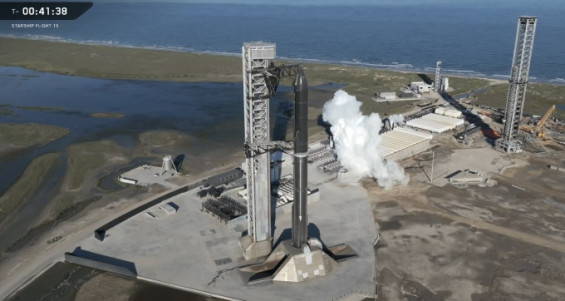
The Catch That Changes Everything (Almost)
On November 14, 2025, a steel tube shaped like a toilet sat down gently on a pair of mechanical fingers at SpaceX’s Starbase in Boca Chica, Texas. It had spent nearly a day circling Earth fourteen times, re-entered the atmosphere at hypersonic speed, and landed itself within centimeters of a target that no one had ever caught mid-air in exactly this configuration.
The upper stage worked. The lower stage did not. And that gap between those two outcomes is where the real story lives.
Flight 15 was supposed to be the moment SpaceX proved it could catch both stages simultaneously—the “double catch” that separates a partially reusable rocket from a fully reusable one. Instead, the first stage ran out of fuel during its final approach, veered into the Gulf of Mexico, hovered above the water, and detonated. Elon Musk confirmed it on X. What happened next, however, was already historic: the upper stage completed its 22-hour-and-30-minute orbital run, re-entered cleanly, and was grabbed by the launch tower’s chopstick arms on its first try.
Why the Upper Stage Catch Matters More Than It Looks
Most analyses treated the double catch as binary—achieved or not. The reality is messier and more interesting.
The upper stage catch proves something harder than catching a booster coming straight up: a vehicle that has heated to reentry temperatures, performed a powered landing burn from orbital velocity, and then navigated itself precisely into moving mechanical grippers. The thermal protection system held. The guidance system handled a descent profile most engineers thought would require multiple attempts. And the timing was aggressive—less than a day from orbital insertion to catch, rather than the weeks-long soak period some competitors plan.
That matters because orbital refueling, the technology Starship’s entire business case depends on, requires the upper stage to survive multiple thermal cycles and return to base on schedule. If you cannot reliably catch it once, you cannot build a refueling economy around it.
What did not work—catching both stages at once—was expected given the first stage’s fuel shortfall. But the failure is not trivial. The margins for a dual-catch maneuver are narrower than anyone admitted before this flight. The first stage had less propellant reserve than planned, which means the aerodynamic and trajectory tolerances for simultaneous recovery were even tighter than the design assumed.
The Economics Nobody Was Talking About
Here is what the headline misses: the difference between single-stage and dual-stage recovery is not incremental. It is the difference between a launch that costs tens of millions per flight and one that could cost under ten million at scale.
A single-reuse upper stage halves the capital expenditure per launch cycle, but you are still throwing away the booster. A dual-catch removes that loss entirely. At the current projected Starship development cadence, every first stage that explodes in the Gulf is roughly $10–20 million in hardware written off—a cost that compounds fast if you are flying weekly and cannot recover either stage consistently.
More importantly, the upper stage catch validates the timeline for orbital refueling. SpaceX announced it would test tank-to-tank transfers between two Starships next year. That test assumes the upper stage can return reliably after an orbital mission. Before Flight 15, that assumption was unproven after a full orbital loop. Now it has held up under real conditions.
If orbital refueling works as designed, a Starship launched partially fueled can be topped off in low-Earth orbit and sent to the Moon with a full payload. The economics flip from a medium-lift vehicle with limited range to a super-heavy lifter capable of moving 100+ tons to trans-lunar injection for the price of a single launch. That is not a marginal improvement. That is the difference between a moon base and a press release.
Who Wins, Who Loses, Who Catches Their Breath
NASA wins. The Artemis program’s crew lander depends on Starship’s refueling architecture. Every flight that proves a piece of that stack reduces the schedule risk on Artemis 3 and subsequent missions. The docking practice scheduled for next year now sits on firmer ground than it did twelve months ago.
SpaceX wins the competitive moat. Blue Origin’s New Glenn has not flown yet with a comparable reusability demonstration. Rocket Lab’s Neutron is still in development. China’s state-backed heavy-lift programs have no public parallel to orbital refueling tests. The gap between SpaceX and everyone else in full reusability widened meaningfully this week.
Commercial payload operators win secondarily. Even without the double catch, proven upper-stage recovery de-rates the service enough to make Starship competitive on pricing for mass-market LEO deployments. The Starlink deployment on this flight—twenty-six satellites dropped into orbit en route to the mission—was a side effect, not the point. But it showed the vehicle can carry meaningful secondary payloads without compromising the primary test objectives.
Rivals lose time. Not money, necessarily, but the narrow window of advantage that comes from being the only company proving these systems under flight conditions. Every successful test pushes the industry standard higher.
What Comes Next—and What Might Break
SpaceX says it will expand launch operations to Kennedy Space Center and additional sites starting with Flight 16, increasing cadence. The orbital refueling test follows next year. Artemis docking practice is on the same horizon. Musk’s promise of an uncrewed Mars mission by end of 2025 has already slipped, and the double-catch failure makes another delay plausible.
The real question is whether the first-stage fuel issue was a one-off anomaly or a systematic problem. If it is systemic—if the ascent profile consistently leaves insufficient margin for recovery—the double catch may require weight reductions, trajectory redesigns, or more aggressive throttle management on the engine burn. None of these are fatal. All of them take flight time to resolve.
What is clear is that the path to a fully reusable Super Heavy-Starship combination just got shorter. The upper stage worked. Now SpaceX has to prove the lower stage can too, on the same flight, on the same day. Until then, the economics remain aspirational. After that, they become arithmetic.