Starship's Reusable Push Reshapes Space Economics
SpaceX's Flight 15 missed a historic booster catch but advanced the goal of fully reusable rockets—a shift that could slash launch costs, accelerate lunar missions, and intensify global competition.
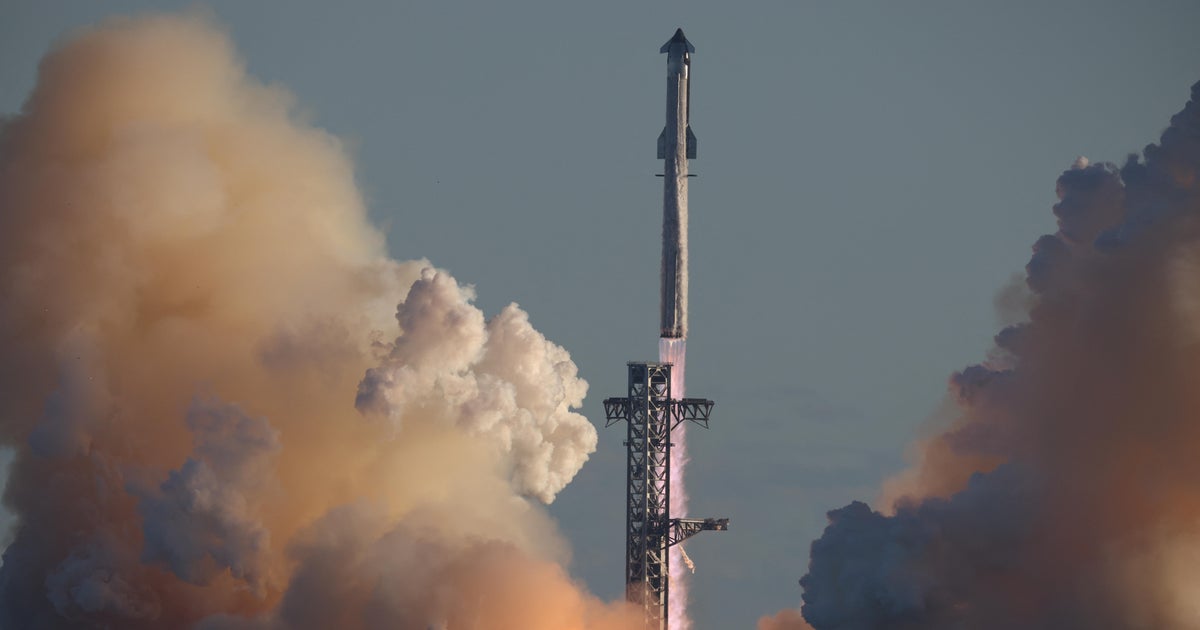
The Missed Catch That Isn’t Really a Miss
SpaceX’s 15th Starship test flight ended with a fireball over the Gulf Coast, not the mechanical arms clamping down on a returning booster. The Super Heavy stage, powered by 33 Raptor engines and loaded with 8 million pounds of supercold propellant, veered off course six minutes into ascent and splashed down miles offshore. A controlled explosion shattered any chance of recovery.
For workers at Texas’s Starbase who had bet their shifts on the first full‑reuse demonstration of an orbit‑class rocket, Friday night was a disappointment. Yet the 22‑hour mission still carried forward a critical thread: the Starship upper stage rode its own suborbital trajectory, deployed 26 upgraded Starlink satellites, and spent the rest of its time coasting—ready to attempt Saturday’s first ever launch‑pad catch of a crew‑sized vehicle.
In commercial spaceflight, milestones are rarely clean. A lost booster is a setback; a functional upper stage that returns home is a step closer to the holy grail.
Why Full Reuse Changes Everything
The economics of launch have always been brutal. Each rocket stage flown today is essentially disposable, built once and discarded after a single job. That model caps payload‑to‑orbit volume and keeps prices stubbornly high—even as demand for satellite internet, Earth‑observation data, and deep‑space infrastructure explodes.
Full reusability flips that script. If both the booster and the upper stage can land intact, fly again within days, and require only minimal refurbishment, the marginal cost of each additional launch drops dramatically. SpaceX has long hinted at launch‑price targets that would undercut legacy providers by an order of magnitude, though precise figures remain elusive until repeated flights prove the concept.
The ripple effects extend far beyond cheaper rides to orbit. Lower costs unlock new business models: more frequent satellite‑constellation replenishment, heavier payload deliveries to cislunar space, and a basic infrastructure layer upon which everything else depends.
Lunar Landings and the Artemis Timeline
NASA’s Artemis program hinges on a variant of Starship serving as the Human Landing System for its 2028 Moon mission. Every delay in Starship’s development pushes that date further out—and already the agency is hedging. NASA officials have said they remain open to using Blue Origin’s Blue Moon Mark 2 lander depending on which spacecraft is ready first.
Full reusability would change the calculus for lunar logistics in two ways. First, it would allow rapid resupply and crew rotations without building a new vehicle for each flight. Second, it would drastically cut the mass penalty that now forces landers to carry enormous amounts of propellant for descent and ascent—a penalty that shrinks when you can refuel in orbit using cheap, repeated launches.
Without proven reuse, Artemis remains vulnerable to schedule slip and cost growth. With it, the architecture becomes viable enough to support sustained surface operations—the very kind of operations that turn a flag‑planting mission into a permanent foothold.
Satellite Constellations and the New Space Race
Starlink itself is both beneficiary and driver of this shift. Deploying thousands of internet satellites requires launch cadence that only a reusable system can sustain. Flight 15 carried the first of 26 upgraded Version 3 Starlink satellites; each subsequent batch will ideally ride on vehicles that fly again instead of being retired to the atmosphere.
Other operators stand to gain equally. Earth‑observation constellations, communication networks, and scientific missions all face soaring launch demand. When the price per kilogram falls, projects that were previously too expensive become feasible—widening the market and intensifying competition among launch providers worldwide.
But there is a counter‑force: if only one company achieves true full reusability at scale, it controls the pricing floor for everyone else. That creates a strategic chokepoint in an industry where access to space is increasingly seen as essential infrastructure.
China’s Response: Can They Keep Up?
Beijing has watched SpaceX’s progress closely. China’s state‑run aerospace sector is developing its own reusable vehicles—most notably a next‑generation launcher derived from the Long March 5, and experimental wings that aim to land boosters horizontally.
Yet China faces structural differences. Its space program is funded and directed by the military‑industrial complex, prioritizing national‑security payloads over commercial markets. That model can mobilize resources quickly but may lack the iterative, failure‑tolerant pace that characterizes SpaceX’s test flights.
If Starship proves routinely reusable, Beijing will feel pressure to accelerate its own capabilities—not just for lunar ambitions but to maintain parity in low‑Earth‑orbit bandwidth and surveillance. A gap of even a few years in launch affordability translates into strategic disadvantage in an era where space assets are as critical as sea lanes or cyber domains.
What Happens Next
All eyes now turn to Saturday’s operation. Flight controllers will monitor Starship’s health through the remainder of its coast phase, then execute a return‑burn that lowers the far side of its orbit. Over the next hour, the vehicle reenters belly‑first, guiding itself with four control flaps while weaving north of South Padre Island and out over the Gulf.
If the ship arrives upright between the gantry arms, engineers will shut down one Raptor and let mechanical clamps snatch it from the air—a maneuver never before attempted on an orbit‑returning stage. Should anything go awry, pre‑cleared ocean‑splash zones near Hawaii and Chile offer emergency escape routes, and controllers retain the ability to induce a controlled breakup over sparsely populated terrain.
Success on either day would mark the first time an orbit‑class rocket has been caught on pad, a feat SpaceX calls the turning point from “rocket science” to “airline‑like” cadence. Failure would delay the proof‑of‑concept but leave the underlying economics unchanged: every flight still gathers data, every near‑miss sharpens the next attempt.
The bigger story, however, is not one launch alone. It is the realization that a fully reusable transport system could reshape lunar logistics, accelerate global satellite coverage, and force a reckoning in the Washington–Beijing space rivalry. Even a spectacular splashdown cannot erase that trajectory.
As the fireball faded over the Gulf, Starship continued its long arc around Earth—a reminder that in the race to make space accessible, the finish line is not a single event but a rhythm of flights that eventually becomes routine.