Steam Achievement Sets Fix DLC Frustration — But Change the Game
Valve's new Achievement Sets let completionists pursue 100% without buying every DLC. The archive feature for time-limited events is the quieter revolution. A deeper shift in how games are designed and sold.
The Completionist’s Curse Is Finally Broken
Every gaming community has that one player — the one who checks their completion percentage after every session, the one whose profile is a wall of gold trophies. They are the most loyal customers and the most fragile audience Valve has ever courted.
For years, Steam’s achievement system punished them. Buy a DLC that added ten new achievements, and your overall completion rate dropped — even if you owned the game at 100% before the expansion shipped. The system treated every unlocked badge as equal, regardless of whether it came from the base game or a $20 add-on you never purchased. The result was a quiet but persistent resentment between completionists and publishers who monetized progress.
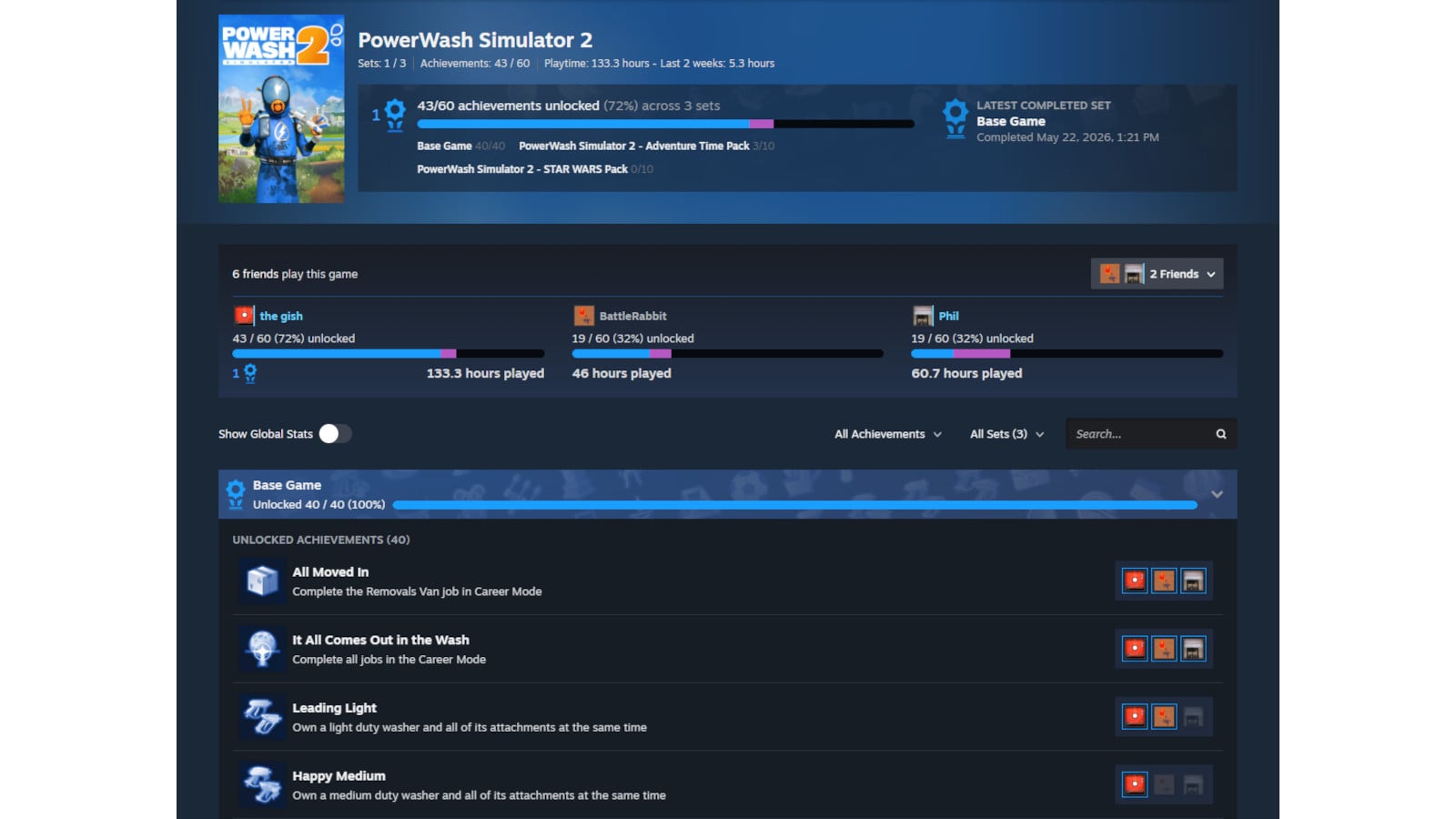
Valve’s Achievement Sets, launched in beta on October 16, ends that dynamic. Achievements are now grouped into categories. DLC-related unlocks display in purple instead of the standard blue, and they are excluded from the overall completion calculation for players who do not own the DLC. A player who completed Portal 2 before its co-op and Aperture Desk Job content can now maintain a clean 100% for the base experience. The metric is no longer hostage to purchase decisions.
A Platform-Level Admission
This is significant because it represents Valve formally acknowledging that the old system was broken — not just annoying, but structurally unfair to a segment of its user base. The company noted in its announcement that追加実績 (additional achievements tied to DLC or expansions) were difficult to identify and could unintentionally damage the completion records of players who had already finished the core game.
The fix is cleaner than the problem. Achievements now carry a category label visible in the library and on store pages. Development tools include a new Achievement Editor that lets creators organize sets from day one. Early adopters include Portal 2, Left 4 Dead 2, Team Fortress 2, Crusader Kings III, Age of Wonders 4, Forza Horizon 5, and several others. More will follow as the beta runs.
The question is whether this changes how games are designed, or merely how they are displayed.
The Designer’s New Constraint
Before Achievement Sets, developers had almost no incentive to think about how their achievements would interact with the completion metric. A common pattern in the JRPG and action game space was to scatter unlockable content across multiple post-launch updates, some tied to paid DLC and some free. Each update added achievements. Each achievement lowered the all-time completion percentage for anyone who hadn’t bought everything.
Now that pattern has a cost. When developers assign achievements to DLC categories, those achievements disappear from the completion calculation for non-owners. That means a game’s base-game achievement count becomes a harder ceiling. Publishers who previously relied on DLC to inflate the total number of collectible badges now face a choice: absorb additional content into the base game’s blue-category pool, or accept that the purple-tier content won’t contribute to the headline number at all.
This may slow the trend of inflating achievement counts through episodic releases. It could also encourage a different design philosophy — one where the base game’s achievement set is treated as a coherent whole rather than a placeholder for future monetization.
The Quiet Revolution: Achievement Archiving
If the DLC separation is the headline feature, the Achievement Archive is the one that matters more for the industry.
Developers can now archive individual achievements or entire groups. This is primarily designed for time-limited events — seasonal challenges, anniversary celebrations, holiday promotions — that would otherwise become impossible to obtain and permanently visible as missing entries. Once archived, those achievements no longer block completion percentages for players who missed them. Players who did unlock them before the archive still see their progress on their profile.
This changes the calculus for live-service games and seasonal content. Previously, a limited-time achievement created a hard deadline that excluded anyone who couldn’t play during the window. That was a deliberate design choice — scarcity drives engagement — but it also punished lapsed players. Archiving softens that penalty without eliminating the event’s incentive structure.
For developers, it means seasonal content can exist without becoming a permanent blemish on the achievement ecosystem. For players, it means a missed Halloween event in 2024 won’t haunt their profile forever.
The Social Layer Expands
The update also extends social features. Players can now compare achievement progress with up to three friends directly within the library interface. Search and filtering options for achievement lists have been expanded. These are incremental improvements, but they signal that Valve views completion tracking as a social activity, not just a personal scorecard.
The friend comparison feature is worth watching. Competitive achievement hunters have always existed, but the ability to pull up a side-by-side breakdown of who has completed which categories turns completion into a shared activity rather than a solitary pursuit. This could increase retention for achievement-heavy games, particularly in the co-op and multiplayer spaces where Portal 2 and Left 4 Dead 2 already thrive.
Who Wins, Who Loses
Completionists win immediately. Their progress is no longer retroactively devalued by DLC releases or time-limited events they missed. Publishers who rely on achievement inflation as a marketing tool lose a dimension of control — their DLC content is now visually and mathematically separated from the base game experience.
The biggest winners may be mid-tier developers who publish games with periodic free updates. Under the old system, those free updates carried the same penalty as paid DLC in the completion calculation. Now, if developers tag free-update achievements appropriately, they can coexist with DLC content without corrupting the base-game percentage. That is a meaningful shift for the indie and AA segments.
What Comes Next
The beta is available now through the Steam client settings under Interface > Client Beta Participation. A full rollout will depend on developer adoption and player feedback during the test phase. Valve has indicated that more titles will receive the update as the beta progresses.
The Achievement Editor release is the second part of this push — giving developers the tools to implement sets correctly from the start rather than retrofitting them onto existing games. How widely that tool is adopted will determine whether this becomes a lasting structural change or a cosmetic update applied to a handful of high-profile titles.
One thing is clear: Steam is no longer treating achievement systems as an afterthought. The platform has recognized that completion tracking is not a backend feature — it is a core player experience, and one that deserves the same design rigor as any other system on the store. Whether other platforms take note remains to be seen, but Valve has set a new baseline.