The Strategic Logic Behind the Kuhestak Wedding Strike
A US strike on a wedding in an Iranian coastal town killed four, including a child. The attack raises urgent questions about escalation strategy, collective punishment, and what happens next to Gulf shipping and regional stability.
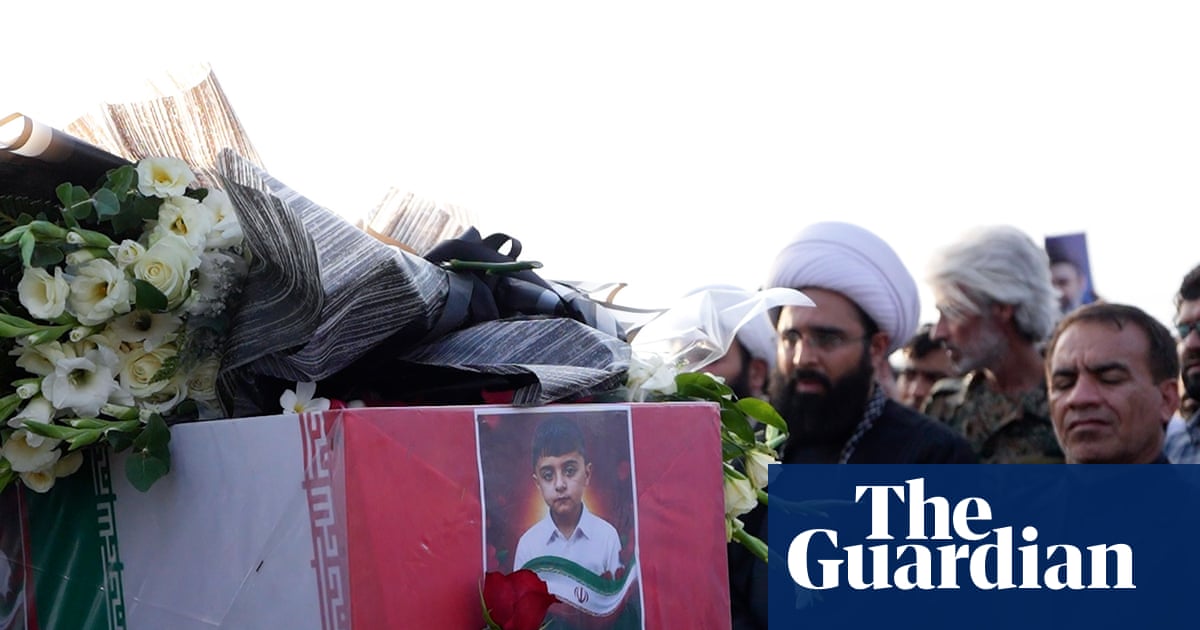
The Night the Celebration Became a Crime Scene
At 9:30 pm on September 1, Ali Mallahi, a fisher in the coastal town of Kuhestak, was waiting for guests to arrive for his daughter’s wedding. The henna ceremony had not yet begun. Within minutes, an explosion tore through the house and several neighbouring buildings. By the time the body count stopped rising, four people were dead — including a seven-year-old boy, a sixteen-year-old on a motorbike, and a twenty-two-year-old woman. More than sixty others were wounded, many critically, and shipped eighteen miles inland to a hospital in Minab that was not built for mass casualty events.
The United States carried out the strike. Vice-President JD Vance did not deny it. When pressed, he said the US would never target civilians in combat but admitted that “sometimes things happen.” He expressed scepticism about Iran’s reporting and declined to acknowledge that the deaths had been confirmed by an internationally recognised humanitarian body. The remarks were carefully constructed to leave the attack unacknowledged without directly denying it — a posture that speaks volumes about Washington’s calculus.
Why a Wedding? The Strategic Question No One Is Answering
The single most important unanswered question is not who was killed but why they were targeted. Kuhestak sits on the Strait of Hormuz, the narrowest chokepoint through which roughly a fifth of global oil consumption passes. It is not a military base. It is not an weapons depot. It is a predominantly Baloch fishing community on Iran’s southeastern Makran coast — one of the poorest and most politically marginalised regions in the country.
Striking a wedding gathering in a town that serves as a residential corridor to one of the world’s most critical energy chokepoints sends a signal far heavier than the blast itself. The implication is that the US is expanding its target set beyond conventional military assets into the social infrastructure of Iranian coastal communities. This is not counter-terrorism. It is area denial through terror — a doctrine with deep historical precedent but one that carries catastrophic escalation risks in a region already on a knife’s edge.
The Baloch angle matters enormously. Iran’s Baloch population has endured decades of neglect, surveillance, and crackdowns. Activists report that internet shutdowns are now being used to prevent witnesses from speaking to foreign media and rights groups. Moein Arjomand, director of the Balochistan Human Rights Documentation Network, confirmed that responders face growing obstacles investigating the explosion. Residents have been warned against speaking to outsiders. The state and the strike are both converging on the same community from opposite directions.
Who Wins, Who Loses
Washington wins ambiguity. By refusing to confirm or deny the strike’s intent while simultaneously expressing doubt about civilian casualty figures, the administration creates plausible deniability that insulates it from legal and diplomatic accountability. That is the immediate gain.
Iran loses credibility among its own southern coast. When a fisher stands in the rubble of his home and thanks God the death toll was not higher, as Ali Mallahi did in a state media video, you are witnessing a regime struggling to manage grief it did not cause while simultaneously being blamed for inviting it. The Baloch resident of Sirik put it bluntly: “From the US that has attacked us in this war? Or the regime which has brought this war to our doorsteps? Tell me from whom I can demand and I will answer your questions.”
The residents of Kuhestak lose everything. Farzin Kadkhodaei, a Baloch human rights activist, described the human cost as “devastating.” Chakar Baloch, a fisher, said the attack reinforced a feeling that civilians along the Makran coast are being placed in the path of conflicts over which they have no control. They are the victims of a war whose geography they did not choose and whose strategy they cannot influence.
The Legal Dimension: Beyond Politics Into Courtrooms
Vance’s formulation — that the US “would never target civilians” but acknowledges that casualties occur — may sound like diplomatic language. It is also, potentially, a legal admission. Under the Rome Statute of the International Criminal Court, intentional direct attacks against civilians constitute war crimes. The scale of injury — over sixty wounded — and the confirmed death of a child elevate this beyond collateral damage arguments into the territory of proportionality and distinction, the two foundational principles of international humanitarian law.
The fact that the wedding had barely started, that neighbours were hit by shrapnel, and that the blast damaged multiple residential structures suggests the strike was not precision-targeted at a military asset embedded in a civilian zone. It hit a civilian zone. That distinction matters in any future legal proceeding.
Iran’s response will test whether these norms have any enforceable weight. The regime has every incentive to amplify the footage — rubble, flower garlands, bloodied shoes, a bandaged seven-year-old in a hospital bed — as evidence of American indifference to civilian life. Whether it channels that anger toward Washington or redirects it toward its own Baloch population remains the open question.
What Happens Next: The Strait, the Ships, the Prices
The immediate risk is retaliation. Iran and its proxy networks have repeatedly demonstrated willingness to target commercial shipping in the Strait of Hormuz and the Gulf of Oman. A strike on a wedding that kills a child provides a potent moral framework for those operations — one that transcends the usual ideological framing and taps into universal outrage.
Insurance premiums for vessels transiting the region will spike. Re-routing around the Arabian Peninsula adds days and dollars to every container bound for Europe. The global economy has spent years pricing in stable Gulf shipping flows. Kuhestak just recalibrated that assumption.
Domestically, the Vance statements are designed to defuse immediate pressure. They will not defuse the strategic problem. The strike has moved the conflict from contested airspace and naval encounters into the domain of civilian terror — a threshold that, once crossed, is extraordinarily difficult to retreat from. Every subsequent attack, from whichever side, will be judged against the precedent set on that wedding night in September.
The people of Kuhestak are mourning. Ahmad, the barber who witnessed the aftermath, told reporters: “We are not carrying coffins on our shoulders, we are carrying the dark future that awaits us all in the south.” The funeral for a young woman was scheduled for Friday. More are likely to follow.
What Washington has done in that coastal town is not just kill civilians. It has redrawn the line between military target and social life in a way that will define this conflict for months to come — and whose consequences will ripple through every shipping lane between Dubai and Dubai.