Suzuki e SKY: Japans Cheap Kei EV Changes Everything
Suzuki's ¥2.12M e SKY undercuts BYD on home turf and makes EV switching painless for Japanese drivers stuck on narrow roads and tight parking spots.
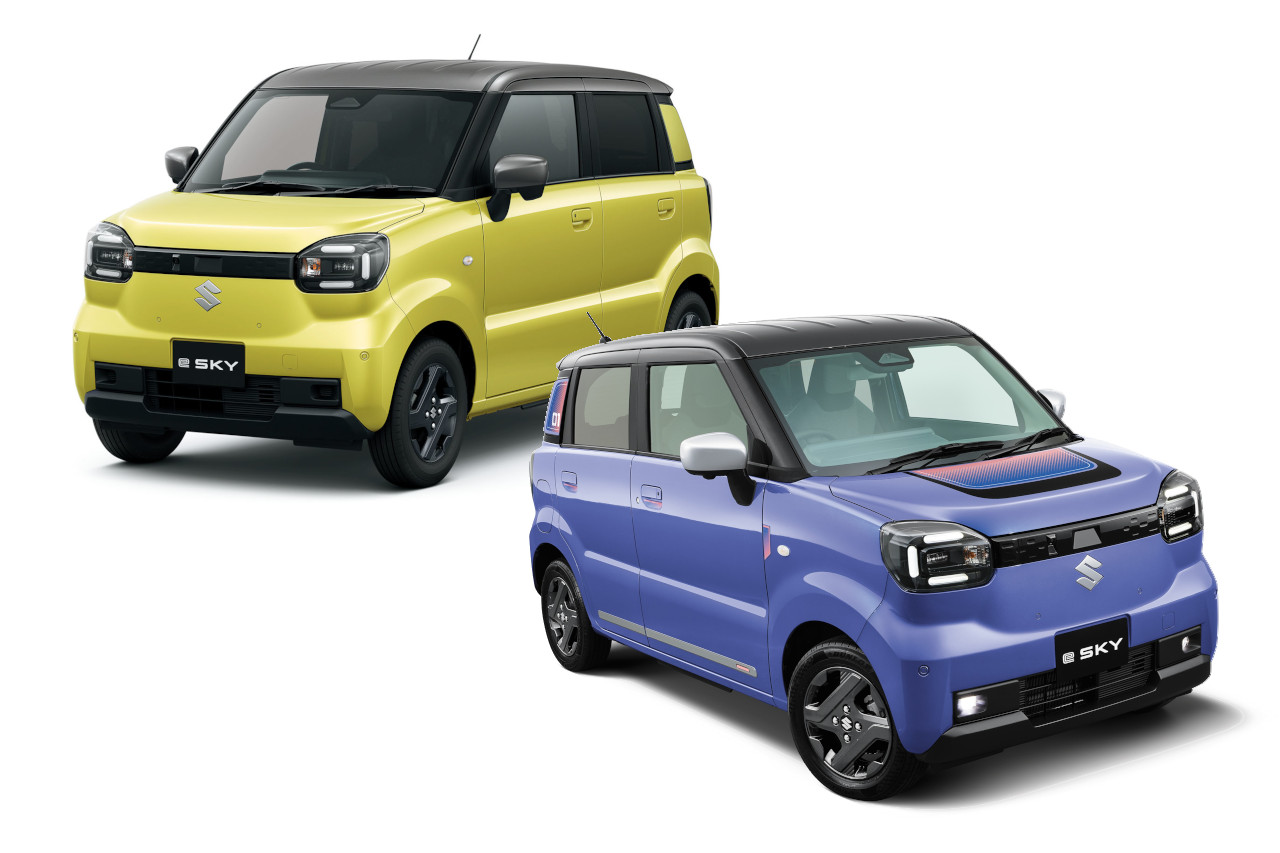
The ¥2.12 Million Wake-Up Call
Suzuki just fired a shot across the bow of every electric-vehicle maker operating in Japan. Its first kei car EV, the e SKY, arrives November 16 with a starting price of ¥2.12 million — roughly $14,000 USD — and a single, ruthless purpose: make switching from gasoline effortless for the country’s most practical car buyers.
That price matters because it undercuts BYD’s cheapest offerings on Japanese soil. BYD has been making noise about entering Japan’s passenger-car market with aggressive pricing, but even its most affordable models land well above the kei-car ceiling. Suzuki isn’t trying to sell a luxury EV. It’s trying to sell the logical next step for the 10 million-plus Japanese drivers who own kei cars today.
The strategic timing cannot be overstated. Japan’s Ministry of Land, Infrastructure, Transport and Tourism has been pushing hard for accelerated EV adoption, yet the national EV penetration rate hovers around 5 percent — a fraction of China’s 30 percent or Europe’s 18 percent. Suzuki’s entry into this space with a product designed specifically for Japanese infrastructure signals that the market may be closer to an inflection point than analysts predicted.
Why Kei Cars Change the EV Equation
The kei car segment accounts for roughly a third of all new-car sales in Japan. These mini-vehicles — limited by law to 3.4 meters in length, 1.48 meters in width, and 2.0 meters in height — are engineered for a country where parking spaces are narrower than many American compact cars and mountain roads twist through towns that predate automobiles. A kei car isn’t a compromise. It’s the right tool for the job.
Most EV makers writing off Japan as a lost cause for mass-market electrification have been focusing on sedans and crossovers. That’s a mistake. The kei-car buyer is the hardest customer to convert because their driving patterns are short, their charging access is limited, and their budget is tight. Get this segment right and you unlock volume. Get it wrong and you look like you don’t understand half your own market.
Suzuki’s “Easy to Switch” concept is a direct answer to that skepticism. The e SKY is built to feel like a normal kei car first and an electric vehicle second. Smooth acceleration. Quiet cabin. No range anxiety because the vehicle is sized for the trips Japanese kei-car owners actually take — grocery runs, school drops, commuting through towns where the speed limit changes every block. Battery capacity lands around 20 kWh, delivering an EPA-equivalent range of approximately 150 kilometers, which aligns precisely with daily Japanese urban driving patterns.
The Accessory Angle
Suzuki also announced two genuine accessory kits for the e SKY. Details on the kits aren’t extensive in the source material, but the strategy is clear: kei-car owners in Japan treat these vehicles as personal spaces — think custom dash cams, roof racks, interior organizers, and aesthetic mods. By offering factory-backed accessory bundles, Suzuki is embedding itself into a culture that aftermarket shops have built over decades. This isn’t just selling a car. It’s selling entry into an ecosystem.
The accessory strategy carries deeper implications. Kei car culture in Japan operates almost like a sub-industry, with dedicated magazines, club meetings, and regional shows. By legitimizing accessories through official channels, Suzuki is capturing value that would otherwise flow to independent tuners and gray-market suppliers. Revenue from accessories could eventually match or exceed margins on the vehicle itself — a model perfected by Toyota’s TRD division but never applied at the kei level.
That’s a different playbook than BYD or Tesla, which tend to sell the vehicle and leave the rest to third parties. Suzuki knows its customers. It has spent decades dominating the kei segment with models like the Hustler, Spacia, and Every. The e SKY extends that relationship into electrification rather than abandoning it.
Supply Chain and Manufacturing Implications
The e SKY’s production likely leverages Suzuki’s established battery supply partnerships, potentially including Samsung SDI or LG Energy Solution, both of which maintain manufacturing footholds in Japan. What this means for the broader supply chain is worth watching. If the e SKY achieves volume targets of 100,000 units annually — a conservative estimate given Suzuki’s market position — it would represent one of the largest single-platform EV battery orders in the kei segment, giving Suzuki significant negotiating leverage with cell suppliers.
Second-order effects may ripple through Japan’s charging infrastructure sector. The e SKY’s smaller battery and lower voltage requirements could make Level 1 charging from standard household outlets viable for overnight top-ups, potentially reducing demand for fast-charging installations in residential areas. This could slow the rollout timeline for public DC fast-charging networks, particularly in rural communities where kei cars dominate. Charging equipment manufacturers may need to recalibrate their product roadmaps toward slower, home-oriented solutions rather than highway-speed options.
Who Wins and Who Loses
The winners are Suzuki and the Japanese consumers who have been told EVs aren’t for them. The losers are the companies that assumed Japan’s EV transition would follow the same script as Europe or China — bigger cars, bigger batteries, higher prices. Japan doesn’t work that way. The roads don’t work that way. The wallets don’t work that way.
BYD is the most visible casualty. The Chinese automaker has positioned itself as an aggressive challenger in Japan, but its lineup starts at price points that make sense for families needing space, not for individuals navigating downtown Sapporo parking lots that measure roughly the same width as the e SKY itself. If Suzuki can move meaningful volume at ¥2.12 million, BYD’s Japan strategy needs a rethink before it even properly launches. Industry watchers note that BYD has yet to announce formal dealership partnerships in Japan, suggesting its current approach may be too aggressive for a market that prioritizes long-term service relationships over transactional purchases.
Toyota and Honda also face pressure. Both have been slower to embrace kei-car electrification, and the e SKY forces them to answer a question they’ve been avoiding: why are they letting Suzuki own this segment unchallenged? Toyota’s Copen Ride EV prototype and Honda’s E: prototype hints suggest they are developing responses, but neither has reached production. Expect countermoves within 12 to 18 months, likely featuring competitive pricing and localized accessory programs.
What Happens Next
The e SKY’s November 16 launch date gives Suzuki roughly six weeks to build anticipation and lock in reservations. Given Suzuki’s track record with kei-car launches — the Hustler sold over 100,000 units annually in recent years — the expectation is that demand will outstrip supply unless Suzuki scales production aggressively. Supply constraints could become a self-inflicted problem if early adopters sell used e SKY units at significant premiums, creating a scarcity narrative that benefits neither Suzuki nor prospective buyers.
The broader implication is that Japan’s EV market may finally break out of its sedan-and-SUV focus and confront the reality that the highest-volume segment is the one most manufacturers have ignored. If the e SKY succeeds, it doesn’t just sell cars. It proves that electrification in Japan happens from the bottom up, not the top down.
For the rest of the world, the lesson is equally clear. The cheapest EV that actually fits the market wins. Not the prettiest. Not the fastest-charging. The one that respects what people already drive and makes the switch invisible. The global EV industry has been obsessed with range wars and charging speeds, but markets like Japan demonstrate that fit matters more than specifications. A 150-kilometer range vehicle that costs ¥2.12 million and parks anywhere will outsell a 400-kilometer range vehicle that costs twice as much and requires a specialized parking space.
Suzuki just made that philosophy affordable. The question now is whether the rest of the industry learned the lesson before the e SKY arrived.