The Switch 2 Zelda Sellout Maps Exactly Where Nintendo's Demand Is
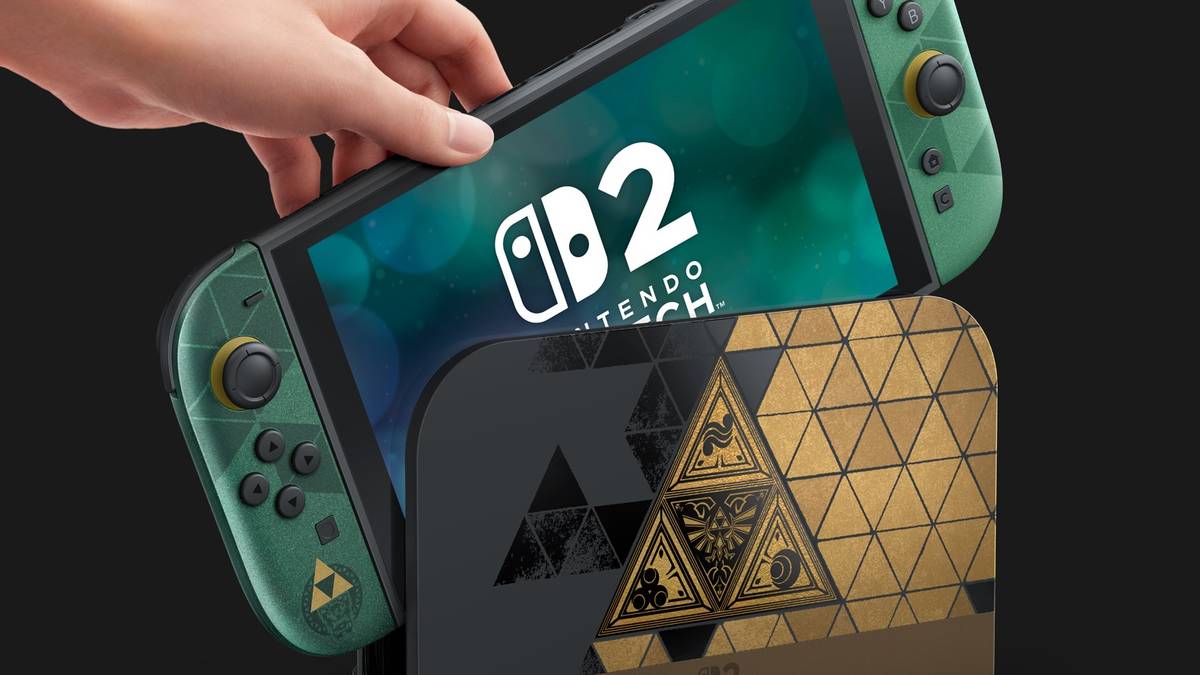
The Legend of Zelda 40th Anniversary Switch 2 is sold out at every major US retailer, with eBay as the sole holdout — and that exception tells you everything about Nintendo's supply strategy heading into launch.
The Sellout That Isn’t Just Hype
The Legend of Zelda 40th Anniversary Switch 2 is gone. Not backordered — gone. Across Nintendo’s direct channel, Amazon, Best Buy, and Target, the $519.99 console is completely out of stock as of this writing, with no restock date listed anywhere. The only place with inventory is eBay, where listings hover around $850, roughly 70 percent above the manufacturer’s suggested retail price.
The immediate takeaway is that hardware demand for the Switch 2 is real and intense. The deeper takeaway — the one most coverage is missing — is what the geography of this sellout reveals about Nintendo’s supply strategy and what it portends for the October 29 launch.
Who’s Locked Out and Why It Matters
The sellers with the most visibility — Amazon, Best Buy, Target, Walmart — have no stock. This is notable because those are the channels most American consumers trust for pre-orders and early purchases. When those channels are empty, you don’t have a mild demand problem. You have a channel-design problem.
The consequence is that the primary route to ownership for anyone outside Japan — and possibly outside select Asian markets — is the secondary market. eBay is not a retailer. It’s an auction house with no price controls and thin seller verification. Buyers who manage to secure a unit there are paying a premium for uncertainty. Several listings are already raising red flags about whether the console itself is included or only the box.
That creates a reputation risk for Nintendo before the console has shipped a single legitimate unit. Resale frustration doesn’t stick to the reseller. It sticks to the brand.
The One Exception: eBay as a Demand Thermometer
The fact that eBay is the sole marketplace with availability is the signal worth tracking. In prior hardware cycles, when first-party channels went dry, third-party marketplaces often filled the gap within days. They aren’t filling it now. That means either supply is so constrained that even arbitrageurs can’t move inventory, or that existing eBay stock is being rotated through faster than it can be listed.
Scalper Discord channels are already deploying bots to snap up any restocks the moment they appear. The race between automated buyers and human buyers is structurally unfair, and the current inventory picture confirms it: there is nothing left for the slow lane.
This is not a normal preorder environment. It is a supply shock meeting demand that was already concentrated around a singleIP event.
The Zelda Multiplier
The 40th Anniversary Edition is $20 more than the base Switch 2. That price difference is nominal. The real cost to consumers is invisible: the resale premium, the time spent refreshing pages, the risk of buying from an unverified seller.
Zelda is not a ordinary launch window asset. It is one of the most recognizable franchises in interactive media, with a fanbase that spans generations and geographies. A Collector’s Edition tied to a milestone anniversary does not simply attract Zelda fans. It attracts collectors, completists, and investors who view hardware as a store of value. Each of those cohorts operates on different timelines. Collectors refresh at dawn. Investors monitor API endpoints. Both will beat a casual browser to any restock drop by seconds.
The net effect is that the standard Switch 2, which launches the same day at $499.99, is now implicitly priced higher in practice than its MSRP because the only path to it runs through a bottleneck.
What the Rest of the Product Line Shows
The accessories story reinforces the same picture. The Zelda Pro Controller is sold out at Walmart and Target, absent from Amazon, and listed as coming soon at Best Buy. The carrying case still has pre-order availability at a few retailers, but that window is narrow. Physical copies of Ocarina of Time are already gone at Walmart. Nintendo’s own storefront still lists the game, which suggests they are holding allocation there for direct sales — a sign they intend to capture margin on software even as they lose control of hardware distribution.
When every peripheral tied to the same IP moves through inventory in parallel, you are not looking at a hardware shortage alone. You are looking at a demand event that is consuming the entire ecosystem at once.
The Holiday Timing Is a Strategy, Not an Accident
October 29 places the Switch 2 squarely in the holiday buying window. That is not a date Nintendo chose lightly. It means the company is accepting short-term frustration to preserve long-term margin. Every unit sold through eBay at $850 is a unit Nintendo did not profit from. Every angry customer who cannot check out on launch day is a customer Nintendo’s authorized channels failed to serve.
But the alternative — flooding the market and risking a post-holiday glut — carries its own cost. Nintendo has a long record of managing hardware supply to protect resale value and maintain brand scarcity. The Switch 2 appears to be following that tradition, just at a higher volume and with far more eyes watching in real time.
What Comes Next
The most likely near-term pattern is cyclical: brief restocks at major retailers during the coming weeks, instantaneous depletion, and a continued reliance on secondary markets until genuine supply catches up. The holiday season will amplify both the demand and the frustration. A second restock window around Black Friday is plausible but not guaranteed; Nintendo has not indicated whether it plans additional allocation drops.
What is clear is that the sellout is not confined to the Zelda variant. The standard Switch 2 is subject to the same supply constraints, even if it does not carry the same collector demand. Anyone planning to buy at launch should expect to compete in the same environment — just without the foil cover to distract from the fact that the underlying bottleneck is identical.
The single market where stock exists today is not a loophole. It is the exception that proves the rule: Nintendo is allocating limited units through channels it controls, and the rest of the world is entering a queue it did not design.