Taiwan Investigates Jensen Huang's Mistress Over Chinese Espionage
Taiwan and the US are conducting a joint investigation into Alice Huang, the woman linked to Jensen Huang, over suspected Chinese espionage. The probe transforms a corporate scandal into a flashpoint in US-Taiwan-China technology-security relations.
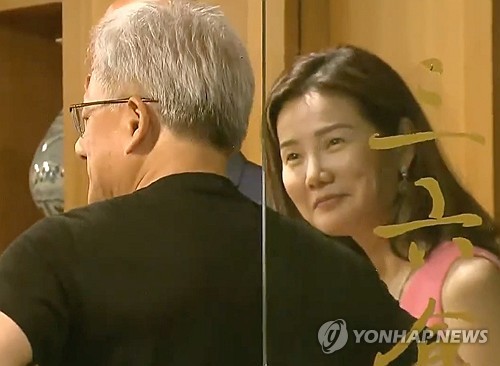
A Personal Scandal Becomes a National Security Case
What began as a report about the extramarital affair of NVIDIA CEO Jensen Huang has taken a sharp turn into territory far more consequential than corporate governance. Taiwan has confirmed it is running a joint investigation with the United States into Alice Huang, the woman at the center of those allegations — and the reason is not what most Western headlines are focusing on.
According to Taiwan’s Executive Yuan, officials held a press conference on November 12 laying out the contours of the probe. Alice Huang’s travel records, visit frequency to Taiwan, the dates of her first and last entries, and whether she accompanied Jensen Huang during his trips all became subjects of scrutiny. Her commercial visa has already been canceled. She entered Taiwan using a Hong Kong passport, a detail immigration authorities tracked from the moment she arrived.
The language Taiwan used was careful but loaded. Spokesperson Li Hui-zhi said the investigation involves “multinational cooperative” procedures and that no further details could be provided while active. If criminal involvement is confirmed, he added, explanations would remain sealed under standard investigative protocol.
That restraint speaks volumes.
Who Wins, Who Loses
The immediate loser is reputational. NVIDIA’s valuation and its image as a steady hand in AI infrastructure face a fresh headline cycle unrelated to GPU shipments or Blackwell deliveries. But the deeper loss belongs to whatever informal network may have connected a senior American technology executive to a person under suspicion of Chinese intelligence activity on Taiwanese soil.
The winner, or at least the side gaining leverage, is the framework of US-Taiwan security cooperation itself. Taiwan’s decision to publicly confirm a joint probe — rather than quietly handle it through back channels — signals confidence in that partnership and a willingness to bring these matters into the open when national security is involved. It also sends a message to Beijing that Taiwan has eyes on people moving between Hong Kong and the island, and that the US is sitting at the table.
China loses credibility by association. Whether Alice Huang is genuinely acting as an asset or simply caught in a web of suspicion, the mere accusation embeds another data point in the narrative that Beijing’s reach extends into the personal lives of foreign technology leaders. That narrative, accurate or not, makes every handshake between American executives and Chinese institutions harder to justify at home.
What the Details Actually Reveal
Several specifics from Taiwan’s announcement deserve attention beyond the surface drama.
First, the use of a Hong Kong passport to enter Taiwan is noteworthy. Hong Kong-issued travel documents are widely used by mainland Chinese citizens who maintain residency there, and they are routinely flagged in intelligence circles as a possible vehicle for covert movement. Taiwan’s immigration chief, Lin Hung-yen, stated explicitly that authorities had monitoring records from Alice Huang’s initial arrival — meaning this was not reactive. Someone was watching before anything happened.
Second, Taiwan has established a joint review mechanism across its national security agencies to screen entrants using Hong Kong or Chinese visas. This is not a one-off response to a single case. It is institutional hardening.
Third, Taiwan has not confirmed whether Jensen Huang himself faces any legal exposure if he returns. The Executive Yuan stopped short of addressing that question, which means the possibility remains open — either as a shield or as a stick, depending on how the investigation evolves.
Why This Matters Beyond the Headlines
Western coverage of this story has largely treated it as celebrity-adjacent gossip wrapped in tech-executive fabric. That framing misses the structural significance.
Taiwan produces the vast majority of the world’s advanced semiconductors. NVIDIA designs chips that power AI systems worldwide, but those chips are manufactured on Taiwanese foundries, primarily TSMC. Any suggestion that individuals connected to NVIDIA’s leadership are being cultivated or monitored by Chinese intelligence raises questions that go well beyond personal conduct — they cut directly at the security of the supply chain that underpins the global economy.
The US has spent years building export controls, entity lists, and investment restrictions aimed at slowing China’s access to advanced chip technology. Those measures assume that the people on the American side of that relationship can be trusted not to leak, not to be compromised, and not to be unknowingly recruited. An espionage investigation involving someone in the personal orbit of NVIDIA’s CEO tests that assumption publicly.
What Comes Next
Three scenarios are worth tracking.
If the investigation concludes with formal charges or a public admission of espionage ties, it will force a reckoning inside NVIDIA and among its investors about due diligence on executive associations — a category almost never scrutinized in Silicon Valley culture. Expect tighter background-check norms, not just for board members but for C-suite networks.
If the case remains shrouded in secrecy — which is more likely given Taiwan’s stated position — the uncertainty itself becomes the outcome. Jensen Huang and other senior executives will face heightened scrutiny whenever they travel to Taiwan. Business travel plans will be filtered through security considerations that didn’t exist a year ago. And every future allegation of this kind will carry the baggage of this unresolved case.
If the investigation yields nothing substantial, the damage is already done. The reputation hit lands regardless of the verdict, and the precedent of US-Taiwan public coordination on a case involving a top American tech executive sets a template for how such situations will be handled going forward.
One thing is clear: the line between personal relationships and national security in the semiconductor arena is thinner than most players have admitted. This case just made that visible.