Tesla's Cybercab Just Touched Austin Roads — The Robotaxi Race Has a New Player
Tesla's Cybercab started limited autonomous rides in Austin this week — a vehicle with no steering wheel, no pedals, just a touchscreen. What matters isn't the gadget; it's what the launch reveals about the regulatory and scaling hurdles standing between hype and daily commutes.
The Vehicle That Looks Like a Gadget, Not a Bus
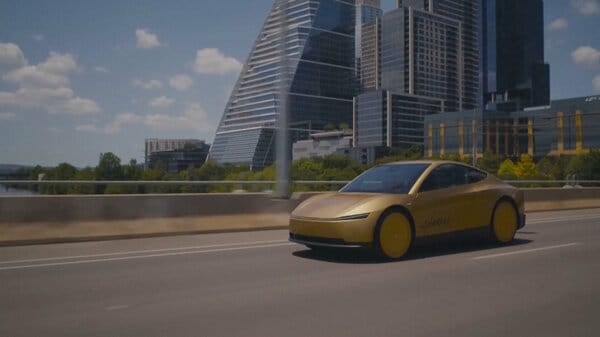
Tesla’s Cybercab is impossible to describe without sounding like a press release. Two seats. No rear bench. A steering wheel that does not exist. Pedals that are not there. A touchscreen that replaces every conventional instrument cluster. Butterfly doors that open upward like wings. It launched in Austin on September 3rd, 2026, and within hours the footage was everywhere: a compact pod rolling through suburban streets with nothing between driver and passenger except a glass pane showing maps and ride controls.
The gadget theater is real. The question that matters — and the one most coverage, English-language or otherwise, is avoiding — is whether this vehicle can navigate the regulatory and operational maze that has tripped every autonomous taxi pioneer before it.
Who Wins, Who Loses, What Austin Reveals
Waymo, backed by Alphabet, has been operating paid robotaxi services in Phoenix, San Francisco, and Los Angeles for years. It has logged millions of miles, collected data on edge cases that no simulation can replicate, and built a regulatory relationship with each city that took quarters of negotiations. Tesla entered this arena with a product reveal and a limited Austin launch. That asymmetry is the story.
Who wins immediately? Tesla’s stock traders, who price future revenue into today’s share price. Tesla’s existing shareholder base, whose conviction in Elon Musk’s autonomy roadmap gets reinforced by another visual milestone. The broader EV market, which benefits from the attention a headline-generating launch brings to electric vehicles.
Who loses? Traditional ride-hail drivers in Austin, whose livelihoods face a new competitor that does not require a license, a breaks check, or a salary. Municipal regulators in cities that will have to decide how to treat a vehicle that operates without human oversight — a question that no existing framework answers cleanly.
The Regulatory Friction Nobody Talks About
Austin’s pilot is limited. Very limited. The City of Austin has issued what amounts to a temporary operating permit for a small fleet in defined zones. Waymo’s permits in Phoenix cover thousands of square miles and operate 24/7. The difference is not a line on a spec sheet; it is the gap between a vehicle that can handle a test course and a vehicle that can handle a Tuesday afternoon in a city that does not stop raining.
The NHTSA — the National Highway Traffic Safety Administration — has yet to issue a comprehensive federal framework for level-5 autonomy, the kind of system that requires zero human intervention. States are making their own rules. California has strict reporting requirements. Texas, naturally, has been far more permissive. The result is a patchwork that no national automaker can navigate without building a regulatory team larger than its engineering one.
Tesla’s Cybercab has no steering wheel. That is a feature for the photos. It is a liability for the regulators, who have to decide how to certify a vehicle that cannot be overridden by a human operator in an emergency — a question that existing safety frameworks simply do not address.
Urban Acceptance Is a Slower Problem Than You Think
Phoenix residents have accepted Waymo because it arrived slowly, over years, in a city that is used to testing autonomous vehicles on its wide, predictable streets. San Francisco residents tolerate it because the service solved a real problem — late-night rides when Uber availability drops to near zero. Austin, meanwhile, is a city that loves cars but has not yet decided whether it wants robotaxis on its mixed residential and commercial streets.
The acceptance curve is not linear. It is a series of incidents — a fender-bender that makes headlines, a pedestrian scare that triggers city council hearings, a viral video of a Cybercab hesitating at an intersection that becomes the talking point for the next quarter. Each incident resets the acceptance thermometer. Each reset adds months to the timeline.
Japanese coverage of Tesla’s launch adds detail not yet prominent in English wire stories: the Cybercab’s touchscreen-only interface, the absence of any conventional driving controls, the 2026 deployment timeline that places this vehicle on Austin roads this week rather than next year. That timing matters. It places Tesla squarely in the robotaxi race at a moment when the competitive field has already hardened around Waymo’s first-mover advantage.
The Scale Question: Austin to Where?
Tesla’s Austin pilot is the beginning, not the end. The company has promised wider deployment, but the path from a handful of vehicles in one city to a fleet that can serve a metro area is measured in regulatory approvals, not engineering milestones. Waymo has spent five years and hundreds of millions of dollars building its Phoenix operation. Tesla is measuring its robotaxi ambition in press events and limited permits.
The scale challenge is not technical — it is operational. A robotaxi fleet requires charging infrastructure, maintenance facilities, remote operators to handle edge cases, insurance policies that cover autonomous vehicles, and a regulatory relationship in each city it enters. Each city adds months. Each regulation adds cost. Each incident adds scrutiny.
What Happens Next
The Cybercab launch is a genuine milestone for robotaxi deployment. It is not the moment the technology proves itself; it is the moment the regulatory and operational challenges become visible to everyone watching. The question for the next twelve months is not whether Tesla can build more Cybercabs — it is whether it can navigate the maze of city permits, state regulations, and public acceptance that determines whether a vehicle that looks like a gadget becomes a vehicle that works as a commute.
Austin’s pilot will tell us. So will the next incident. So will the next city council hearing. So will the next quarterly earnings call, where Tesla’s robotaxi revenue is either priced as real or dismissed as vaporware. The robotaxi era is no longer theoretical. The question is who lives in it, and who just sells tickets to the launch.