Tesla's Cybercab Stumbles Into a Regulatory Minefield
Tesla just deployed driverless cars without federal approval — and NHTSA is already investigating. The fallout could reshape how every automaker approaches autonomy.
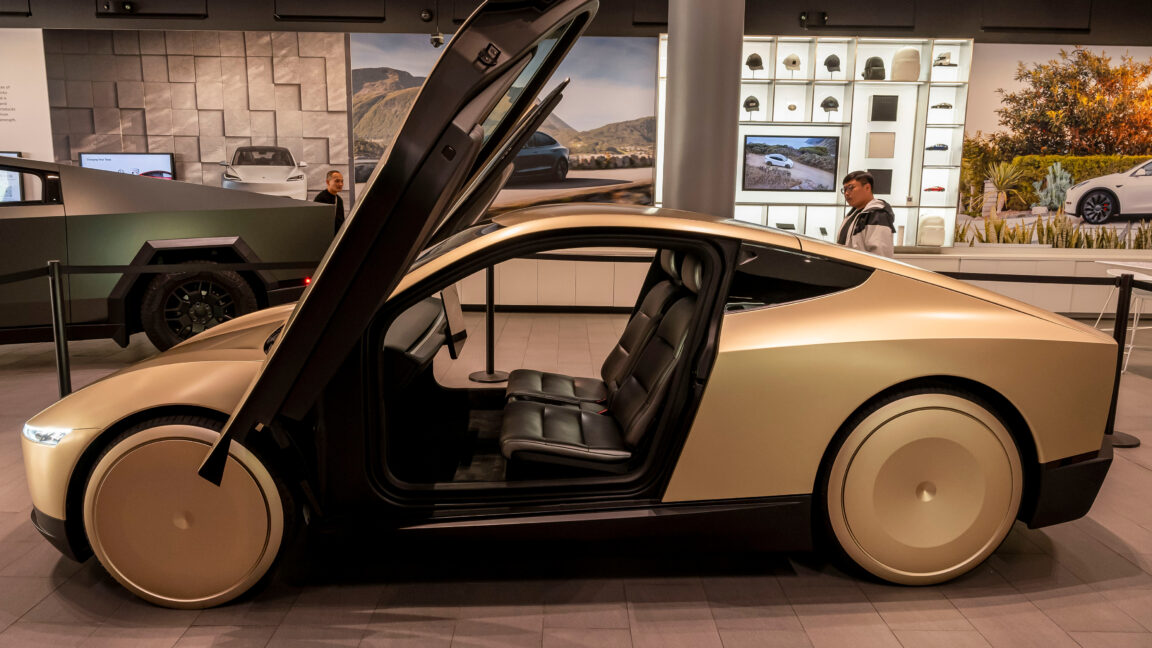
Tesla skipped the process. Washington noticed.
Tesla deployed 45 driverless Cybercabs in Texas last week — or at least that’s what a state database shows — without filing the paperwork that federal law requires before any company puts a robotaxi on public roads. NHTSA responded within days with an Audit Query, a formal investigation into whether Tesla followed its own safety determinations and the regulatory framework that governs autonomous vehicle deployment.
This isn’t a minor paperwork issue. It’s a collision between Tesla’s operating philosophy and the institutional architecture of American automotive regulation, and it sets a template for how every other company in the space will be treated going forward.
The Zoox precedent matters more than most realize
The investigation is significant because it tests a principle NHTSA spent months establishing with Amazon’s Zoox. When Zoox applied for and received an exemption to deploy its driverless shuttle, the agency made clear through that case that the exemption pathway is not optional — it’s the required process for companies seeking to put autonomous vehicles into public service.
Ann Carlson, former acting NHTSA administrator now teaching environmental law at UCLA, put it bluntly: Tesla’s move was “gobsmacking.” Not reckless. Not aggressive. Gobsmacking. The phrasing signals something important — this isn’t viewed as bold entrepreneurialism within the agency, it’s viewed as an insult to the regulatory process itself.
What NHTSA can actually do
The Audit Query is the opening move, not the final blow. NHTSA can require Tesla to modify the Cybercab’s software or operational parameters. It can impose civil penalties. In the most serious cases, it can force structural changes to how a company approaches safety compliance.
Volvo Group North America serves as the relevant comparison point. After an NHTSA investigation into its recall process, Volvo paid $130 million in penalties and agreed to three years of oversight by a third-party auditor. That outcome came from a failure in reporting procedures — a far less provocative violation than bypassing the exemption process entirely. If NHTSA determines Tesla acted deliberately rather than negligently, the consequences could be substantially steeper.
The stakes extend far beyond Tesla
This moment is disproportionately significant because of what Tesla represents in the autonomous vehicle ecosystem. Elon Musk has publicly stated that Tesla should no longer be classified as an automaker but as a robotics and autonomous vehicle company. The Cybercab is the physical manifestation of that pivot — the product Tesla is betting its valuation premium on. Success here justifies the narrative. Failure here, under these circumstances, carries symbolic weight far beyond the 45 vehicles currently deployed.
More importantly, how NHTSA handles Tesla establishes the boundary conditions for every other company working on autonomy. Waymo operates under a different set of relationships with regulators — built incrementally, city by city, with extensive documentation and public coordination. Zoox followed the exemption process to completion. Tesla’s approach — deploy first, ask questions later — if left unchecked, would become a viable strategy for competitors willing to accept the risk.
Regulators cannot allow that precedent to stand without consequence, because the alternative is a race to the bottom where the only barrier to deployment is corporate willingness to absorb penalties rather than comply with safety standards.
Why this will force a global reckoning
The United States does not set regulatory policy for autonomous vehicles globally, but it does set the pace. European regulators watch how NHTSA responds to high-profile violations. Chinese authorities, which have their own accelerating AV programs, study American enforcement patterns carefully. Every market where Tesla plans to deploy the Cybercab at the scale Musk has promised — he says millions annually — will face the same question: what happens when a manufacturer treats regulatory process as optional?
Right now, no major manufacturer has tested that boundary with NHTSA. Tesla just did. The investigation will produce findings, those findings will shape enforcement posture, and the posture will reverberate through regulatory agencies in Brussels, Beijing, and Tokyo before the Cybercab fleet reaches anywhere near the scale Tesla envisions.
Who wins, who loses
The immediate loser is Tesla’s credibility with the very institution it needs to operate at scale. Musk’s strategy has always been to generate momentum through public deployments, then negotiate retrospectively with regulators. That approach worked when the technology was in early development stages and regulators were eager to appear innovation-friendly. It does not work when the technology is being sold to the public as driverless and the political temperature around autonomous vehicle safety is already elevated.
The long-term winner, potentially, is the regulatory framework itself. A forceful NHTSA response to Tesla would demonstrate that the exemption process is enforceable and that companies cannot simply ignore it regardless of their market position. That strengthens the position of every company that complied with the rules — Waymo, Zoox — while creating real friction for anyone considering a similar path.
If NHTSA responds weakly, the opposite dynamic occurs: the rules become optional for anyone with enough brand momentum to absorb the backlash.
What happens next
Tesla has not responded to requests for comment. The Cybercabs remain in operation in Texas. The Audit Query will produce a public report at some point, and that report will determine whether this becomes a fine-and-settlement exercise or something more structurally consequential for the industry.
The most likely outcome is a negotiated resolution — Tesla faces penalties, agrees to enhanced reporting, and continues limited operations while the process plays out. That outcome preserves Tesla’s ability to deploy while establishing that the process cannot be bypassed with impunity. It is the kind of outcome NHTSA prefers: enforcement without destruction.
But the symbolic weight of this moment means the stakes are higher than any single penalty package. How America regulates Tesla’s driverless car will shape how the world regulates autonomous vehicles for the next decade.