Tesla Ends Cybertruck, Signaling Musk's Bigger Bet
Tesla's decision to phase out the Cybertruck isn't just about a controversial truck. It reveals a company pivoting hard toward AI and robotics while EV demand hits turbulence.
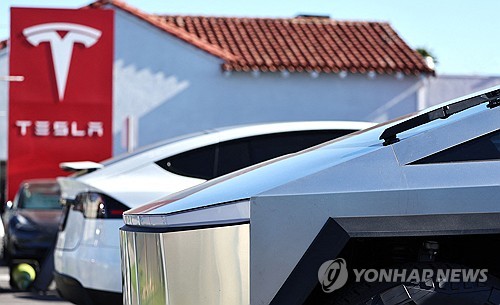
The Truck That Never Was
Tesla is winding down Cybertruck production, a move confirmed by Elon Musk on X as the company begins phasing out the all-electric pickup at its Texas Gigafactory by mid-next year. The announcement carries a hint of theatrical regret — Musk called the Cybertruck “Tesla’s best vehicle ever made” and framed the decision as “the end of an era.” But the substance of the decision tells a different story: Tesla is not mourning a product miss. It is reallocating.
The Cybertruck launched into a market that was already turning against electric trucks. General Motors put its Hummer EV on life support. Ford scaled back production expectations for its F-150 Lightning. Consumers who bought pickups wanted range, utility, and towing capacity — not a stainless-steel exoskeleton that arrived late, required multiple recalls, and carried a starting price that put it out of reach for most of the market.
Kelley Blue Book data shows Tesla moved just 22,024 Cybertrucks last year. Nearly all of them were bought by SpaceX, Tesla’s other company. That is not a customer base. That is inventory management.
Musk had predicted annual sales of 500,000 units when the Cybertruck was first unveiled in 2019. He missed that target by a factor of twenty. The vehicle’s angular design, which divided opinion from the moment the first render leaked, never found its audience. Recalls piled up — software glitches, panel gaps, structural concerns. The truck was late to market and late to conviction.
What the Shutdown Actually Means
The closure of Cybertruck production lines at the Texas facility is significant not because a single vehicle model is failing, but because the space it occupied is now being repurposed. Musk explicitly stated the lines are being cleared to make room for the “Cybercab,” Tesla’s promised autonomous ride-hailing vehicle. The factory floor is the constraint. Every square meter dedicated to a low-volume truck is a square meter not dedicated to the products Tesla believes will define its next decade.
This is the same logic that drove Tesla to end production of the Model S and Model X at its California factory earlier this year. Those premium sedans and SUVs were replaced on the line by space reserved for the Optimus humanoid robot. The pattern is unmistakable: Tesla is converting its manufacturing footprint from vehicles it sells to consumers into machines it hopes will transform industries.
The Cybertruck’s exit is not an isolated failure. It is part of a broader restructuring of Tesla’s industrial ambitions.
The EV Demand Problem Nobody Is Naming
The harder truth behind the Cybertruck’s death is that the electric vehicle market is slowing in ways Tesla’s leadership has been reluctant to acknowledge publicly. Growth in EV adoption has decelerated across North America and Europe. Prices remain high relative to internal combustion alternatives. Charging infrastructure has not kept pace with early projections. Buyers who were early adopters have moved on; the next wave of buyers remains hesitant.
The Cybertruck was positioned as Tesla’s answer to America’s pickup truck obsession — a market segment where profit margins are traditionally strongest. Instead, it became a symbol of the difficulties facing the industry: expensive electric trucks that struggle to justify their premiums, limited real-world utility for work-oriented buyers, and a design that prioritized attention over accessibility.
Ford and GM are still making electric trucks, but they are doing so at reduced volumes and with revised expectations. The market sent a clear signal. Tesla, for all its brand power, could not override it.
Where the Money Goes Next
Musk has made his priorities explicit across multiple platforms. Tesla’s upcoming investor day presentations, its robotaxi launch events, and its public commentary all point toward the same conclusion: the future of Tesla is not in the cars it sells, but in the autonomy it promises and the robots it plans to build.
The Cybercab, once realized, would operate as a fully autonomous ride-hailing service, eliminating the need for a human driver and dramatically improving unit economics. Optimus, the humanoid robot, is envisioned as a general-purpose labor platform for factories, homes, and logistics. Both represent longer timelines and greater technical uncertainty than any vehicle Tesla has released. Both also represent the kind of high-margin, high-volume businesses that Musk has repeatedly said will define Tesla’s valuation.
The pivot away from the Cybertruck is therefore not a retreat. It is a redirection toward bets that Musk believes carry far higher ceilings — even if those bets carry higher risks as well.
Who Wins, Who Loses
For Tesla investors, the Cybertruck’s end removes a persistent drag on manufacturing efficiency and brand perception. It frees up capital and floor space for projects with greater strategic weight. It is a pragmatic decision, however painful for the enthusiasts who ordered the truck years ago and never received it.
For the broader automotive industry, Tesla’s exit from the electric pickup market removes a formidable competitor in a segment that still needs volume to prove its viability. Ford and GM now face less pressure in the electric truck category, though they carry their own challenges with profitability and adoption.
For Musk, the move reinforces a familiar pattern: he announces audacious products, delivers diluted versions, and then pivots toward the next ambition before the disappointment fully settles. The Cybertruck was always more concept than commodity. Its end clears the stage.
The Signal Beyond the Silencing
The Cybertruck’s production halt is small news in the context of global vehicle sales. It is large news in the context of Tesla’s identity. The company built its brand on the idea that electric vehicles could be desirable, iconic, and culturally significant. The Cybertruck tried to be all three and achieved none at scale. Its discontinuation marks the end of Tesla’s most ambitious attempt to turn an EV into a cultural statement.
What remains is a company betting that its real product is not the vehicle, but the intelligence inside it — and the robots that will one day drive without a steering wheel at all. Whether that bet pays off is the question Tesla’s shareholders will have to answer next.