Tesla's Optimus Mass Production Is Just the Beginning
Tesla has begun producing Optimus humanoid robots at its California plant, marking a rare moment where a robotics product moves from prototype to real factory output. The implications for global manufacturing labor are far bigger than the quarterly earnings suggest.
The Factory Floor Changes Overnight
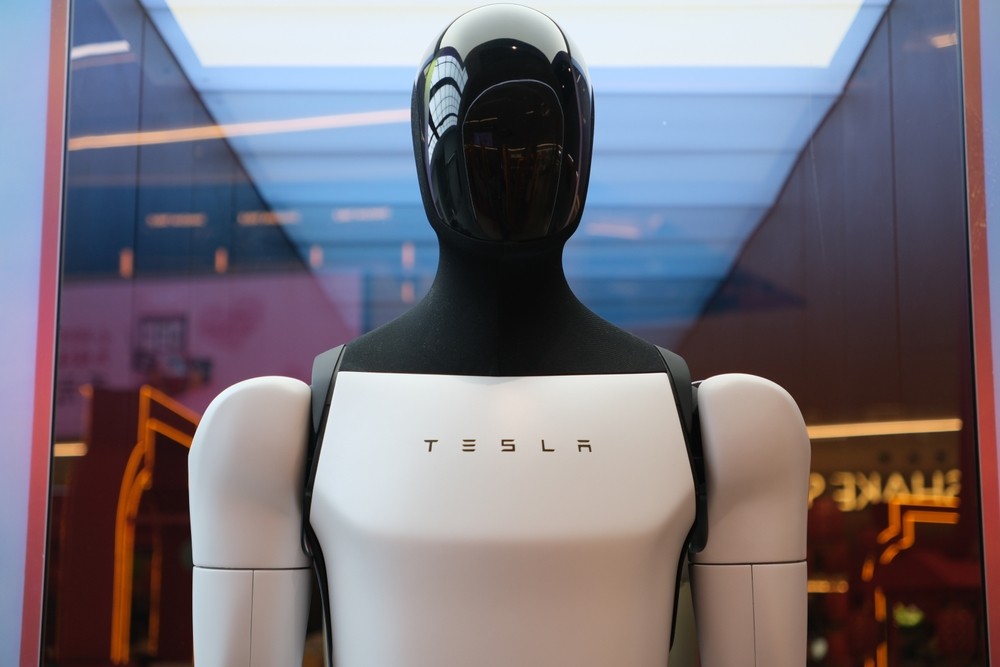
Tesla began producing Optimus humanoid robots at its Fremont, California facility this quarter. The company announced the milestone in its third-quarter earnings report, describing it as the first batch of “mass production-quality” robots coming off its assembly line. Elon Musk called it “initial production” — a careful qualifier that signals Tesla knows the difference between building something that works in a lab and building something that survives a shift on a factory floor.
The distinction matters. For years, humanoid robots have existed primarily as demonstration machines. Companies have shown them walking, waving, occasionally picking up objects. But none have moved beyond prototypes into sustained manufacturing output. That changes now. Fremont, which shed Model S and Model X production earlier this year to make room for the Optimus line, is now producing what could be the world’s first robot designed to replace human workers in industrial settings.
Musk’s targets are aggressive: 20,000 units per week by the end of 2027, with commercial deliveries starting late next year. Tesla envisions an annual production capacity of one million units at Fremont and ten million at a second facility under construction in Austin, Texas. If even half those numbers materialize, the math reshapes labor economics across every sector that relies on repetitive physical work.
The Earnings Mask the Real Story
The quarterly results tell a different story than the robotics headline. Tesla’s net profit fell 43 percent to $787 million, dragged down by surging investment in AI and autonomous driving development. Revenue slipped slightly to $28 billion. EV sales held flat at roughly $20 billion, with deliveries of 486,532 units — up only 6,000 from the prior quarter and down year over year. Solar and energy storage revenue dropped 16 percent, hit by tariff-related customer refunds.
The one bright spot reinforces the pivot: Tesla’s services segment, driven largely by Full Self-Driving software subscriptions, posted $4.6 billion in revenue — up 33 percent year over year — with gross profit hitting a record $734 million. The company is increasingly becoming an AI and software business that happens to also sell cars. Optimus extends that logic one step further: it would become a business that sells robots, which then run on Tesla’s AI stack.
Who Wins, Who Loses
The robotics industry has spent a decade trying to solve the same problem Tesla is now manufacturing at scale. Boston Dynamics showed us robots that could backflip. Agility Robotics and Figure AI have demonstrated humanoid units in warehouses. But none have achieved the combination of vertical integration, AI infrastructure, and manufacturing velocity that Tesla brings to the table.
Tesla’s advantage isn’t just in building the robot — it’s in the feedback loop. The company is establishing what it calls the “Optimus Academy,” a system where robots repeat tasks, generate training data, and improve their own AI models. The next-generation AI5 chip, scheduled for April, will push computing power further. Every unit produced becomes both a product and a data-gathering node. This is the same flywheel that made Tesla’s EVs cheaper and better over time, now applied to humanoid robotics.
For workers in manufacturing, logistics, and warehousing, the timeline is the question. Musk cautioned that production ramp-up would be slow and bumpier than typical. Safety and durability remain unproven at scale — he explicitly said a robot that breaks down after a month would be a failure. But the trajectory is clear: within three years, Tesla expects to produce tens of thousands of Optimus units annually, and each one is designed to perform the kinds of tasks that currently employ humans in repeating, physically demanding roles.
The losers in this equation aren’t just low-skill workers. Any company that built its margin on manual labor arbitrage — warehouses in markets with cheap wages, assembly lines in countries with young workforces — faces a structural shift. If a robot can do the job of a human worker for the cost of electricity and maintenance, the geographic logic of global manufacturing unravels.
The Unanswered Questions
Tesla hasn’t released images of the latest Optimus model. Musk said a video is coming within the next month or two. Until then, the actual capabilities remain speculative. The company claims the robots can perform diverse tasks, but the breadth and quality of those tasks will only become clear once the units are deployed outside the factory.
Regulatory risk is another open variable. A robot that moves autonomously in shared human spaces raises questions about liability, workplace safety standards, and labor law. No major economy has a regulatory framework for humanoid robots on the factory floor yet. Tesla will be writing that framework through practice.
And there’s the question of demand. Tesla has committed to building millions of these robots. But who will buy them? The company has outlined targets but hasn’t disclosed confirmed commercial customers. The transition from prototype to production is one thing. The transition from production to profitable adoption is another.
What Happens Next
The most important takeaway from Tesla’s announcement isn’t the production number or the quarterly earnings miss. It’s the signal: humanoid robots are no longer a science fiction concept or a research project. They’re entering the economy. The Fremont line will start slow, and Musk’s caution about bumps ahead is probably warranted. But the direction of travel is irreversible.
The companies and countries that adapt fastest — whether through retraining programs, new safety regulations, or entirely different business models — will define the next decade of manufacturing. The ones that don’t will find their cost structures collapsing under the weight of cheaper, tireless alternatives.
Tesla just turned the key. The robots are rolling off the line.