Why a Tesla–SpaceX Merger Would Rewrite the Semiconductor Game
SpaceX and Tesla have quietly launched formal merger talks. The implications for chip manufacturing, satellite internet, and antitrust regulators in three continents could be far-reaching.
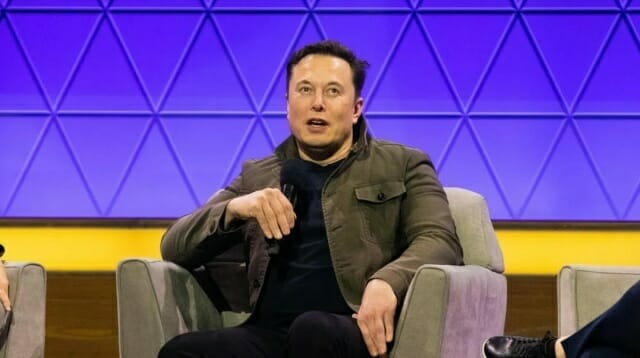
SpaceX and Tesla are no longer flirting with a merger. They are building the machinery to make it happen.
Special committees have been seated at both companies, Elon Musk confirmed on a conference call following SpaceX’s third-quarter earnings release. He stepped aside from the discussions on the grounds of a conflict of interest — a formal acknowledgment that he will benefit enormously if the two empires fuse. He also said, somewhat surprisingly for a man who rarely hedges, that the deal has not been decided. The committees have not agreed on terms. Shareholder votes, particularly at Tesla where a majority of all outstanding shares is required, remain a hurdle. And regulators will inevitably weigh in.
What makes this moment notable is not the speculation — Musk has been hinting at a combined entity for months. It is the speed at which Wall Street and Korean outlets alike are treating it as almost certain. Dan Ives of Yorkville & Ives put the probability at over 80 percent within the next year. A former partner at Deepwater Asset Management told X that the odds reach 95 percent. That kind of consensus from analysts who trade on surprise is itself a signal.
The AI logic behind the deal
Both companies are converging on the same bet: artificial intelligence is the growth engine, and the infrastructure to power it is the moat.
SpaceX’s AI division — now renamed “SI” after Trump’s unconventional naming convention for superintelligence — generated $7.56 billion in the third quarter, up nearly ninefold from $813 million a year earlier. That figure beat the $6.47 billion consensus estimate by a wide margin. CFO Brett Pocevo described the quarter as an inflection point, noting relentless demand for computing capacity from hyperscalers and smaller AI firms alike.
Tesla, meanwhile, is pursuing physical AI through Full Self-Driving software and the Optimus humanoid robot. The two trajectories are not the same, but they share the same bottleneck: chips and compute.
That is where the merger logic becomes structural rather than symbolic. A combined company would own the entire stack — from satellite-based data downlink through Starlink, through AI training clusters in orbit and on the ground, to the physical robots and vehicles that execute those models in the real world.
TerraFab and the chip supply chain
The most consequential detail has received far less attention than the valuation drama: SpaceX and Tesla already cooperate on a semiconductor project called TerraFab, under construction in Texas. The facility aims to produce AI chips for both terrestrial and space-based applications. A merger would fold TerraFab into a single corporate structure, eliminating a contractual dependency and potentially accelerating production timelines.
This matters beyond Musk’s balance sheet. The global semiconductor supply chain is already strained by export controls, fab construction delays, and intense competition for advanced packaging capacity. A vertically integrated Tesla-SpaceX entity would control a significant slice of dedicated AI chip supply — one that does not compete for capacity with NVIDIA or AMD foundry customers. That independence is precisely what regulators should scrutinize.
If TerraFab scales to the levels Musk envisions, it becomes a sovereign-grade chip capability under private ownership. The company would not just be buying GPUs. It would be designing and fabricating them, for satellites that orbit in regimes neither China nor Europe can easily replicate, and for vehicles that navigate roads in every market on Earth.
Starlink’s gravity well
Starlink currently serves over 5 million subscribers globally and continues to expand into new markets. A Tesla merger adds a distribution channel unlike any other: the vehicle fleet. Imagine every Tesla on the road acting as a ground-terminal relay, a mobile data point, a node in a network that already covers most of the planet’s populated areas. The cost savings alone would be staggering.
More importantly, it locks Starlink into the Tesla ecosystem in a way no competitor can match. Apple, Amazon, and Google have satellite ambitions. None have 5 million cars with high-bandwidth hardware integration already installed. That integration advantage compounds as autonomous driving requires constant, low-latency connectivity — a requirement Starlink can theoretically fulfill, and one a merged entity could optimize across both product lines.
The antitrust calculus
Regulatory review would likely span at least three jurisdictions, and each would look at a different threat.
In the United States, the FTC and DOJ would examine whether the combination creates an undue concentration of AI infrastructure — both the chip fabrication side at TerraFab and the satellite bandwidth side via Starlink. The CFIUS angle is real too: any foreign ownership concerns around satellite data flows would intensify if the entity is perceived as sufficiently dominant.
In the European Union, the bloc’s Digital Markets Act and Digital Markets Act designations could come into play if Starlink-Tesla integration is seen as tying behavior — bundling connectivity with vehicle purchase or FSD subscriptions. The EU has shown increasing willingness to treat data and connectivity as gatekeeper utilities.
In South Korea and Japan, the concern would be different. Both countries are investing heavily in their own semiconductor ecosystems and view TerraFab-style facilities as competitive threats if they operate outside local content rules. A merged Tesla-SpaceX company with dedicated fab capacity could bypass the very partnerships Asian governments are trying to cultivate.
Who wins, who loses
Musk clearly wins if the deal closes. The Wall Street Journal reported in August that a Tesla revaluation could help him unlock a $1 trillion compensation package tied to performance milestones. Whether that is a feature or a bug of the merger debate depends on your position on executive compensation, but it is impossible to ignore.
Tesla shareholders who bought in on the humanoid-robot thesis may welcome the deal. SpaceX shareholders focused on launch cadence and Starlink revenue may see it as a diversification move. Both groups have reason to approve.
Competitors in the chip and satellite sectors lose. NVIDIA and AMD face a customer that no longer needs to buy from them. Amazon’s Project Kuiper and OneWeb face a rival that can subsidize Starlink terminals through auto sales margins. Traditional automotive suppliers lose relevance if a merged entity controls both the vehicle and the data pipeline underneath it.
Regulators everywhere gain a case file.
What happens next
The special committees need to agree on terms before anything public happens. If the timeline Wall Street is pricing in holds, we could see a formal announcement before the end of next year. Shareholder votes at both companies would follow, and regulatory filings would be the longest pole.
The most likely bottleneck is not the deal itself but the antitrust review. A merger of this scope — spanning autonomous vehicles, satellite internet, AI chip fabrication, and humanoid robotics — would be unlike anything US regulators have seen. Expect investigations, conditions, and possibly a battle over whether to break up assets rather than block the combination outright.
For now, the only certainty is that the merger committees are meeting, the AI revenue numbers keep coming in above expectations, and the world’s two most watched tech companies are moving toward a point of no return.