The Drone That Hit the Kyiv-Warsaw Train Was Never an Accident
A Russian drone struck a passenger train just two kilometres from the Polish border overnight. The attack is Russia's latest test of the NATO red line — and it changes how the alliance reads every subsequent strike.
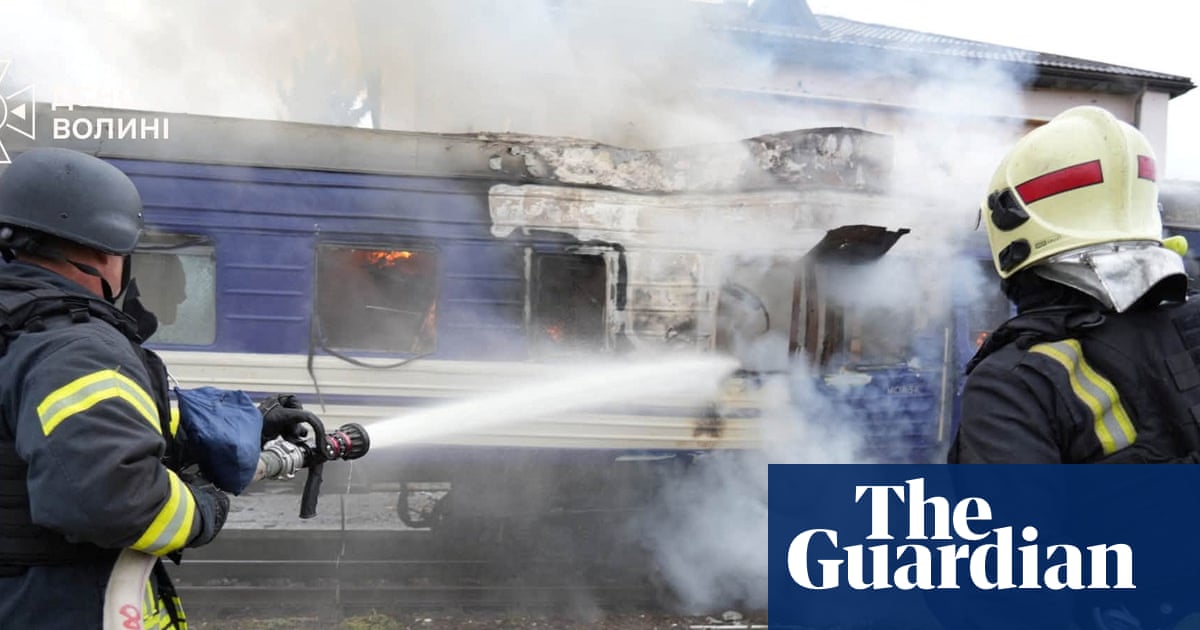
The Strike That Crossed a Line Nobody Had Named Until Now
At about 9am on Sunday, passengers on a Kyiv-to-Warsaw train were told to evacuate as the locomotive rolled within two kilometres of the Polish border. A few hours earlier, they had been ordered to disembark for two hours in the middle of the night — a routine drill during the current wave of overnight strikes. But this time, the mood shifted sharply when Katerina Sergatskova, director of the training organisation Daily Humanity, heard the first Shahed drone buzz overhead, only a few hundred metres from the frontier.
No one on board was hurt. But the geometry of the attack was unmistakable. This was not a straggler veering off course. This was a projectile that flew 100 kilometres through Ukrainian airspace, passed over western Ukraine — a region that has grown eerily quiet by wartime standards — and stopped its journey just short of NATO soil.
Ukraine’s foreign minister, Andrii Sybiha, did not mince words. He called it “Putin’s terror knocking directly on the doors of the EU and NATO.” Poland’s foreign minister, Radosław Sikorski, who had visited Kyiv days earlier, wrote simply: “Putin is escalating.”
The language of escalation is usually deployed after the fact. This time, the pattern preceded the diagnosis.
What Moscow Gains From Blurring the Boundary
Russian defence ministry officials immediately framed the attack as targeting infrastructure that facilitated military cargo movements from Europe into Ukraine. They also claimed a lorry less than a kilometre from the Dorohusk-Yahodyn border crossing was hit — though Ukrainian and Polish authorities treated that claim with visible scepticism.
The more interesting question is not whether Russia will publicly admit its aim but whether it achieved its objective without claiming credit. Three possible signals emerge from the strike:
First, Russia is testing NATO’s response threshold in real time. The alliance has never faced an armed attack on its territory that falls short of the Article 5 trigger. A drone that lands in Poland but is not attributed to a declaration of war creates a legal and political gap — exactly the grey zone where Moscow has been operating throughout this war.
Second, the overnight campaign that accompanied the train strike — 450-plus drones and missiles, 405 intercepts, four missiles that got through — shows that Russia is stretching its arsenal to see where Ukraine’s air defences fracture. Western Ukraine, usually shielded by layered Patriot and IRIS-T batteries, bore the brunt. Six people died across the country, including a 71-year-old woman in Mykolaiv. The pattern suggests Moscow is probing for weak points before committing to larger strikes that could reach further.
Third, there is a domestic message for both Russia and its adversaries. By striking within sight of the border, Russia signals that its long-range drone fleet remains operational despite Western sanctions and supplies of interceptor systems. It tells Polish and Baltic audiences that distance offers no immunity.
How NATO Reads the Moment
The alliance’s response so far has been calibrated. Lithuania scrambled a fighter jet after a perceived drone sighting at Vilnius airport, though it turned out to be a flock of birds. The airport reopened in 40 minutes. That incident, minor as it was, revealed the reflex: NATO is already on a higher alert posture along its eastern flank, and every ambiguity raises the stakes.
What makes this strike different from previous cross-border incidents is the civilian target. A passenger train is not a military convoy. It is not an ammunition depot. It is a symbol of the very connectivity that the EU has invested in since 2022 — rail links that bind Kyiv to Warsaw, Berlin, and beyond. Striking it sends a message that the war’s perimeter is expanding, even if the frontline has not moved on any map.
Poland’s interior minister, Marcin Kierwiński, called Russia “the enemy of the free world” in a statement that carried more weight than the usual diplomatic phrasing. That language has not been common in Warsaw since February 2022. It signals that Poland is no longer treating this as a distant conflict but as a direct and ongoing threat to its sovereignty.
What Changes Next
Several things are likely to shift in the coming weeks:
Air defence deployment. NATO will almost certainly accelerate the stationing of additional interceptor systems along the Polish-Lithuanian-Belarusian triangle. The lesson from western Ukraine’s exposure is that current deployments leave gaps.
Clarification of rules of engagement. Currently, Ukrainian forces can track and engage drones that cross into Polish airspace, but the legal framework for pre-emptive strikes against launch sites inside Russia remains contested. This attack will intensify debate in Brussels and Washington about whether the current constraints are too tight.
Trains and cargo routes. The Kyiv-Warsaw rail corridor may face restrictions or heightened security. If Russia can strike a train this close to the border without being stopped, both Ukraine and its European partners will reassess the viability of civilian rail during active strike campaigns.
US political friction. Donald Trump’s comments urging Zelenskyy to stop targeting Russian diesel fuel — citing shortages he blamed on the war rather than his own Middle East conflict — add a new dimension. The US president’s framing suggests Washington may prioritise European fuel markets over Ukrainian infrastructure strikes, a divergence that could strain the alliance precisely when cohesion matters most.
The Bigger Picture
What happened near Dorohusk is not a single event. It is a signal in a campaign that has been building since 2023, when Russia began shifting its strike strategy toward energy infrastructure and logistics nodes. The train attack represents the next logical step: pushing the boundary of what Moscow considers acceptable, knowing that NATO’s deterrence depends on unanimous interpretation of where the line sits.
Zelenskyy’s Telegram post — that Ukrainians are “fighting every day to prevent these strikes from spreading further into Europe” — captures the strategic reality. Ukraine’s defenders are absorbing strikes so that Poland, Lithuania, and Romania do not have to. But the price of that sacrifice is rising, and the margin for error is shrinking.
The drone that hit near the Polish border did not detonate on NATO soil. But it came close enough to redraw the map in everyone’s mind. The question now is whether the alliance treats this as a warning or as a rehearsal.