Three Carriers in the Middle East — What the Deployment Really Signals
The US has sent a third aircraft carrier to the Middle East as the Iran war stalls. This isn't a show of force — it's preparation for sustained escalation. Here's what oil markets, shipping routes, and allies should read into it.
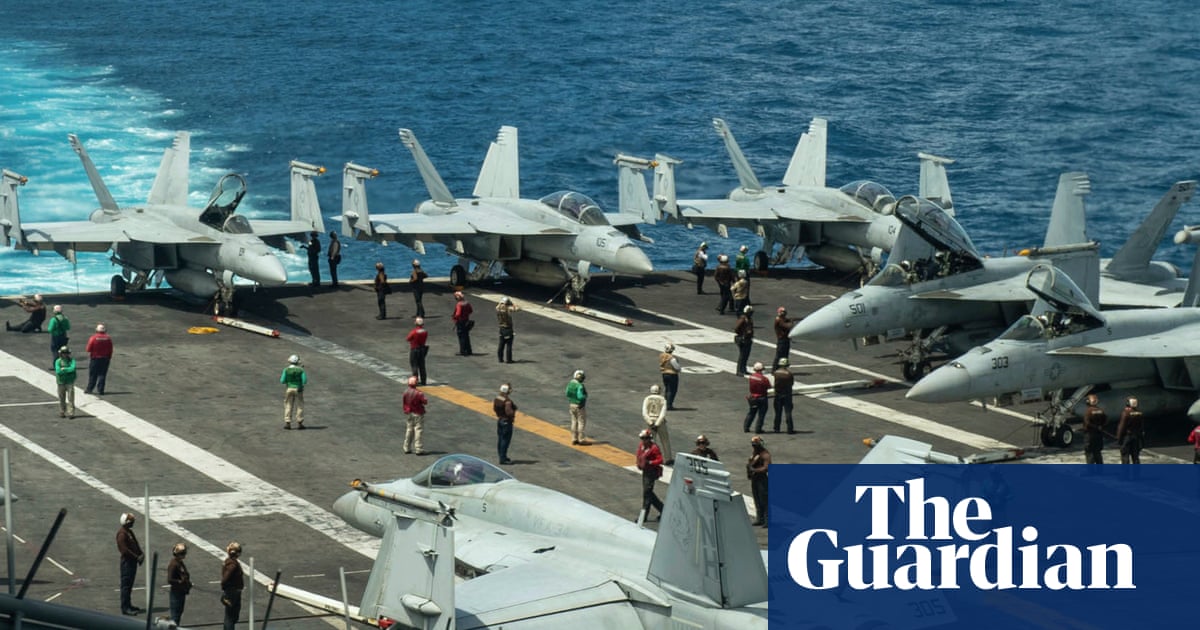
The Numbers Behind the Signal
The United States is moving a third aircraft carrier strike group toward the Middle East, joining two already in the region. The USS Theodore Roosevelt departs alongside the amphibious assault ship Makin Island, carrying 7,000 sailors and 2,000 Marines. When it arrives, roughly 20,000 American sailors and Marines will be concentrated in the theater — the largest naval presence since 2003.
That baseline matters. Three carriers in the Persian Gulf and surrounding waters is not a routine deployment. It is a configuration designed for protracted operations, not a flyover meant to intimidate. The USS George HW Bush and USS George Washington are already there, along with the USS Boxer amphibious group. The Washington was pulled from its usual Pacific patrol specifically to relieve the Abraham Lincoln, whose crew spent more than 260 days at sea. That detail alone tells you something about operational tempo and the strain on naval forces.
Why Now — and Why This Shape
President Donald Trump has floated the possibility of renewed bombing campaigns against Iran after the November midterms. In a Time interview, he rejected Iran’s latest ceasefire overture, calling it “not good enough.” He acknowledged the war’s declining popularity could hurt Republicans but insisted that preventing an Iranian nuclear weapon would ultimately play politically.
The military build-up tracks directly with that posture. Carriers don’t sail across the world without a plan. The addition of an amphibious readiness group to the Roosevelt strike package suggests something beyond air strikes — potential for marine operations, port denial, or pressure on coastal infrastructure. Neither the Pentagon nor the White House has confirmed specific objectives, but the composition of the force is its own message.
What Oil Markets Are Missing
Traders watching the Strait of Hormuz are focused on volume — roughly 21 million barrels per day flow through that narrow waterway. Disruption there would send prices surging. But the carrier deployment signals something subtler: the US is preparing to control or threaten that chokepoint more aggressively if diplomacy collapses post-midterms.
Iran has occasionally hinted at closing the strait as leverage. Trump’s dismissal of the latest ceasefire proposal — which reportedly included discussions about reopening Hormuz — indicates Washington is unwilling to negotiate on that term. More carriers in the region mean more capacity to intercept maritime traffic, enforce blockades, or target Iranian naval assets if the fighting escalates.
Oil markets have absorbed the current conflict at relatively muted levels because neither side has threatened critical energy infrastructure at scale. That could change. A sustained carrier presence gives the US military the ability to project force deep into Iranian territory while simultaneously securing sea lanes. It’s a dual capability that raises the stakes for any future disruption of Hormuz traffic.
Supply Chains on the Brink
Global shipping insurers are already pricing war risk premiums into vessels transiting the Gulf. A three-carrier posture suggests those premiums could climb further if strikes resume. The Middle East isn’t just about oil — it’s about the broader web of shipping routes connecting Asia to Europe, with containers, liquefied natural gas, and manufactured goods moving through the same waters.
Even the perception of escalation creates friction. Ports along the route adjust schedules. Crews request hazard pay. Insurers redraw coverage maps. These are small disruptions that compound. If the US moves from containment to active escalation after the midterms, expect supply chain costs to reflect that shift well before any missile fires.
Who Wins, Who Loses
Regionally, Israel and Gulf cooperation council states may welcome the increased American military presence as a deterrent against Iranian aggression. But they also bear the risk of becoming secondary targets if Iran shifts tactics toward regional assets. The carriers provide a shield, but they also concentrate high-value military assets in a geography Iran has long sought to deny to adversaries.
For Iran, the deployment is a straight escalation. Three carriers represent roughly 100 to 150 combat-ready aircraft, plus supporting helicopters, drones, and maritime strike platforms. That’s a force capable of sustained air campaigns, not symbolic visits. Tehran’s leadership likely views this as preparation for something broader than the current stalemate.
For the American public, the politics are murky. Trump framed the buildup as necessary to prevent a nuclear Iran, but the war remains unpopular and no clear endpoint exists. The midterms add a timing dimension that makes this feel less like strategic patience and more like political preparation.
What Comes Next
The Roosevelt strike group is expected to arrive by late October. If the Washington rotates back to the Pacific as planned, the region would still retain three carrier-capable forces — two strike groups and one amphibious readiness group. That configuration supports ongoing operations without appearing desperate, but it also leaves room for further reinforcement if the political calculus shifts after November.
Trump’s refusal to elaborate on post-midterm strategy is itself strategic ambiguity. It keeps Iran guessing and markets unsettled. But it also raises the risk of miscalculation. When forces are this large and intentions this opaque, accidents happen faster than diplomacy can respond.
The real story isn’t that America sent another carrier. It’s that the war has settled into a stalemate Washington isn’t willing to accept and Iran isn’t willing to surrender. Three carriers in the region say exactly that — without a single word from Washington.