The Three-Japanese-Brand Custom Car Hiding in Plain Sight
A custom Honda Integra once spotted in OPTION2 magazine looks like a Mitsubishi Evo IX in the front and a Nissan 180SX in the rear. It turns out nothing is what it seems — and the headline about a three-brand alliance is pure misdirection.
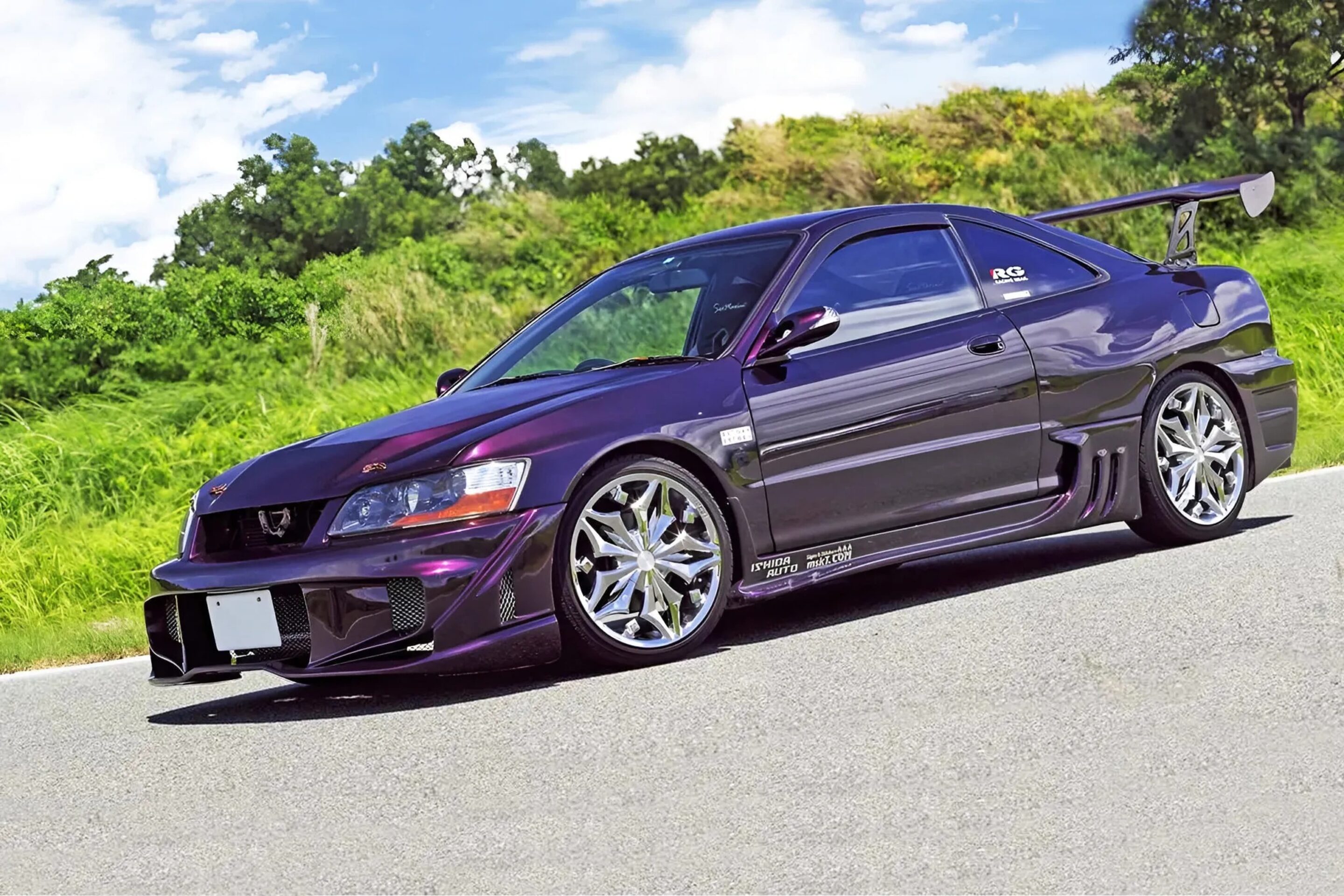
The headline that wasn’t
A single custom car has circulated through Japanese automotive media carrying a headline that reads like corporate gossip: “Honda, Mitsubishi, Nissan — an unlikely union?” The image it accompanies shows a front end that looks unmistakably like a Mitsubishi Lancer Evolution IX, a rear that recalls a Nissan 180SX, and a body that is, in fact, a 1990s Honda Integra DC2.
That mismatch is the point. What looked like a corporate convergence is a one-off custom build — but the confusion itself reveals something worth analyzing about how Japanese car culture operates, and how headlines are constructed in a market where attention is the scarcest commodity.
What the car actually is
The Integra DC2 is a legendary platform in its own right — lightweight, rear-wheel drive, and one of the most modified cars in the JDM canon. The owner didn’t stop at stock upgrades. They grafted an Evo IX headlight assembly and core support onto the Integra’s front frame, blended in Evo fenders (keeping only the Integra’s mounting points), and modified the bumper and hood to make the seams barely visible.
The rear was even more ambitious. A complete 180SX rear panel, taillights, and related trim were sourced from a wrecked example and移植ed onto the Integra. A D-MAX blister fender kit helped smooth the body lines. The trunk hatch required significant fabrication because the latch height didn’t match — a detail that would have collapsed the illusion for anyone who knew what to look for.
Under the hood sat a Tadano Racing-built engine with 82mm pistons, a high-compression setup paired with a 5-dimensional EX manifold and an R1 titanium muffler. The exhaust note was described as high-frequency and visceral. The entire project took a year to complete.
Why the headline works
The headline plays on a very specific cultural moment. In 2024 and 2025, Honda, Nissan, and Mitsubishi announced a series of partnerships — software co-development, shared EV platforms, and merger talks between Nissan and Mitsubishi. The corporate news cycle made any headline mentioning all three names feel urgent, even revolutionary.
Motor Fan, the publication that ran the piece, understands its audience. Readers familiar with the auto industry’s current drama would see “Honda + Mitsubishi + Nissan” and assume corporate significance. The subheadline — “This car’s identity is too unclear” — adds just enough doubt to make you click, then delivers a story about sheet metal and welds instead of supply chains and equity stakes.
It’s a form of editorial misdirection that has existed as long as automotive journalism itself. Tabloids do it with celebrity gossip; car magazines do it with builds that look impossible.
The deeper story beneath the gimmick
The real significance isn’t the headline trick. It’s what the build demonstrates about the state of Japanese automotive manufacturing and modification culture.
First, the parts ecosystem. The builder didn’t commission custom fabrication for every panel. They sourced used Evo IX headlights, a wrecked 180SX rear clip, aftermarket fender kits from D-MAX, and performance internals from Tadano Racing. The availability of these components — many from vehicles no longer in production — speaks to a mature secondary market that Western markets struggle to replicate. In America, a similar build would face sourcing nightmares and prohibitive costs.
Second, the skill floor. Blending body panels from three different manufacturers so that the transitions are invisible requires metalwork skills that are rare even among professional customs shops. The fuel filler lid adjustment — using a magnet lock and key cap to solve a panel gap problem that most builders would either patch poorly or abandon entirely — is exactly the kind of detail that separates amateurProjects from professional-grade builds.
Third, the cultural context. This kind of Frankenstein build is a recognized genre in Japanese car culture. It’s called mekuri — literally “head-turning” — and it celebrates the audacity of combining incompatible sources into something coherent. The Evo front on an Integra isn’t just aesthetically striking; it’s a commentary on what those two models represent. The Evo is all about Mitsubishi’s rally-bred AWD identity. The Integra DC2 is Honda’s entry-level driver’s car. The 180SX is Nissan’s style-forward sports coupe. Stacking them together is a form of visual essay about Japanese performance identity.
Who wins, who loses
The builder wins — the car appeared in OPTION2, a respected Japanese tuning magazine, which is essentially the highest honor a custom car can receive in that market. The exposure validates hundreds of hours of work and likely increases the car’s value among collectors.
The manufacturers win tangentially. Each brand’s design language is being treated as iconic enough to borrow from. That’s cultural capital, even if no one is licensing it.
Readers who expected corporate news lose — they clicked for merger analysis and got a story about titanium mufflers and blister fenders. But that loss is minor compared to what the industry gains: continued engagement with car culture content, which sustains the magazines and platforms that keep enthusiast communities alive.
What happens next
Custom builds like this don’t drive industry strategy. But they do signal something about brand equity. When a builder trusts that an Evo IX front end will read as “Mitsubishi” on an Integra body, it means Mitsubishi’s design identity remains potent — a relevant point as the company renegotiates its place in the Nissan-led alliance. When an 180SX rear panel is considered worth the effort to transplant, it means Nissan’s styling legacy still carries weight decades after those cars left production.
The Honda-Nissan-Mitsubishi alliance is real and structural. The car that triggered this analysis is not. But both stories share a common thread: Japanese automotive identity is being reassembled, whether through boardroom deals or weld marks on a Integra hood.
The headline got you curious. The car is the answer.