Three Tech CEOs Derailed US AI Regulation — Here's What Comes Next
Nvidia, Meta, and SpaceX leaders reportedly convinced Trump to block a proposed AI watchdog. The move consolidates unchecked power in Silicon Valley and risks fracturing the global race to govern artificial intelligence.
The Meeting That Killed a Regulator
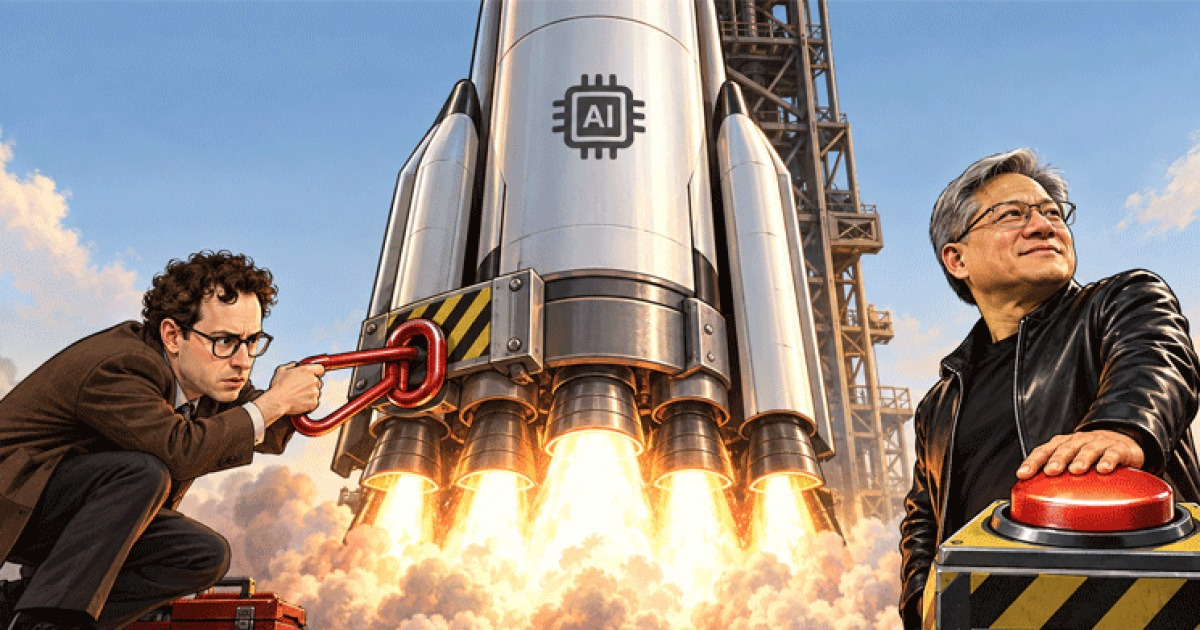
According to the Wall Street Journal, three of the most powerful figures in technology recently walked into the Oval Office and walked out with a regulatory body dead. Jensen Huang of Nvidia, Mark Zuckerberg of Meta, and Elon Musk of SpaceX each held separate conversations with Donald Trump in recent weeks, arguing against the creation of an AI oversight institution and winning. What Trump ultimately decided to do with that information — reject the proposal entirely — marks one of the most direct instances yet of individual tech CEOs shaping federal policy.
The target was a self-regulatory AI body proposed by Demis Hassabis, Google’s chief scientist. The model was deliberate: FINRA, the financial industry’s own regulatory arm. The idea was that AI companies would set their own safety standards under an industry-led framework, similar to how Wall Street polices itself. It was a compromise position — not government regulation, but not pure voluntarism either. That made it vulnerable.
Huang, Zuckerberg, and Musk opposed it on two fronts. First, they argued the body would concentrate power in the hands of OpenAI, Anthropic, and Google — the very companies now leading the race. Second, they raised concerns about who would sit on it. The implication was clear: any body with real teeth would be controlled by their competitors, not them.
They told Trump they preferred a minimal-regulation approach. He agreed.
The White House Already Wasn’t United
This wasn’t a foregone conclusion. Inside the White House, the AI governance debate was already split. Suzy Wiles, the White House chief of staff, and Sean Cashcross, the National Cyber Director, pushed for stronger AI oversight and guardrails. David Saxon, chair of the White House Science and Technology Council, reportedly urged Trump to stick with the lighter touch. The CEOs’ direct lobbying likely tipped the balance toward Saxon’s position.
Trump’s public framing sealed it. He took to Truth Social to call the push for AI regulation a “toxic conspiracy,” arguing that slowing AI development benefits only China. The line — “the only ones happy about this are China” — is a familiar political move: equate regulation with weakness and deregulation with dominance. It reduces a complex policy question to a binary about national competitiveness.
That framing has real consequences. If AI regulation is politically branded as pro-China, any administration that values strength over scrutiny will avoid it. The result is a policy environment where the default is acceleration, not caution.
Who Stands to Gain, Who Stands to Lose
The winners are obvious. Nvidia, Meta, and SpaceX face no new oversight constraints. Their development timelines remain their own. Huang can continue shipping GPUs at pace. Zuckerberg can keep building the metaverse and its AI stack without an external body questioning safety protocols. Musk can deploy Grok and other systems on whatever schedule he chooses.
The losers are harder to name because they are abstract: the public, the global community, future researchers working in a field that may outpace its own safety understanding. But there is also a concrete loser in this specific arrangement. The companies that were building their political strategy around responsible leadership — OpenAI, Anthropic, and to some extent Google — see their influence diminished. Hassabis’s proposal was an attempt by leading AI labs to signal self-restraint. It was rejected not by regulators, but by rival CEOs who benefit from the absence of restraint.
The irony is that Musk at least nodded at the safety concern. When Dario Amodei, Anthropic’s CEO, called for slowing AI development, Musk agreed in principle. But his company has offered no concrete plan to reduce its own development pace. The distinction matters: it is easy to agree that safety is important while taking no action that changes your trajectory.
The Global Ripple
The United States is not the only country weighing AI regulation. The EU has the AI Act, already law, with enforcement ramping up. China has its own regulatory framework, increasingly focused on AI. The UK has announced its pro-innovation approach. Japan, South Korea, and others are all drafting policies.
What happens in Washington sends a signal to every capital doing the same work. If the world’s largest AI market — home to OpenAI, Google DeepMind, Anthropic, and Meta — refuses to create any oversight body, even a self-regulatory one, it gives cover to every government that wants to avoid regulation. The argument becomes: even America, the land of Silicon Valley, cannot agree on guardrails.
That dynamic will play out differently depending on which countries have their own AI champions. Europe will likely press ahead with enforcement regardless. China will continue its state-directed model. But the US retreat from even voluntary oversight removes a key counterweight to the “let everyone regulate however they want” position that deregulation-friendly governments can cite.
The result is a fragmented governance landscape. Companies operating globally will face different rules in different markets. Nvidia designs chips in the US under no AI-specific oversight, Meta deploys in Europe under the AI Act, and Chinese firms build under Beijing’s framework. Coordination becomes harder. Accountability becomes thinner.
What Comes Next
The immediate question is whether this decision holds. Trump’s position was shaped by direct CEO lobbying and a political instinct to frame regulation as weakness. Neither is permanent. If a safety incident occurs — and the pattern of rapid AI deployment suggests one is possible — the political calculus could shift quickly. The White House’s internal debate proves the issue is not settled, only paused.
The longer-term question is what happens to the self-regulation model itself. The FINRA analogy is apt in structure but wrong in stakes. Financial self-regulation exists alongside SEC oversight, capital requirements, and enforcement mechanisms. The AI body Hassabis proposed was meant to be a first step, not a final arrangement. Removing it entirely leaves a vacuum.
There is also the question of whether the US will produce an alternative. A policy gap does not stay empty for long. States, cities, and international bodies will fill it. The EU’s AI Act already has extraterritorial reach. China’s framework extends to companies operating in its market. The US company that wants to sell in all three zones will need to comply with all three regimes — or risk exclusion.
The CEOs who lobbied Trump may have won this battle. But the war over how AI is governed globally is far from over. The next chapter will depend on whether safety concerns catch up to political convenience, and whether the companies that championed deregulation can still claim the moral high ground when something goes wrong.