Tim Cook Built the Machine That Makes Apple $3T. What Happens Next?
Tim Cook's final day as Apple CEO marks the end of an era built on supply chains, not chips. The question isn't just who replaces him — it's whether the next CEO can turn Apple's hardware dominance into genuine AI dominance before the $3T valuation cracks under competitive pressure.
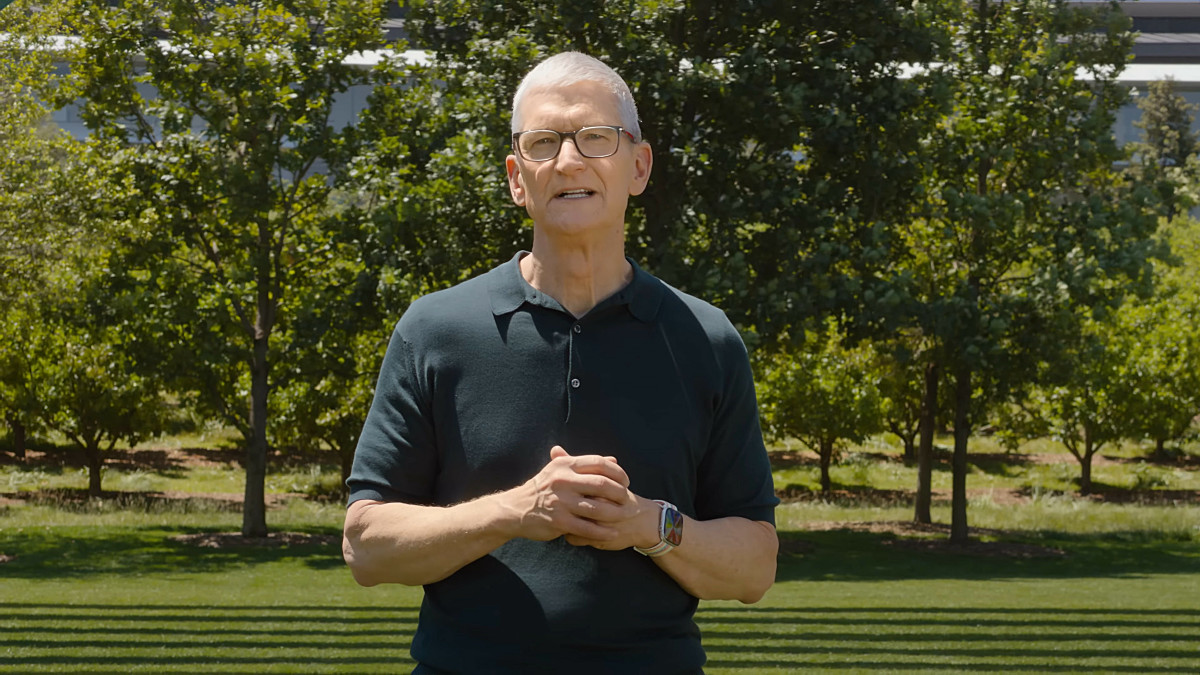
The End of the Operational Emperor
Tim Cook’s last day as Apple CEO was not marked by a dramatic farewell or a sudden storm. On August 31, 2026 — just one day before the post appeared on GIGAZINE’s Japanese desk — Cook logged off, posted a quiet message of gratitude on X, and handed over a company that had grown from a near-bankrupt garage project into the world’s most valuable enterprise. His words were warm, personal: “Sending lots of love to the Apple community on my last day as CEO.” But behind that softness was something far more consequential than sentiment.
Cook is leaving behind a $3 trillion market cap, yes — but more importantly, he is leaving behind a company whose value is not derived from a single visionary’s taste for minimalist design, but from an operational machine so thoroughly built, so deeply embedded in every factory, warehouse, and flash memory contract on Earth, that replacing him is not merely a leadership transition. It is a structural question.
What Cook Actually Built
Let us be precise about what Tim Cook did at Apple between 1998 and 2011, because this is where the next CEO inherits not a brand, but a blueprint.
Cook did not design the iPhone. He did not conceive the iPod. What he did — and what few English-language analysts seem to fully appreciate — was make those products possible at scale. As Senior Vice President of Global Operations, he reformed Apple’s factories and warehouses, which in the late 1990s were chaotic, fragmented, and unreliable. He made the decisive early bet on flash memory storage, investing in the component that would become the backbone of the iPod nano, the iPhone, and every iOS device that followed. Without that bet, Apple’s hardware ecosystem does not exist in the form we know it.
He joined Apple in 1998 at Steve Jobs’s invitation — not as a product person, but as an operations fixer. When he became CEO in August 2011, following Jobs’s death, he inherited not a company built on genius, but a company built on discipline. And he ran it with more discipline than any CEO in tech history.
The result: Apple went from a $100 billion company to a $3 trillion company in fifteen years, not through a single product breakthrough, but through relentless operational excellence, supply chain control, and the ability to deliver millions of identically perfect devices every quarter.
The AI Question Nobody Is Asking in Tokyo
Here is what the Japanese tech press is not discussing enough: Apple’s AI strategy remains unclear, and Cook’s departure may expose that ambiguity more sharply than any CEO transition in recent memory.
On August 27, 2026 — three days before his final day — Cook hosted Tsunekazu Ishihara, CEO of The Pokémon Company International, at Apple Park in Cupertino. A photo circulated showing Cook, Ishihara, and Pikachu together. On the surface, this looked like a casual partnership announcement. But read it differently, and it signals something important: Apple is still searching for its next category-defining relationship after the hardware maturity curve flattens.
Pokémon is a franchise built on collectibility, community, and cross-platform play. Apple is a company built on closed ecosystems, premium pricing, and hardware loyalty. The meeting suggests Apple is exploring whether its ecosystem can serve as a hosting platform for intellectual property-driven experiences — a space where AI could play a role, but where the business model is still undefined.
Meanwhile, Google has DeepMind integrating generative AI across search, YouTube, and Android. Microsoft has Copilot baked into every Office product. OpenAI has GPT serving millions of developers daily. Apple, despite claiming “Apple Intelligence” as a core pillar, has been notably quiet on the public front. Its AI features have been incremental, privacy-forward, and deliberately restrained — which is both a strength and a strategic risk.
The question for the next CEO is not whether Apple can build AI. The question is whether Apple can build AI that changes how people use their phones, or whether it will remain an add-on layer on top of a hardware empire that Cook spent his entire tenure perfecting.
The Supply Chain Inheritance
Cook’s deepest legacy is not in product strategy. It is in the supply chain. Japan’s tech supply chain — the精密部品 manufacturers in Niigata, the OLED panel producers in Kumamoto, the flash memory fabs in Yokkaichi — remains deeply integrated with Apple’s operations. These are not abstract relationships. They are physical, financial, and temporal dependencies that take decades to build and minutes to rupture.
When Cook made his flash memory bet in the early 2000s, he was not just securing component supply. He was securing timing. Apple’s ability to launch products on schedule, year after year, depends on relationships that predate the iPhone. The next CEO inherits not just a company, but a network of factories, suppliers, and logistics channels that are so tightly woven that no competitor can replicate them without decades of effort.
But here is the vulnerability: supply chain mastery is a defense mechanism, not an offense. It protects Apple’s margins and its launch schedules. It does not create new markets. If the next phase of value creation belongs to AI-native experiences — conversational interfaces, personalized agents, predictive computing — then operational excellence alone is insufficient. The next CEO must figure out how to convert Apple’s hardware supremacy into software and AI supremacy before the window closes.
Who Comes Next, and Why It Matters
The source material does not name Cook’s successor. What it does confirm is that Cook remained active until the final hours — hosting visitors, signing off with warmth, ensuring continuity. That is characteristic: Cook has always been a steward, not a showman. His replacement will likely be chosen for the same reason he was chosen in 2011: someone who can hold the machine together while the world changes around it.
But the world has changed more since 2011 than it has since 1998. The AI revolution is not a product cycle. It is a paradigm shift. And Apple’s response has been careful, cautious, and deliberately slow. That caution kept Apple’s privacy promise intact. It also left the company trailing competitors who moved faster, launched more publicly, and accepted more risk.
The $3 trillion valuation is not a prediction. It is a record of what has already happened. The question for the post-Cook era is whether Apple can justify that valuation with something new — or whether it will be forced to defend it with the same operational brilliance that built it.
What Japanese Readers Should Understand
For readers following Apple from Tokyo, the Cook departure is not just a Silicon Valley story. It is a supply chain story. It is a flash memory story. It is a story about the relationship between American corporate leadership and Japanese manufacturing excellence — a relationship that has sustained Apple’s hardware dominance for over two decades.
The meeting with Pokémon’s Ishihara is a small moment, but it is telling. It suggests Apple is still looking for its next cultural partnership, its next category bridge, its next reason for people to care about the ecosystem beyond the device in their pocket. AI may be the answer. Or it may be something else entirely — something Cook, in his final days, was still figuring out.
What is clear is that the operational empire he built is not easily transferred. It is embedded in contracts, in relationships, in the timing of shipments and the quality of panels and the reliability of suppliers across three continents. The next CEO does not inherit a brand. He inherits a machine. And the machine, for all its precision, now faces a world that rewards speed over stability, vision over discipline, and risk over caution.
Cook spent his entire tenure mastering the latter. The next era will demand mastery of the former.