Toyota's Arene Bet: Why SDVs Will Redefine Auto Competition
Toyota plans to put its Arene software platform in 50 models and 10 million vehicles by the early 2030s — a structural pivot that could reshape the global auto industry.
Toyota Is All-In on Software. The Industry Should Be Paying Attention.
At a technical briefing in Europe, Toyota laid out a plan that sounds incremental but is actually structural: by the early 2030s, it will have equipped 50 vehicle models — more than 10 million units annually — with its Arene software-defined vehicle (SDV) platform.
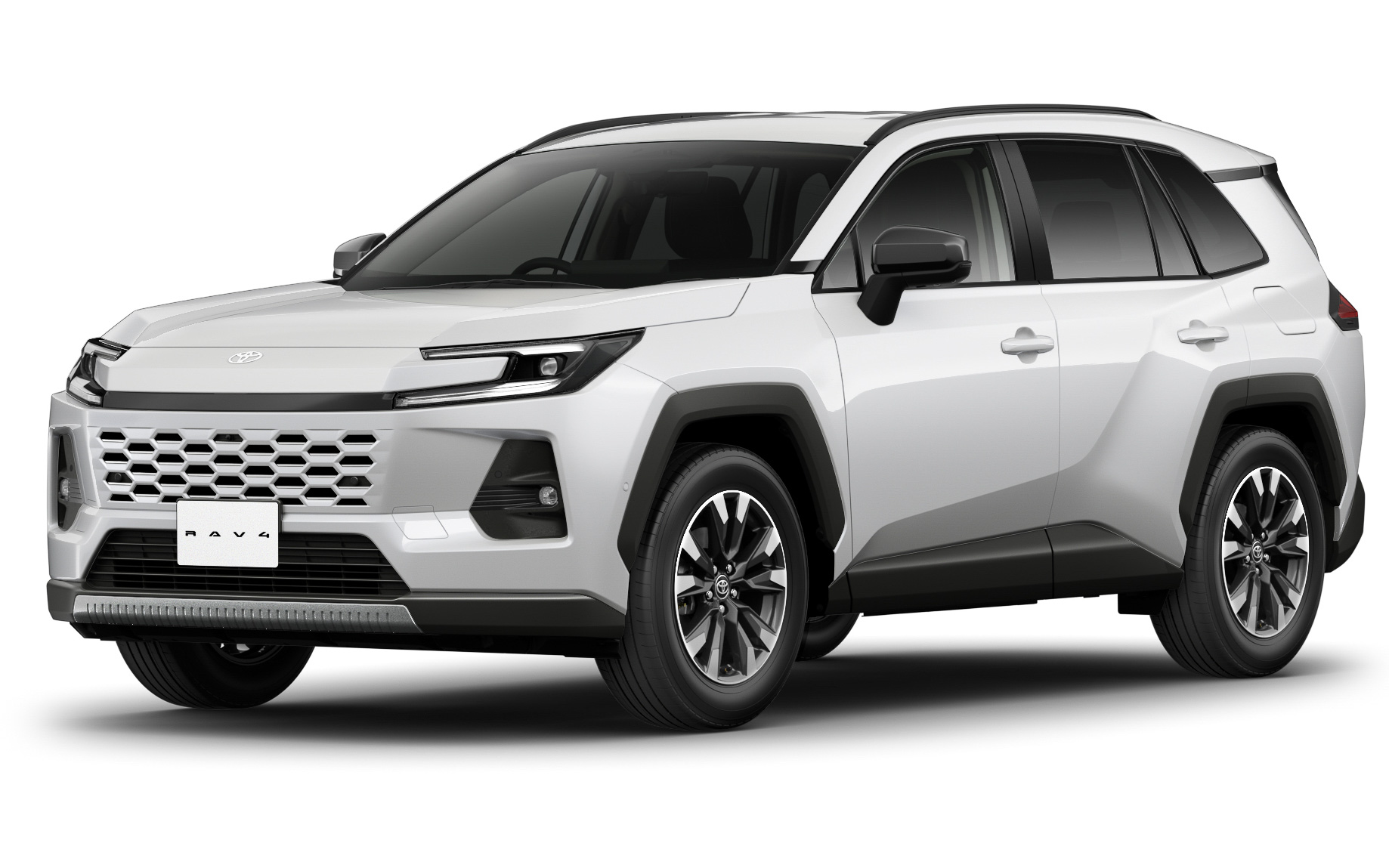
Currently, that number is one model and roughly one million units: the RAV4. The gap between here and there is where the real story lives.
What Arene Actually Is
Toyota describes Arene as a software creation platform, not an operating system. That distinction matters. Arene does not sit on top of a specific system-on-chip (SoC). Instead, it sits above the SoC layer, providing an API set that abstracts away hardware differences. Toyota calls this approach “Hardware Abstraction Layer” (HAL) — the same concept already standard in Windows 11 and macOS, now being applied to automotive silicon for the first time at this scale.
In practice, this means Toyota can mix and match high-performance SoCs, specialized-function chips, and cost-effective processors across its portfolio without rewriting software for each one. The HAL absorbs the differences. Software development overhead — the single biggest cost driver in SDV programs — drops accordingly.
For the RAV4, Arene currently covers two domains: ADAS (advanced driver assistance systems) and IVI (in-vehicle infotainment). Toyota plans to expand and consolidate into additional domains over time.
The Numbers Behind the Announcement
Let’s be concrete about what Toyota is committing to:
- Now: One SDV model (RAV4), approximately 1 million units
- Early 2030s: 50 models, over 10 million units with Arene
- Trajectory: Roll out to all Toyota models, expanding from two domains to full vehicle integration
That trajectory represents a tenfold increase in unit volume and a tenfold increase in model count. For a company that built its reputation on hardware refinement and mechanical reliability, this is a dramatic reorientation.
Why This Matters Beyond Toyota
The auto industry is currently locked in a software arms race. Tesla proved that vehicles could be updated, monetized, and differentiated through software. Chinese manufacturers like NIO, XPeng, and BYD are building software stacks from the ground up. European incumbents are scrambling to catch up with in-house platforms or partnerships.
Toyota’s approach — building an abstraction layer rather than betting on a single chip supplier or OS vendor — is quietly more ambitious than it appears. It positions Toyota to integrate any SoC without being locked into a single ecosystem. That flexibility is rare in an industry where most manufacturers are tied to specific chip architectures from Qualcomm, NVIDIA, or mobileye.
There is also a second thread in Toyota’s announcement that English-language coverage has largely ignored: “Extended Arene” (拡張アリーナ).
The Physical AI Angle
Toyota is explicitly planning to extend Arene beyond vehicles into physical AI robots and even home platforms. The company demonstrated a physical AI robot called “Eely” (エリー) alongside the SDV announcement. The implication is that Toyota envisions a unified software layer spanning cars, robots, and buildings — a vision that aligns with its broader “Technology House” strategy.
No other major automaker is making this kind of cross-domain software play yet. Tesla has Optimus robots, but its software stack is tightly coupled to its own vehicle hardware. Chinese competitors are pursuing robotics separately. Toyota is attempting to build a single abstraction layer that could run on anything with wheels, legs, or a fixed base.
If that vision holds, Toyota is not just building SDVs. It is building the operating system for physical AI — and cars would be the first, largest product line.
Who Wins, Who Loses
Winners: Toyota’s software engineering organization, which now has a clear path to reducing per-vehicle development costs at scale. Chip suppliers who can fit into Toyota’s HAL framework, since the abstraction layer opens the door to multiple SoC vendors rather than locking Toyota into one. Customers who benefit from cheaper software development eventually translating to lower vehicle costs or more features.
Losers: Legacy Tier 1 suppliers whose business model depended on selling integrated hardware-software bundles. Single-chip-dependent automakers who lack the resources to build their own abstraction layers. Suppliers betting everything on one SoC architecture — if Toyota’s HAL proves successful, it becomes harder to charge premium prices for proprietary silicon.
Uncertain: The global EV transition. Toyota has not explicitly tied Arene to electrification. The platform is software-agnostic. This means Toyota could accelerate EV software readiness — or it could keep advancing SDV capabilities across its hybrid and fuel-cell lines while EV competitors scramble to catch up on software.
What Happens Next
The critical question is execution. Announcing a 50-model, 10-million-unit SDV roadmap by the early 2030s is one thing. Delivering it is another. Toyota’s RAV4-based SDV is still in the early stages — two domains, one model. The jump to 50 models requires not just engineering talent but a fundamental shift in how the company develops, tests, and deploys software.
Toyota will need to build internal software culture at a scale it has never attempted. It will need to manage relationships with dozens of chip suppliers through its HAL framework. It will need to prove that Extended Arene can actually run on robots and home platforms — not just in concept demonstrations.
The timeline is tight. The early 2030s is six years away. If Toyota delivers even partially on this plan, it will have done what few legacy automakers thought possible: built a software platform competitive with Tesla and Chinese EV makers while maintaining a multi-chip, multi-domain, multi-product strategy.
If it fails, the announcement will look like ambitious PR masking the same slow transformation that has plagued Toyota’s EV efforts for years.
The stakes are high enough that the industry should watch closely — and not just in Japan.