Toyota's H24EVO Is a Quiet Bet Against an All-Electric Future
Toyota is supplying a 650kW hydrogen combustion engine for Le Mans' MissionH24 prototype class. The move isn't just motorsport theater — it's a signal that Toyota sees hydrogen as a durable parallel pathway to electrification, and wants the world's most historic race to prove it.
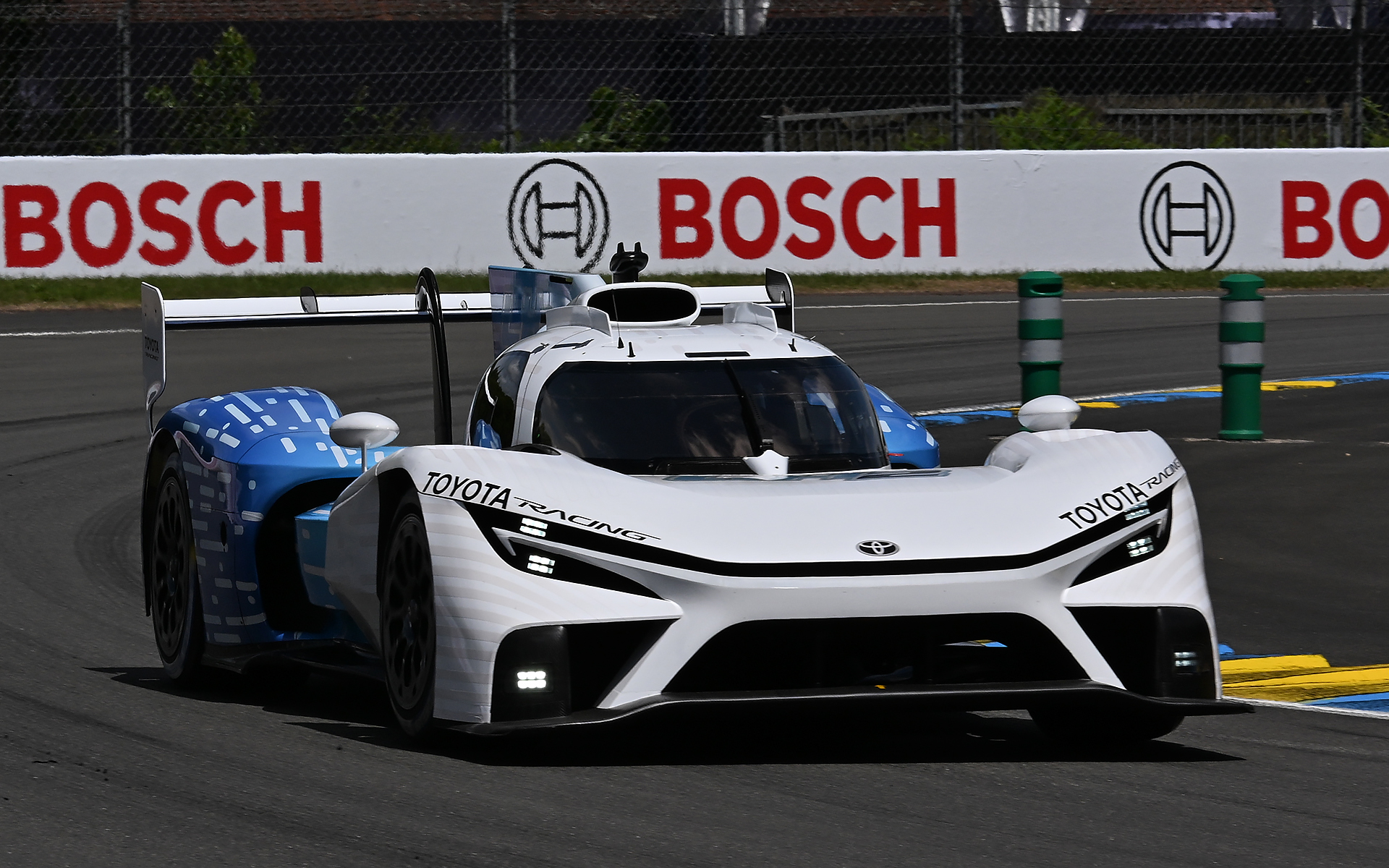
The Sound at Le Mans Will Be Different Next Year
In 2026, the Circuit de la Sarthe will echo with a new kind of engine note. Not the high-revving whine of a hybrid turbo four, not the sustained drone of a diesel, but something closer to a jet — the signature sound of hydrogen burning in a 3.5-liter V6 at up to 10,000 rpm.
Toyota confirmed at Fuji Speedway on September 26 that its hydrogen internal combustion engine will power the MissionH24 “H24EVO” prototype, the third evolution of ACO’s grassroots push to bring a zero-carbon-below-the tailpipe category to Le Mans. The engine produces 650 kilowatts, roughly 884 brake horsepower. Kazuki Nakajima, the three-time Le Mans winner who now serves as team director for Toyota Racing, will take the wheel for the demo run.
What makes this moment quietly significant goes well beyond the spectacle. Toyota is making a strategic bet that hydrogen — both as a combustion fuel and as a feedstock for fuel cells — deserves infrastructure, credibility, and real-world validation on the most visible stage in motorsport. The company is not just participating in MissionH24. It is helping define it.
From Demo Car to Championship Contender
The arc began in 2023, when Akio Toyoda — still active as chairman despite stepping down from the presidency — revealed a water-cooled hydrogen combustion engine at the Le Mans press conference and then drove a hydrogen Corolla around the circuit. That car ran on compressed gaseous hydrogen. The H24EVO engine, by contrast, uses liquid hydrogen, which raises the energy density and changes the engineering calculus entirely.
Liquid hydrogen must be stored at minus 253 degrees Celsius. Managing that aboard a race car under 24 hours of thermal and mechanical stress is a substantial challenge. But solving it in a controlled racing environment is precisely how Toyota intends to accelerate the technology toward road relevance. The leap from a press-demo Corolla to a 650-kilowatt racing prototype represents the kind of iterative pressure-testing that pure laboratory development cannot replicate.
Nakajima’s involvement is deliberate. He is one of the few drivers alive who has won Le Mans in a hybrid Toyota, a diesel Peugeot, and now will demo a hydrogen prototype. His presence bridges the emotional lineage of the event with Toyota’s technological pivot.
The European Angle Nobody Is Talking About
Here is what English-language coverage tends to miss: the European reception matters enormously for this project.
Pierre Fillon, president of the Automobile Club de l’Ouest, owns a Toyota Mirai and has been openly eager for hydrogen racing to succeed. His enthusiasm is not theatrical — it is the stance of a man who has watched battery-electric solutions struggle to gain traction among European fans and regulators who view hydrogen as a legitimate industrial policy tool. Fillon’s support signals that MissionH24 has institutional backing at the highest level of Le Mans governance, not just enthusiasm from a handful of engineers.
That institutional alignment is rare in motorsport. Most alternate-fuel classes die because they lack a governing body willing to risk its flagship event on an unproven proposition. ACO is risking its 104-year history on this one. That alone should tell you how seriously the organization takes hydrogen.
Europe’s industrial policy is also shifting. The European Union’s fit-for-55 package and member-state subsidies for green hydrogen production create a tailwind that Japan’s domestic market alone could not generate. Toyota’s decision to supply third-generation fuel cell stacks to other manufacturers at IAA Transportation in Hanover in September 2026 — announced by CTO Yuki Nakajima, no relation to Kazuki — reinforces the read: Toyota is positioning itself as a hydrogen components supplier, not just an automaker that happens to race with hydrogen.
Who Wins, Who Loses
If MissionH24 gains momentum, the winners are clear. Toyota gains a technology demonstration platform that operates under conditions no wind tunnel can simulate. ACO gains a compelling sustainability narrative that does not require retiring existing race cars or rewriting decades of sporting regulations. European hydrogen producers gain a high-visibility application that validates their investment thesis.
The losers are less obvious but equally real. Battery-electric racing programs — particularly any that were counting on Le Mans legitimacy to drive consumer EV adoption narratives — lose a rival technology that sounds good, looks legitimate, and performs under extreme stress. The internal combustion engine loses a defender: hydrogen combustion is still combustion, still requires a fuel infrastructure, and still produces emissions at the point of use, even if the lifecycle picture improves with green hydrogen.
Then there is the audience. Motorsport fans who found battery-electric series impressive but emotionally flat may find themselves re-engaged by a category that retains the visceral qualities of racing — noise, heat, mechanical complexity — while claiming a cleaner footprint. That is a powerful narrative to sell at a time when traditional endurance racing has struggled to maintain cultural relevance against the glitter of Formula E and the dominance of Tesla-backed Formula One narratives.
The Real Test Is Not the Engine
The H24EVO engine is impressive on paper. Six hundred and fifty kilowatts from a naturally aspirated or turbcharged 3.5-liter V6 burning liquid hydrogen is competitive with some current Le Mans Hypercar power units. But the engine is the easy part.
The hard part is the ecosystem. Green hydrogen must be produced at scale, transported, stored, and refueled at a circuit that currently has no hydrogen infrastructure. The 24-hour format amplifies every logistical challenge: pit stops must be faster than ever, safety protocols must be rigorously tested, and any failure mode involving cryogenic fuel presents risks that gasoline or diesel do not.
Toyota is aware of this. The company has spent years developing hydrogen combustion technology across multiple platforms — the GR Yaris rally crossover, the Mirai sedan, the Supra concept studies — and has openly acknowledged that hydrogen internal combustion engines are not a panacea. They are, in Toyota’s framing, one pathway among many in a portfolio approach to decarbonization.
What distinguishes the H24EVO announcement is that Toyota is no longer talking about hydrogen as a parallel option. It is building the most visible hydrogen racing program on the planet and inviting the world to watch.
What Happens Next
If the 2026 demo run succeeds — and early indications from the Fuji press conference suggest confidence on all sides — the logical next step is a full competition debut in the 2027 season. That would give MissionH24 two years of development under the spotlight before it asks manufacturers to commit serious resources. It is a patient timeline, but patient timelines win in endurance racing.
Toyota’s parallel move to supply fuel cell components to other automakers suggests the company is preparing for a future in which hydrogen technology transcends its own vehicle lines. If that happens, the H24EVO engine could become a benchmark reference — the way the 3.5-liter V6 became the default architecture for GT racing for two decades.
The question for readers outside Japan is simple: does this matter beyond the paddock?
Yes. Because the cars that win Le Mans shape the technology that reaches consumers. Hybridization entered endurance racing and landed in your daily driver within a generation. Turbocharging did the same. If hydrogen combustion or hydrogen fuel cells prove themselves at Sarthe, the cost curves shift, the supply chains mature, and the political debate about which decarbonization pathway to fund tilts accordingly.
Toyota is not trying to replace electric vehicles with hydrogen cars. It is trying to ensure that hydrogen has a seat at the table — and the most effective way to do that is to make it impossible to ignore.
The sound at Le Mans next September will tell you everything you need to know.