Trump Asked Xi If China Would Buy US Weapons. That's Not a Joke.
The US ambassador to China revealed Trump asked Xi Jinping whether Beijing would buy American weapons — a remark that lays bare the transactional logic defining Washington's entire approach to Taiwan, Iran, and the broader Indo-Pacific.
The Deal That Was Never Meant to Happen
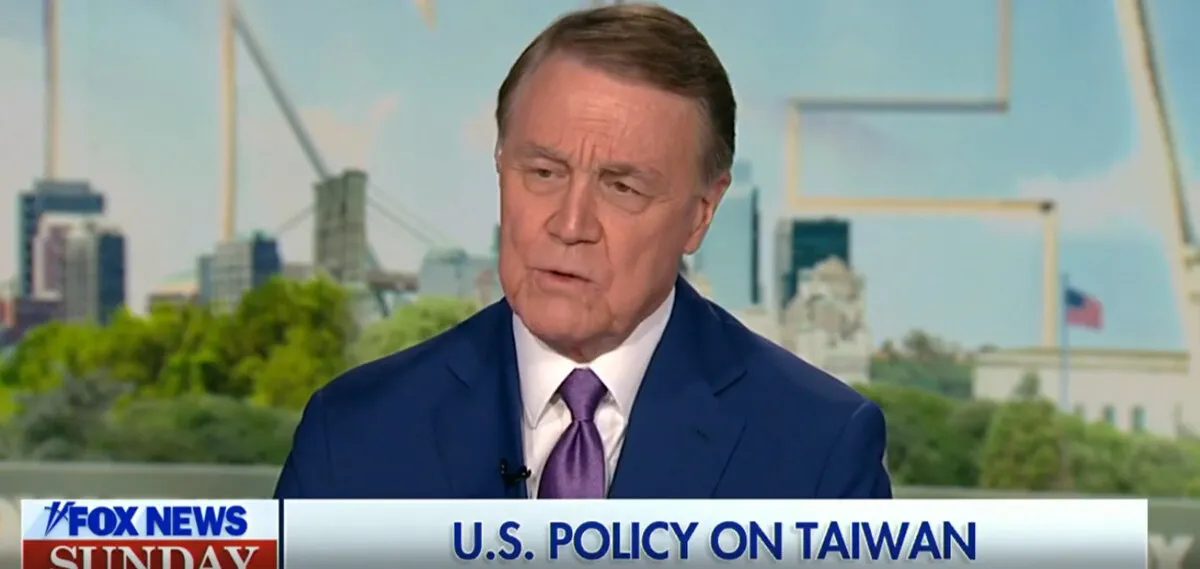
David Perdue, the US ambassador to China, dropped a remark in a Fox News interview on November 27 that sounded like political theater — until you realize there is no theater here, only a consistent logic that runs through every corner of the Trump foreign policy apparatus.
President Trump, Perdue said, had asked Xi Jinping directly whether China wanted to buy American weapons. Not as a negotiation tactic. Not as a joke. As an actual offer.
The remark came while Perdue was deflecting questions about whether the Trump administration is delaying a $14 billion arms package to Taiwan as leverage over Beijing. He denied it firmly. But the underlying assumption in the question — that arms sales can be paused, withheld, or used as bargaining chips — is exactly the assumption Trump has made publicly before.
A Transactional Worldview, Systematically Applied
This is the core insight that English-language coverage often misses: Trump does not treat alliances as commitments. He treats them as client relationships.
When he asked Xi about buying weapons, he was extending the same logic that governs his approach to NATO, Japan, South Korea, and — most critically — Taiwan. Everything is negotiable. Everything has a price. The question is never whether the United States stands for something; it is whether the other side is paying its share, or in China’s case, whether it is buying American products instead of making its own.
Jack Cooper of the American Enterprise Institute called the remark shocking. Dennis Wilder, a former senior Asia official in the George W. Bush administration, suggested Trump may have been deliberately provoking Xi to make a point about US weapons superiority. Both readings are plausible. Neither captures the fuller picture.
The fuller picture is that Trump genuinely sees international relations as a marketplace. In that marketplace, Taiwan is not a democratic partner worth defending on principle — it is a customer who should buy from you, and if she doesn’t, you explore other buyers. That is not cynicism. It is a coherent, if deeply destabilizing, worldview.
What This Means for Taiwan
Taiwan’s de facto ambassador to the US, Hsiao Biu-kim, told CBS she hopes the pending arms package reaches Taiwan as quickly as possible. That urgency should not be read as paranoia. It is rational behavior from a country watching its largest adversary’s military modernize while the primary guarantor of its security treats defense commitments like line items on a spreadsheet.
Perdue insisted that US policy has not changed — that the One-China policy, the Taiwan Relations Act, and the six assurances all remain intact. He stated plainly that the United States does not support Taiwanese independence nor coercion. These are standard diplomatic formulations, and they carry weight only if the next president decides they do.
Trump has already described Taiwan arms sales as a card to play against Beijing. He has approved $11.1 billion in sales since December — more than any predecessor by over 50 percent, according to Perdue — but the pace and timing remain subject to the president’s instincts, not institutional guardrails. That is the difference between a policy and a preference.
The Rare Earths Angle
Perdue also leveled a direct accusation against China: that Beijing is weaponizing its dominance over rare earths and magnet supply chains. The demand that companies diversify away from Chinese dependence, or face penalties for noncompliance, is a significant escalation in language if not yet in action.
This connects directly to the weapons question. China’s rare earth leverage is one of the few asymmetric advantages it holds over the United States in the economic-strategic sphere. Trump’s implicit trade — you buy our weapons, we stop relying on your minerals — is the kind of blunt instrumentalism that defines his approach. Whether it is feasible is another matter. Diversifying rare earth supply chains takes years, not election cycles.
The Iran Overlap
Iran appeared on the agenda as well. Perdue reported that Trump told Xi directly that Chinese support for Iran — in intelligence, parts, or military equipment — was unacceptable. Xi responded that China was investigating and taking measures. Perdue said he saw some improvement.
This is the same transactional pattern repeated across dossiers: identify a grievance, bring it to the other side’s leader personally, extract a vague promise of action, declare marginal progress. It is diplomacy as deal-making, where outcomes are measured in photographed handshakes and press conference soundbites rather than verifiable policy shifts.
Why This Matters Beyond the Remark
The Trump-Xi weapons comment is not an anomaly. It is a symptom. The United States under Trump does not ask what a relationship means — it asks what a relationship costs. That framework produces unpredictable outcomes for everyone, including allies who have long counted on American commitments being reliable rather than discretionary.
Taiwan is the clearest case in point. China is the clearest case of where this approach generates friction. Iran is the clearest case of where it produces ambiguity. And the rare earths supply chain is the clearest case of where it misunderstands the timeline required for structural change.
Perdue’s interview was designed to reassure. It succeeded partially — the administration maintains its public line on Taiwan and the One-China policy. But the underlying logic remains unchanged: in Trump’s world, nothing is sacred, and everything is for sale. The question for partners and adversaries alike is not whether Washington will act consistently, but what price they will have to pay for whatever consistency they get.