Trump Claims Hormuz as US Territory — And Rewrites Global Energy Rules
Donald Trump declared the Strait of Hormuz US territory, a move that upends decades of maritime law and turns the world's most critical oil chokepoint into a direct bargaining chip. What happens next will reshape global energy markets and US-Iran relations in ways no one saw coming.
The claim that changes everything
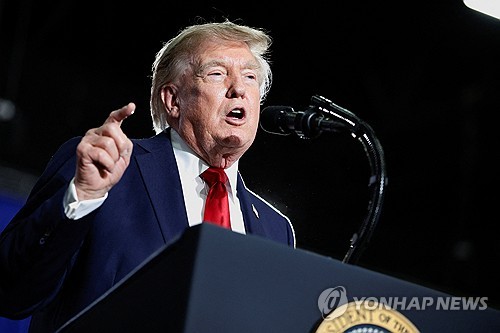
Donald Trump told a South Carolina crowd on August 21 that he currently views the Strait of Hormuz as United States territory. He said it again in the same speech. He had said essentially the same thing six days earlier, warning that a formal declaration was coming soon.
What sounds like political hyperbole is actually a structural challenge to the postwar international order. The Strait of Hormuz is not disputed ground in the way that, say, the South China Sea is. It is the single most consequential maritime chokepoint on the planet. Roughly 20 to 30 million barrels of oil pass through it every day — about a fifth of global petroleum consumption and nearly half of all seaborne crude traded internationally. The United Nations Convention on the Law of the Sea guarantees innocent passage through it. No country claims sovereignty over the waterway itself.
Trump is now claiming that the United States does.
The speech lasted forty-two minutes before breaking for applause lines, but the Hormuz remark — delivered in the middle of a segment about Iran negotiations — carried a weight that set off alarm bells from Washington to Tokyo. Within hours, financial writers were publishing speculative pieces on what a US sovereign claim over the strait would do to bunker fuel contracts, to long-haul shipping routes, to the very concept of freedom of navigation operations in contested waters.
Who wins, who loses, and who blinks first
The immediate winner is whoever controls the narrative around Iran. Trump framed the remark as leverage in a broader negotiation. “Iran desperately wants to make a deal,” he said, “but we don’t even know if we want a deal — because I currently view the Strait of Hormuz as US territory.”
That framing flips the script on Iran’s negotiating position entirely. For decades, Iran’s strategic value has rested partly on its geographic proximity to the strait — a fact that has given Tehran implicit leverage over global energy supplies whenever tensions flare. By declaring the strait American territory, Trump is effectively erasing that leverage before any deal is reached.
The losers are more numerous and more global. Oil traders will recalibrate pricing models overnight. Insurance premiums on tankers transiting the strait will spike — P&I clubs are already reportedly reviewing their war-risk clauses for the Persian Gulf. Countries that depend on Gulf energy — Japan, South Korea, China, India — will face urgent diplomatic calculations they did not anticipate. Japan alone receives over 70 percent of its crude imports through Hormuz. Beijing has quietly been exploring alternative routes through Pakistan and Myanmar, but those pipelines lack the throughput of the strait.
The International Energy Agency has flagged Hormuz as a “catastrophic risk” scenario; this declaration makes that scenario feel less hypothetical and more imminent. European diplomats have not yet issued formal statements, but sources close to Brussels indicate private concern about the precedent set by a unilateral territorial claim over an international waterway.
Iran’s response will determine whether this stays rhetorical or becomes kinetic. Tehran has long treated the strait as within its sphere of influence. A formal US claim over it crosses from pressure into something closer to occupation — even if no American ship has physically planted a flag on the seabed yet. The risk of miscalculation rises sharply when one side declares sovereignty over waters the other considers vital to national survival. Iranian state media has already begun running commentary pieces questioning whether the United States has finally lost its grip on strategic reality.
The domestic clock behind the foreign policy
The timing of the speech was not accidental. Trump was in South Carolina to rally support for Dalen Graham, the Republican candidate in an August 25 Senate runoff. The crowd was told, repeatedly, that the November midterm elections were a binary choice between continuity and collapse. Trump urged voters to treat the race as a referendum on his presidency, warning that a Republican loss would mean the end of border security measures, tax cuts, and possibly his own political survival through impeachment proceedings.
This is the familiar Trump playbook — external escalation paired with domestic mobilization. But the Hormuz claim goes further than typical brinkmanship. It is not a threat to close the strait or to impose sanctions. It is a territorial claim dressed as policy. That distinction matters because it invites a different kind of response from other capitals. When a president threatens to close a waterway, allies bristle but prepare for disruption. When a president claims ownership of one, the question becomes whether that claim will be enforced — and what happens if it is.
Graham lost the runoff on August 25, but the foreign policy theatrics did not recede with the election cycle. If anything, they intensified, suggesting that the Hormuz declaration was always intended to operate on a timeline longer than a single Senate race.
What happens next
The most likely path forward involves a period of deliberate ambiguity. Trump can sustain the territorial claim without ever enforcing it — and enforce it without ever deploying forces to the strait’s center. The uncertainty itself becomes the tool. Iran never knows whether the next escalation is words or action. Other energy-importing nations never know whether their supply routes are safe.
But ambiguity has limits. If Iran or another regional actor tests the claim — by intercepting a tanker, by moving warships into contested waters, by signaling that it will treat US vessels as occupiers — the United States faces a choice between backing down and escalating. Neither option is costless. Backing down would undermine the credibility of every future coercive claim. Escalating risks dragging the US into a conflict that would send oil prices above $150 a barrel within weeks.
For global markets, the signal is already priced in at a baseline level. Anything beyond rhetoric will trigger a violent repricing. The question is not whether the claim will have consequences. It is whether Washington intends to follow through, and whether Iran and its allies are prepared to force the issue.
China’s response is particularly significant. Beijing has invested heavily in Gulf energy infrastructure and maintains a military base in Djibouti with eyes on the Arabian Sea. If the United States moves to enforce a Hormuz claim, Washington and Beijing would find themselves on opposite sides of a maritime dispute with no off-ramp. That dynamic alone makes the claim more dangerous than any rhetoric about closing the strait ever was.
Why this matters beyond the headline
The Strait of Hormuz has survived wars, sanctions regimes, and proxy conflicts precisely because no major power asserted formal sovereignty over it. That silence was the foundation of its function as a global commons. Trump’s declaration breaks that silence.
If the claim is empty rhetoric, it still erodes the norm it contradicts. Every repetition normalizes the idea that great powers can unilaterally redefine international waterways. If it gains traction — through enforcement, through allied acquiescence, through the slow accumulation of precedent — it rewrites the rules of maritime access for an entire region. The South China Sea, the Baltic, the Eastern Mediterranean — all of these flashpoints would inherit a new logic: whatever power can claim a waterway first controls it forever.
The oil flows that underpin the global economy do not care about legal arguments. They care about whether tankers can pass. Right now, they can. But the clock is ticking, and the person holding the stopwatch is a president who has made a habit of treating international waterways as bargaining chips. The next time he picks up the phone, the question will not be whether he issues another threat. It will be whether any of his predecessors’ declarations still mean anything.
The close no one is discussing
There is a deeper implication buried beneath the market reactions and the diplomatic murmurs. The Strait of Hormuz has functioned as a global commons not because of treaties alone but because no major power found it useful to challenge that status. Trump’s claim signals a shift in American posture — from steward of open sea lanes to claimant of strategic assets. That is not a temporary tactic. It is a redefinition of what the United States believes it is entitled to control.
If the administration follows through, even partially, the consequences will outlast the current news cycle. Allies will recalibrate their energy procurement strategies. Adversaries will adjust their naval postures. Insurance markets will price in a new category of geopolitical risk. And historians will point to August 21 as the day the postwar maritime order began to fracture.
Right now, the tankers still pass through. The strait still functions. But the foundation has been cracked, and cracks tend to spread.