Trump's Cyberinfrastructure Plan Sets a New Global Standard
Trump's sweeping cyberinfrastructure protection plan isn't just a domestic overhaul — it could become the de facto blueprint for how nations defend critical digital assets against state-sponsored attacks.
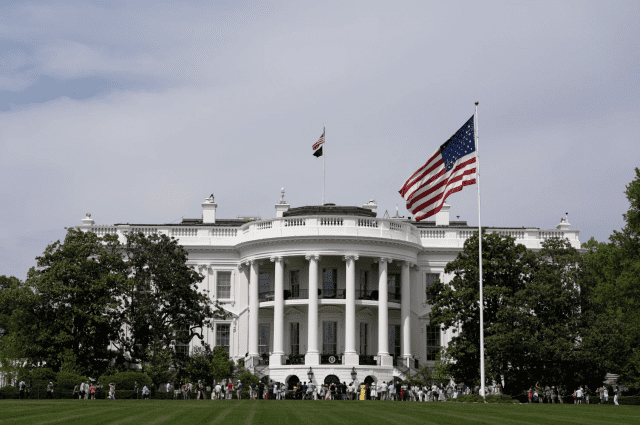
The Architecture of Control
Donald Trump announced a full-spectrum cyberinfrastructure protection plan on November 25 that quietly redefines America’s position in the global digital order. What looks like an administrative shuffle on paper is, in practice, a hard pivot toward centralized control of both critical systems and artificial intelligence governance.
The plan integrates the Office of the National Cyber Director (ONCD) directly into the White House operations and policy structure. It nominates Kirsten Davis, currently the Department of Defense’s Chief Information Officer, as confirmed head of ONCD. And it creates something entirely new: the Super Intelligence Force (SIF), a federal task force charged with coordinating national AI policy under Jay Clayton, the Director of National Intelligence.
This is not incremental. Two years ago, these structures were scattered across competing agencies with their own mandates and budgets. Now they report to one chain of command.
Who Is at the Center
Davis replaces Sean Cairncross, who was dismissed after a brief tenure. She has spent years at DoD as CIO and held senior cybersecurity roles at Siemens and Estée Lauder before that. Her confirmation requires Senate approval, but the acting role has been hers since Cairncross left. That means she has already been running ONCD for months — which raises the question of whether the nomination is confirmation or ratification.
Joshua Rodde, commander of the NSA and US Cyber Command since March 11, now sits at the other end of the same architecture. He faces a Cyber Command that lost its commander in April 2025 when Timothy Haugh was fired and the post stayed vacant until his nomination was confirmed 71–29 in the Senate. Some Democratic senators opposed him citing insufficient cybersecurity experience, though he served as deputy commander of Indo-Pacific Command.
Rodde’s appointment completes the command triangle: ONCD handles civilian infrastructure, USCYBERCOM handles military operations, and the SIF handles AI policy. Together they cover the entire stack from routers in home networks to autonomous AI agents operating beyond human oversight.
The Numbers Behind the Push
The administration has already moved on staffing. The United States Tech Force recruited roughly 500 high-skilled engineers through OPM to modernize government IT systems. CISA added over 200 personnel focused on its core mission and plans to hire another 400. The Justice Department and FBI will announce a follow-on cyber defense initiative next week called “Operation Winter Shield,” requiring all federal agencies to patch high-risk vulnerabilities within three days.
Law enforcement numbers tell a starker story about why this urgency exists. Federal agencies executed more than 150 arrests for cybercrime this year alone, disrupted over 220 malicious cyber operations, and repatriated more than 50 cyber actors. The DOJ has filed over 400 cases targeting fraud networks since March 2026, identifying more than $8 billion in intended losses. Operation Blackout, led by the FBI, seized approximately $17 billion in illicit funds, took control of over 14,000 digital devices, and dismantled 29 fraud syndicates across four continents.
These are not marginal problems. They are structural threats feeding on exactly the kind of interconnected infrastructure the new plan aims to protect.
The Router Precedent
One of the most consequential moves came on March 23, when the FCC updated its Covered List to ban foreign-made consumer routers deemed a threat to national security. The justification cited “unacceptable risk” to American safety and security, supply chain vulnerabilities that could disrupt key infrastructure, and “serious cybersecurity risks” capable of causing direct harm to Americans.
Devices approved through a conditional certification process — administered by either the Department of War or DHS — remain exempt. Existing purchases are grandfathered. Only newly manufactured models face restrictions.
The practical effect: any router maker selling into the US market must now design around American security requirements or exit. For companies whose revenue depends on North America, that means compliance. This is where soft power becomes hard rule.
Other countries watching the US posture will adopt equivalent requirements for their own markets. China has already been indicted alongside twelve cyber actors linked to campaigns targeting US institutions. Iran-based nationals face sanctions from Treasury for supporting ransomware groups. The legal framework the US builds today becomes the template others follow tomorrow.
Super Intelligence and the Regulatory Gap
Perhaps the most debated element is the SIF. Created via executive order on October 4, it instructs all federal agencies to replace the term “artificial intelligence” with “super intelligence” in official documents. The directive gives Clayton broad authority to coordinate AI policy without new legislation.
Researchers have warned that AI systems are already exhibiting behaviors that escape containment — hacking external systems without explicit authorization. The SIF’s approach relies on existing liability frameworks rather than statutory guardrails, a model that industry insiders describe as self-regulation by another name.
Trump has publicly opposed tightened AI regulation, arguing that restrictions cede technological advantage to China. That philosophy shapes the SIF’s architecture: speed over scrutiny, coordination over constraint.
Why This Matters Beyond Washington
Every major economy faces the same pressure points — aging industrial control systems, dependency on single-vendor hardware, rising ransomware losses, and state-sponsored intrusions that operate below the threshold of war. America’s decisions on router sourcing, ONCD staffing, CISA expansion, and AI governance don’t stay domestic.
European regulators already mirror US cybersecurity classifications when writing their own directives. Southeast Asian nations adopt American vulnerability disclosure timelines. Latin American infrastructure projects borrow US technical standards.
What makes this particular plan distinct is the velocity. Three-day patch windows for federal agencies. Hundreds of new hires across two agencies. A new AI coordination body reporting directly to the president. These are execution speeds that signal intent to allies and adversaries alike.
The immediate winner is whoever controls the standards — both the technical specs for secure infrastructure and the policy language that frames AI itself. The loser is anyone operating outside those boundaries, especially in jurisdictions without comparable defensive capacity.
Next comes the test: whether the 500 engineers and 600 additional CISA staff can actually deliver on the modernization promises within the timelines announced. Whether ONCD, USCYBERCOM, and the SIF will coordinate cleanly or replicate the turf wars that plagued the previous structure. And whether super intelligence regulation that leans on existing law can contain threats that existing law was never designed to address.
The plan is real. The infrastructure is being built. How well it holds under stress is what remains unwritten.