Trump's Datacenter Penalties Could Rewire Asia's AI Boom
Trump wants US datacenters home — and threatens penalties for going offshore. Here's how his new posture recalibrates the entire East Asian AI infrastructure strategy.
The Unintended Consequence Trump Isn’t Considering
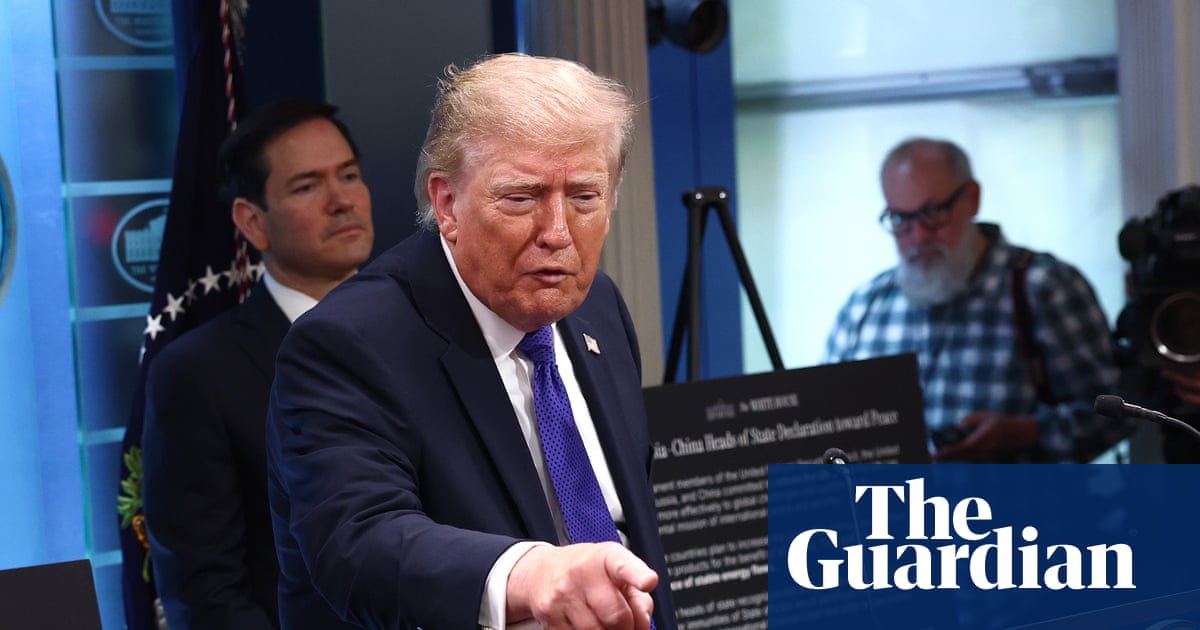
Donald Trump wants American datacenters built in America. On Friday, he told reporters his administration would impose “tremendous penalties” on US tech companies constructing facilities abroad, warning that otherwise “China will take all of them.” No details followed. His officials weren’t briefed.
But the threat alone is reshaping a multi-year investment strategy across East Asia.
The logic Trump articulated — that capital flight on compute infrastructure enables adversary advantage — is not new within national security circles. What is notable is the blunt enforcement mechanism. Rather than subsidizing domestic construction or tightening export controls on chips alone, the White House is now signaling willingness to tax its own companies’ overseas ambitions. That escalates a domestic policy tool into a geopolitical one, and the fallout radiates far beyond Washington.
For the Korean peninsula, the message is clear: your AI infrastructure bets are no longer immune to US political cycles.
Why Korea Was Always Going to Be Affected First
South Korea has spent the past three years positioning itself as a safe alternative to China for hyperscale datacenter investment. Naver and Kakao have expanded aggressively in the Asan and Cheongju corridors, where power availability and semiconductor supply-chain proximity reduce latency to chip fabrication. Samsung foundry operations in Hwaseong sit within driving distance of dozens of planned server farms. SK Hynix’s memory-production footprint means storage-supply delays for new builds are shorter than anywhere else in Asia except Taiwan.
Amazon Web Services, Google Cloud, and Microsoft Azure have all announced or implied Korean facilities since 2023. Each project required US-company participation. Under Trump’s stated framework, any of those expansions facing punitive tax treatment would slow or stall investment decisions already negotiated at local-government levels.
Korean municipal leaders who courted these tenants — offering tax holidays, simplified permitting, and subsidized power rates — suddenly find themselves competing not just against Tokyo, Singapore, or Dubai but against a president who may penalize the same foreign partners who came.
The consequence is asymmetric. Korean builders lose leverage. Their US and European hyperscaler clients face a new risk curve. The ones most exposed are mid-sized operators without diversified portfolios: local cloud providers, colocation firms, and platform companies whose expansion plans were anchored to US partnership agreements.
The Jensen Huang Element Changes the Math
Jensen Huang’s recent departure from Nvidia following espionage allegations related to China compounding Trump’s crackdown creates a feedback loop that makes enforcement more likely and more unpredictable.
Nvidia is the chokepoint for almost every datacenter build in Asia. Its GPUs power the training runs that justify new facility spend. Trump owns a stake in the company; Huang’s firing removes the operational leader who previously navigated both compliance and revenue pressures. The replacement may be less interested in balancing growth against geopolitical risk — exactly when US policy is moving toward stricter enforcement.
This matters because the penalty Trump described was never about small servers in rural Georgia. It targeted high-density AI clusters requiring Nvidia-class hardware. If those clusters can’t leave the United States, demand inside US borders intensifies. Power-grid bottlenecks already constrain placement in Texas, Virginia, and Oregon. Capacity gaps push some projects toward alternatives — unless Congress closes that escape route.
Japan Stands at a Crossroads
Japan offers a different profile. SoftBank, Rakuten, and NTT have invested billions in domestic AI infrastructure. Foreign hyperscalers such as Oracle and Alibaba previously looked to Japan as a gateway to Southeast Asia. SoftBank’s anticipated billion-dollar campus near Tokyo signals a company willing to bear significant upfront cost in exchange for stable regulatory conditions.
Under Trump’s posture, Japanese datacenter sites gain protection — but only if the companies operating them avoid structures that trigger penalties. A Japanese-owned facility hosting US-company workloads occupies a gray area. A joint venture between a Korean constructor and a US cloud provider does not.
Tokyo has quietly been preparing contingency plans for exactly this scenario: securing sovereign AI capacity independent of US approval. Mitsubishi Corporation and Sumitomo have discussed domestic compute reservations. Whether those arrangements can absorb sudden demand shifts remains unclear.
Southeast Asia’s Window Narrowing Fast
Singapore, Malaysia, and Indonesia have positioned themselves as low-cost, English-friendly hosting hubs for Western firms avoiding US regulations or congestion. Indonesia especially has attracted Turkish, Chinese, and Middle Eastern capital seeking neutral ground.
Trump’s penalties effectively extend US jurisdiction extraterritorially — penalizing decisions made outside American territory by American corporations. That transforms Southeast Asia from a viable alternative into a compliance minefield. Companies weighing Kuala Lumpur against Ashburn, Virginia now carry an additional line item: regulatory exposure to penalties that do not yet exist in statutory form.
For regional governments, the implication is immediate. Incentive packages designed to attract hyperscalers must now account for a host-country relationship that can withdraw overnight. Malaysia and Thailand’s datacenter booms face similar vulnerability.
Who Wins, Who Loses
Winners:
- US-based datacenter operators with domestic sites already permitted and wired.
- American utilities accelerating power-generation contracts tied to guaranteed load.
- Domestic chip designers without foreign dependency — AMD, Intel, and emerging FPGA players positioned for localized demand.
- European operators like OVHcloud who face no US penalty exposure, though they lack scale to capture urgent overflow demand immediately.
Losers:
- Non-US hyperscalers who relied on Korean and Japanese construction partnerships — SoftBank, LG CNS, Samsung SDS, and KT face delayed or canceled projects.
- Regional startups dependent on affordable GPU access through local colocation — Seoul’s AI ecosystem compresses without cheap density.
- US companies with mixed domestic-international deployment models that structured capital around geographic diversification.
- Southeast Asian governments investing heavily in foreign-facing infrastructure hoping to ride the hyperscaler wave.
The Real Test Is Implementation
Trump offered no definition of the penalties. No timeline. No guidance to agencies responsible for enforcing them. A House committee reported nearly 900,000 AI chips exported to China in six months — evidence that enforcement gaps persist regardless of rhetoric.
If penalties target equity ownership, they reach deep into global supply chains. If they target operational control, Japanese and Korean operators retain flexibility. If they target GPU exports, every facility anywhere depends on renewed US export-limits precision.
The policy direction is intelligible within current US strategic thinking. The mechanics remain opaque enough to create panic buying, precautionary cancellations, and strategic hedging across the region.
Korean datacenter investors should prepare for two scenarios: aggressive domestic US enforcement that slows all cross-border projects, and softer enforcement that preserves exceptions for trusted allies — with Tokyo and Canberra absorbing preferential treatment.
Either path narrows Seoul’s window. The AI infrastructure race does not pause for policy clarity.