Trump's Economic Implosion Threat Is a Signal, Not Just Rhetoric
Trump's language of 'economic collapse or leadership removal' against Iran marks a shift from transactional pressure to regime-endangering ultimatums. The Houthis' strike on Riyadh and dual strait blockades make escalation feel structural rather than managed.
The Language Has Shifted
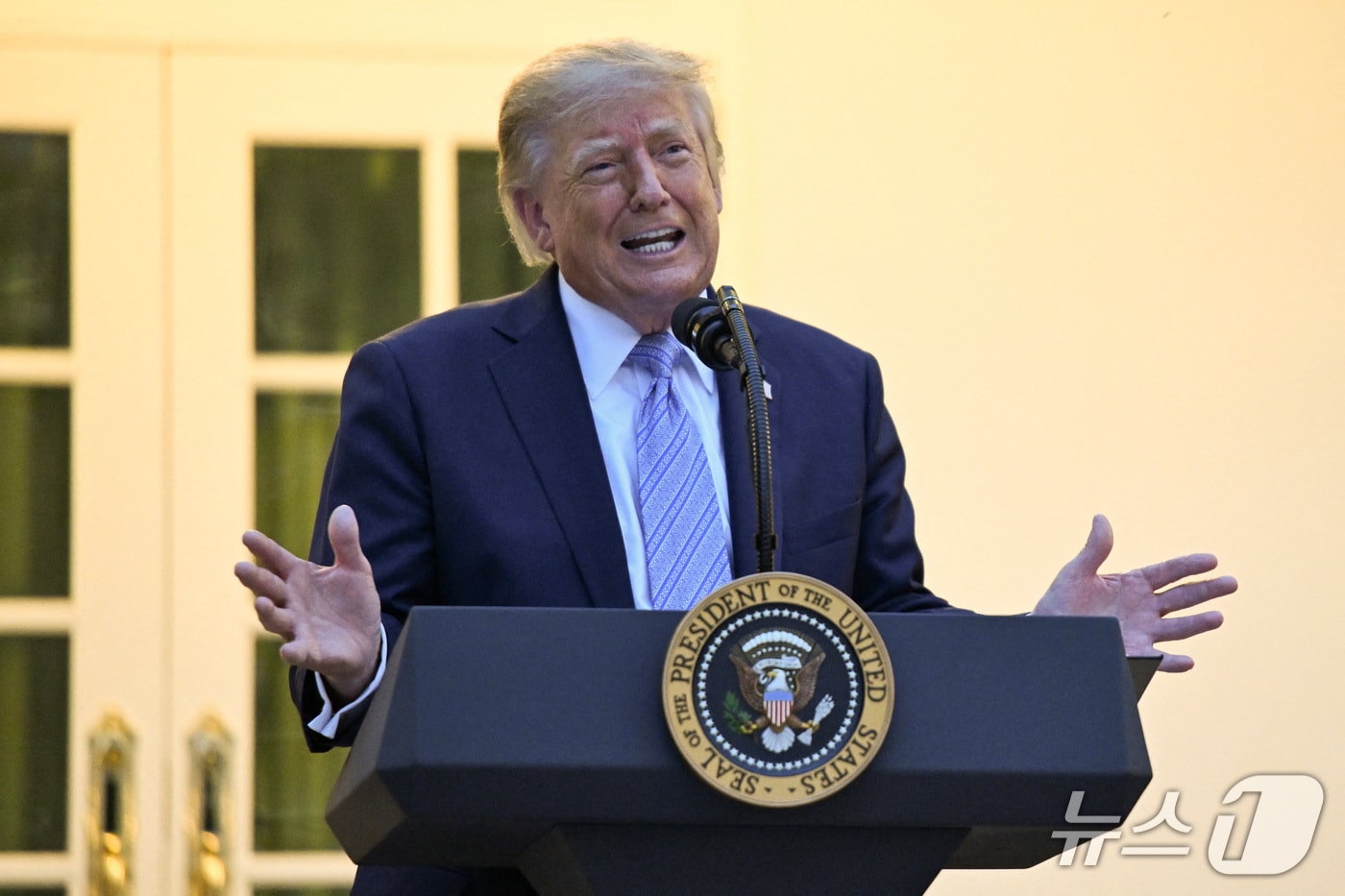
Donald Trump did not merely raise the stakes with Iran. He changed the vocabulary. On September 17, speaking from the White House before a dinner, he told Fox News that Iran’s leadership faces one of two outcomes: reach a deal with the United States or face economic collapse or removal. The phrasing is notable. This is not the familiar transactional pressure of maximum economic strain designed to bring Tehran back to the negotiating table. It is an ultimatum that ties the survival of Iran’s governing class directly to a specific diplomatic outcome — and implies that failure on that front will be met with action that goes beyond sanctions.
The signal embedded in that language matters more than any single threat. Trump has governed by leverage, not ideology. But leverage requires a credible off-ramp. By offering to meet Iranian President Masoud Pezeshkian during the UN General Assembly in New York later that week, the administration is keeping one door open while slamming another shut. The message is coherent enough: comply on our terms, or the consequences escalate to a level where the calculus is no longer about oil prices or sanctions relief. It is about regime survival.
The Response Was Immediate and Structural
Iran’s Central Command did not respond with calibrated rhetoric. It warned that any new attack would trigger sustained retaliation against US bases and American interests across the region — and that US allies in the area would be treated as combatants. That second point is the escalatory hinge. By explicitly expanding the target set beyond military installations to include allied nations, Tehran is testing whether Washington’s coalition architecture holds under fire. If a strike on a US base in Bahrain or Kuwait provokes Iranian retaliation that hits Saudi or Qatari infrastructure, the entire alliance framework is stress-tested in real time.
The US response was to issue a security alert for Americans in the region, warning of potential flight cancellations and airspace closures. That is a low-key signal for what is, in practice, a high-stakes scenario.
The Houthis Changed the Geography
The most consequential development came on September 19, when Houthi forces — backed by Iran — launched missiles and drones at Riyadh, striking near the capital’s main international airport. Black smoke rose from the impact zone. This is not a new capability. What is new is the audacity and the targeting. Riyadh is not a border outpost. It is the political and economic heart of Saudi Arabia, home to the royal court and the core of the kingdom’s public security apparatus.
The US State Department responded by warning of unexpected escalation possibilities in the Middle East. That phrase — unexpected escalation — is worth unpacking. It acknowledges that the conflict is no longer moving along a predictable gradient. The assumption that houthi strikes would remain constrained to Yemen or narrow maritime targets has been broken.
Two Straits, One Squeeze
The economic geography of the escalation is what makes this cycle different from previous rounds. Iran has maintained a blockade of the Strait of Hormuz, the chokepoint through which the majority of Gulf oil exports pass. Since the truce negotiations collapsed in July, the strait has remained effectively closed under Iranian terms — Tehran has reiterated that it will not reopen Hormuz until the June agreement is implemented according to its interpretation.
Meanwhile, the Houthis have expanded their control along the Yemeni coast, increasing their ability to threaten the Bab el-Mandeb strait. This is the second critical maritime chokepoint connecting the Red Sea to the Gulf of Aden and, ultimately, the Suez Canal route to Europe. With Hormuz blocked by Iran and Bab el-Mandeb threatened by the Houthis, two of the world’s most vital energy corridors are under concurrent duress. The pressure on global oil markets is no longer theoretical. It is structural.
The US has responded by blocking Iranian ports, cutting off Tehran’s own export routes. Both sides are inflicting economic damage. Neither is backing down. The July truce showed no signs of revival as of late September, and no new framework has emerged to replace it.
Who Wins, Who Loses
The immediate winner of this posture is the hardline faction in Tehran. Trump’s language about leadership removal is precisely the kind of existential threat that consolidates power around the Supreme Leader and marginalizes any reformist or pragmatic voice within the Iranian system. Pezeshkian’s potential UN meeting may provide a diplomatic window, but the space for compromise narrows the more the US frames the choice as capitulation or collapse.
The loser is anyone who depends on the straits. Shipping insurance premiums are already pricing in risk. Gulf states are caught between US security guarantees and the reality that Iranian and Houthi firepower can reach deep into their territory. European nations, already managing energy diversification away from Russian gas, now face the prospect of supply disruptions from an entirely different quarter.
What Happens Next
The next critical node is the UN General Assembly session in New York. If Trump and Pezeshkian meet, it will be the first high-level contact between the two governments in years and a potential de-escalation signal. If they do not, the trajectory points toward further military posturing.
More likely than either outcome is a continuation of the current pattern: calibrated threats, economic coercion, sporadic violence, and no diplomatic breakthrough. That is the danger. The present cycle does not require a dramatic event to spiral. The strait blockades, the Riyadh attack, and the mutual warnings about sustained retaliation create a system where a single miscalculation — a missile that hits the wrong target, a base strike that causes casualties, a port blockade that blocks a tanker carrying critical supplies — can convert managed tension into active conflict.
Trump’s language about economic implosion or leadership removal was never going to be just words. The question is whether the follow-through will be strategic patience or strategic overreach. The Middle East is currently measuring the distance between the two.