Trump Uses Iran Threat as Midterm Leverage — and Tests Alliance
CENTCOM's Iran strike plan delayed until after midterms isn't just tactical timing — it's a signal that Trump treats military options as campaign leverage. Allies and adversaries are recalculating what American unpredictability costs.
The clock is ticking — and it’s not on Tehran’s time
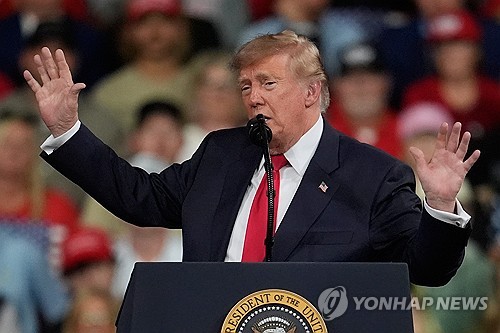
The Hill reported Tuesday that US Central Command has prepared a strike scenario targeting Iran and is waiting for Defense Secretary Pete Hegseth to receive the briefing. There’s no schedule attached to the order. The timeline runs through next month’s midterms, then perhaps onward. Trump himself confirmed the posture on the campaign trail: on November 21 he told reporters he is not negotiating with Iran and expects events to unfold mostly after the election. In Georgia, he floated the prospect of another overwhelming military strike or, alternatively, an Iranian deal — without specifying which would come first or under what conditions.
What sounds like indecision is actually a deliberate strategy. Trump is treating the threat of force not as a last resort but as a bargaining chip calibrated to domestic political cycles. The question is not whether the US will act. The question is when the timing benefits him most.
What CENTCOM’s posture actually signals
The Pentagon’s response was characteristically restrained. Hegseth’s office said preparing military options for the president is its duty. CENTCOM declined to comment. Both answers are accurate and evasive. They confirm that operational planning is active while refusing to define a threshold for execution.
The materiel tells the rest. According to the Wall Street Journal, the aircraft carrier USS George Washington is being resupplied with bunker-buster ordnance in the Gulf region. The Hill places over 50,000 US troops and roughly 20 warships in the Middle East. That is not a defensive deployment. Bunker busters are offensive munitions designed for hardened targets — underground command centers, nuclear facilities, fortified infrastructure. You do not stockpile them for a show of presence. You stockpile them because you expect to use them, or you expect someone to believe you might.
The domestic calculation is transparent
Trump’s rhetoric makes the political geometry clear. A military strike before the midterms would carry the risk of failure, escalation, or a prolonged conflict that voters blame on his administration. A strike after the midterms carries a different calculus. If Republicans retain or gain seats, Trump can claim electoral mandate for escalation. If they lose, he can deflect responsibility while still delivering a tactical win that consolidates his base. Either outcome serves him.
This is not unprecedented in its cynicism. Presidents have timed military action for political gain before. But the current posture is notable because the administration has openly acknowledged the linkage. Trump did not obscure the connection between elections and potential strikes. He advertised it from the rally stage.
Iran’s calculus may be indifferent to American timing
Here is the variable Trump’s timeline does not adequately account for. Iranian leadership appears to believe it can endure US and Israeli military pressure without renegotiating. The assumption, reported by multiple analysts, is that Tehran sees itself as having reached parity through asymmetric capabilities — proxy networks, missile arsenals, strategic depth — and therefore has nothing to gain from concessions under threat.
If Iran believes it can absorb a strike without backing down, the entire deterrence logic weakens. A preemptive US attack that fails to coerce Tehran would leave Washington looking either reckless or empty. The reverse scenario — Iran escalating Gulf oil infrastructure in response — would trigger global energy price shocks that no American election cycle is designed to survive.
Some analysts have suggested Iran might restraint its retaliation even after sustained attacks. That is a bet, not a certainty. The Iranian regime has repeatedly demonstrated willingness to absorb costs it frames as national survival. Whether it draws the line at economic self-harm remains unclear.
Allies are doing their own risk assessment
The indirect signal this posture sends to US partners is arguably more consequential than the threat to Iran itself. European allies, Gulf states, and Japan watch American military timelines with acute attention. When the United States explicitly ties force readiness to electoral calendars, it creates a credibility gap that adversaries exploit and friends pay to close.
Gulf neighbors who rely on US security guarantees now face a dilemma. Do they accelerate their own defense acquisitions? Do they seek alternative partnerships? Do they hedge by opening channels to Washington’s competitors? Every unanswered question about American reliability accelerates regional arms racing and strategic realignment.
European defense planners are already factoring US political cycles into their own risk models. NATO burden-sharing debates take on new urgency when the American commitment appears conditional on domestic vote counts rather than collective security architecture.
What happens next
The immediate forecast is low-intensity pressure: naval posturing, rhetorical escalation, limited kinetic signaling. The midterm elections create a window where both sides can posture without triggering full conflict. That window could extend weeks or months depending on polling, Iran’s internal dynamics, and whether any miscalculation forces an earlier decision.
The deeper risk is structural. An administration that treats military intervention as a negotiable tool rather than a committed strategy trains adversaries to exploit the gap between rhetoric and resolve. Iran tests that gap today. Other actors will test it tomorrow. The cost of that erosion is not measured in a single confrontation but in the cumulative loss of deterrence that makes future conflicts more likely and more dangerous.
Trump’s timeline may serve his party’s electoral interests. The question is whether it serves American strategic interests — or whether those two things have become hard to distinguish.