Trump-Kim Summit Odds Rise as Beijing Opens the Door
Trump signals possible November meeting with Kim Jong Un at APEC in Shenzhen. With Dennis Rodman reappearing at his side and China actively brokering, the stage may be set for a reset — but Kim has not forgotten Hanoi.
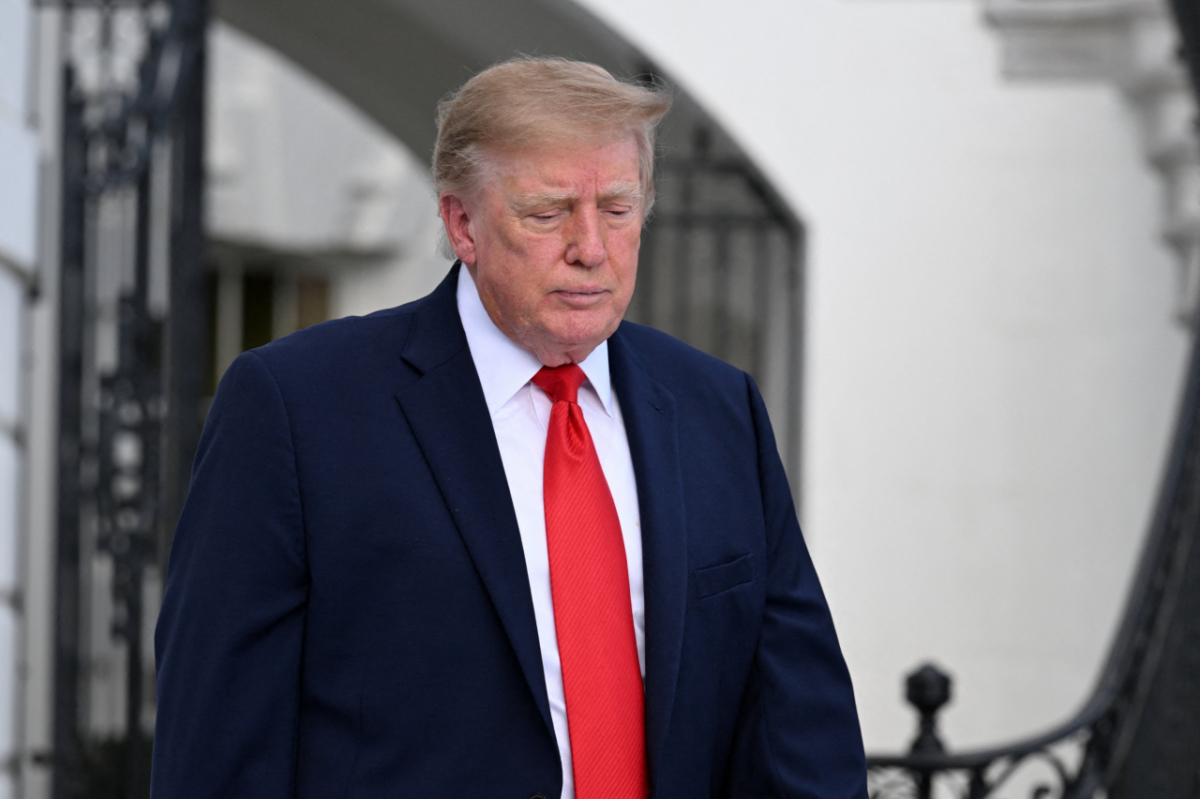
A casually dropped remark is changing the geometry of East Asian diplomacy.
Donald Trump did not schedule a meeting with Kim Jong Un on Tuesday. He merely suggested one might be interesting — while touring with Dennis Rodman, the former NBA player who once served as an informal conduit between Washington and Pyongyang. The remark came during a visit to Texas, a state whose oil money and defense contracts have long made it a backchannel hub for figures operating outside formal diplomatic channels. Within hours, the comment had already rippled through intelligence assessments, embassy cables, and analyst newsletters from Seoul to Beijing to Tokyo.
The target: a November APEC summit in Shenzhen, China. Not Singapore. Not Jakarta. Shenzhen — a city that is itself a symbol of China’s model of developmental state capitalism, far removed from the traditional power centers of Beijing and Shanghai. Choosing Shenzhen over the capital carries quiet significance. It is a venue where China can host a major multilateral event without the same gravitational pull of Xi Jinping’s direct oversight, yet still frame the encounter as a Chinese-led initiative. The city also sits in Guangdong province, not far from Macau’s casinos and Hong Kong’s financial district — infrastructure well accustomed to hosting opaque negotiations.
Why Rodman Is Back in Frame
Rodman’s appearance alongside Trump is the kind of signal the diplomatic world reads loudly even when it is almost entirely unserious. He met Kim Jong Un at least four times between 2013 and 2017, most recently guiding the North Korean regime’s basketball team during training sessions and attending the leader’s birthday celebrations. The basketball angle was never merely recreational. Kim’s documented fascination with Michael Jordan — he attempted, unsuccessfully, to bring the Bulls legend to Pyongyang — made Rodman a natural alternative, someone whose celebrity could translate into access that no career diplomat could secure.
That Kim watches American basketball is not trivial background. It reveals a leader who constructs personal rapport across cultural fault lines, precisely the kind of personality-driven diplomacy Trump specializes in. If there is to be a summit, it will almost certainly be built on personal chemistry rather than bureaucratic process. That is both an advantage and a risk — chemistry opens doors that decades of sanctions won’t, but it also means the entire enterprise can unravel with a single public insult or private slight.
Rodman’s resurgence also reflects a broader pattern in Trump’s foreign policy approach: the willingness to deploy unconventional intermediaries when formal channels appear僵持. This is not new — Trump relied on similar informal networks during his first term, from Roger Stone to private letters delivered through third-party handlers. What is new is the scale of China’s involvement, which transforms what might otherwise be a eccentric sidebar into something resembling a structured diplomatic initiative.
China Has Opened the Door
The more consequential development is China’s demonstrated willingness to mediate. According to the South China Morning Post, Chinese efforts intensified after Trump’s May meeting with Xi Jinping in Beijing. By mid-August, a White House envoy had already scouted Shenzhen and Hangzhou — cities chosen for their capacity to host multilateral events and their distance from the political gravity of Pyongyang’s only major patron.
This is the architecture of a carefully managed corridor. Beijing benefits if the United States and North Korea talk on its turf, and it loses nothing if they do not. But the timing of the venue scouting — three months before the proposed summit — suggests genuine institutional momentum, not merely posturing. Chinese diplomats have been quietly preparing this ground for months, leveraging their relationship with both Washington and Pyongyang in a way that positions Beijing as indispensable to any breakthrough.
The second-order implications are significant. China’s mediation role creates leverage it can deploy far beyond the Kim-Trump dynamic. If the summit succeeds, Beijing can claim credit for stabilizing its northeastern flank and positioning itself as a responsible great power. If it fails, China can deflect blame while maintaining its role as the gatekeeper Pyongyang must pass through. Either outcome strengthens Beijing’s strategic position relative to both Washington and Tokyo.
The Hanoi Ghost
North Korean officials and outside analysts alike recall Hanoi. In February 2019, Trump and Kim met in Vietnam following their historic Singapore summit, but the talks collapsed when Kim demanded partial sanctions relief in exchange for partial denuclearization of his Yongbyon facility. The North Korean leader left publicly humiliated; Trump later described the encounter as a waste of time.
Diplomatic sources tell the SCMP that Kim still carries a sense of grievance from that moment. Any new overture from Pyongyang will almost certainly come with conditions more ambitious than 2019. Full sanctions relief. Explicit recognition of North Korea as a nuclear-armed state. Perhaps even a formal end to the Korean War. These are not positions Trump is likely to concede — and they are far beyond what any US president in recent memory has been willing to entertain.
The memorability of Hanoi also shapes Trump’s own calculus. He has every incentive to avoid a repeat that would reinforce the narrative — already circulating in conservative media — that his personal diplomacy yields nothing tangible. A successful Shenzhen meeting would offer a counterweight to that critique. A failed one would compound it. That pressure may explain why the current overtures carry more urgency than they would under different circumstances.
Who Wins, Who Loses, and What Happens Next
If Trump and Kim do meet in Shenzhen, the immediate winners are the two leaders themselves. A photo-op on Chinese soil offers both domestic audiences a demonstration of relevance and agency. For Trump, it would be another summit to add to his inventory. For Kim, it would be his first meeting with a US president since 2019 — and an opportunity to extract concessions he was denied in Hanoi.
The losers are harder to name because the losses are structural rather than personal. South Korea’s Yoon Suk-yeol administration faces a familiar anxiety: being bypassed in a conversation about its own security. Japan shares that worry. Both capitals depend on American credibility commitments they cannot afford to see traded for a handshake. The deeper erosion comes from the precedent such a meeting would set — that direct engagement between the US and North Korea is possible without South Korean consultation, potentially weakening the trilateral security architecture that has underpinned regional stability for decades.
Regional allies may respond by accelerating their own defensive postures. Tokyo could intensify its missile defense investments. Seoul could revive discussions about limited nuclear sharing arrangements that were shelved after the 2018 Olympic thaw. The very success of a Trump-Kim summit could trigger the kind of alliance anxiety that undermines the strategic stability it was meant to promote.
The deeper question is whether a Trump-Kim summit actually shifts the strategic calculus. Personal diplomacy can open doors that bureaucracies keep closed. It can also close them just as quickly if the personal chemistry sours. Trump’s track record suggests the former is more likely — but so is the latter.
A summit in November would be remarkable. A deal emerging from it would be unprecedented. Neither should be confused with a resolution of the North Korean problem, which remains one of the most intractable security challenges in the post-Cold War era. The rockets will still launch. The tunnels will still be dug. The negotiations, even if renewed, will still be stalled by fundamental disagreements about what a settlement looks like.
What is clear is that the corridor between Washington and Pyongyang has not been sealed shut since Hanoi. It has merely grown cold. Whether warmth returns depends on how much Kim is willing to risk and how much Trump is willing to offer — and on the quiet, persistent work of a mediating power that has spent months preparing the ground. The ball is no longer sitting in a bunker. It is moving toward Shenzhen, carried by forces both personal and structural, and the world is watching to see whether it passes through the net or flies out of bounds.