Trump Uses Korea's $54B to Bankroll an Alaska Swing State
Trump is poised to announce a $54 billion Korean investment in Alaska LNG — a project Seoul hasn't committed to. The timing suggests one goal: prop up a Republican senator in a tight swing state.
Trump’s $54 Billion Gambit Runs Through Seoul
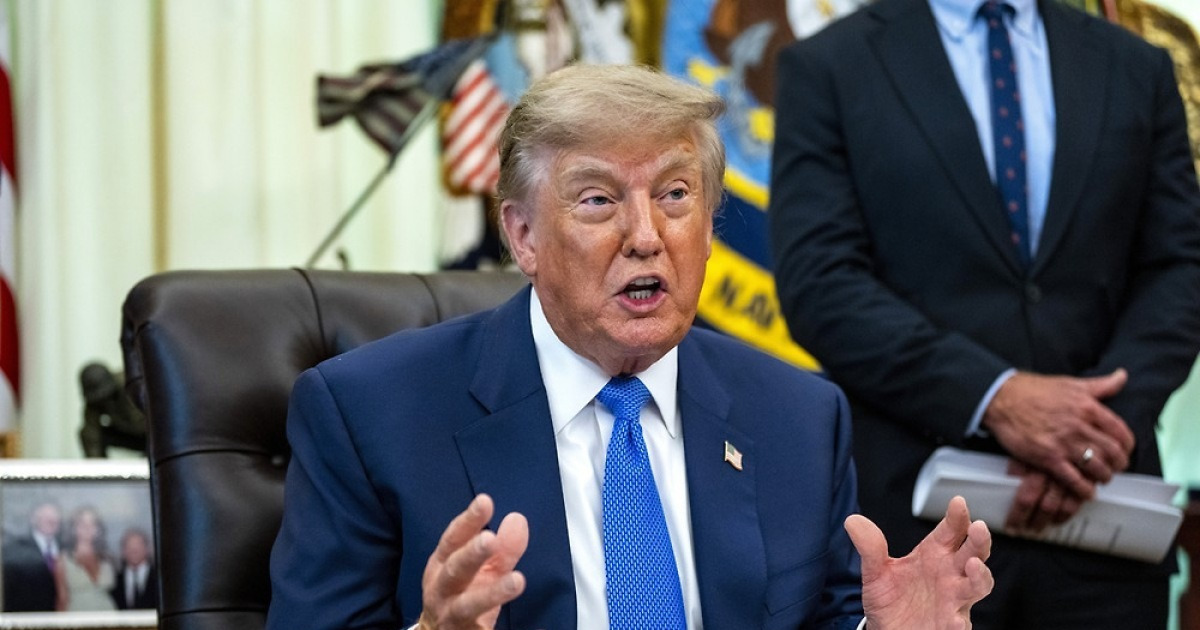
Donald Trump is expected to stand at the White House podium on September 30 and announce that South Korea will invest $54 billion in the Alaska LNG project — a figure so large it makes the earlier $3,500 billion deal Korea promised last year look like a deposit rather than a down payment. What makes this move notable is not the scale. It is the mismatch between what Trump is about to declare and what Seoul has actually agreed to.
According to multiple Reuters and Bloomberg reports citing officials familiar with the matter, the Alaska LNG deal is expected to be bundled into a broader $200 billion Korean investment framework. But South Korea’s own government has classified the Alaska project as a future consultation item, not a committed project. That gap between a declaration and a commitment is where the real story lives.
The Alaska LNG project itself — moving natural gas from the North Slope through roughly 1,300 kilometers of pipeline to a liquefaction terminal near Anchorage — has faced well-documented profitability questions since it was first floated. Trump has pushed it repeatedly, mentioning both Korea and Japan in early September as likely financial partners. The question now is whether his pressure is converting into cash.
Behind the scenes, sources in Seoul suggest the investment figure is being shaped primarily for American political consumption rather than commercial negotiation. The $54 billion number likely represents not a single contracted sum but a collection of theoretical offtake agreements, memoranda of understanding, and speculative equity positions that Korean trading houses — the chaebols behind POSCO and LG Energy Solution — have floated in preliminary discussions. None of those have reached the stage of binding financial commitments.
The Real Target Is Not Korea — It’s a Senate Seat
The most plausible explanation for Trump’s urgency lies in Alaska’s political math.
Alaska is a swing state heading into November’s midterm elections, and the Senate race between Republican incumbent Dan Sullivan and the Democratic challenger is shaping up as a genuine tossup. Sullivan has been one of the most vocal congressional advocates for the Alaska LNG project. Trump’s schedule reflects the connection: he is reportedly planning an Alaska visit in October to hold a rally in support of Sullivan’s campaign.
This is not a coincidence. It is architecture.
By announcing the Korean investment before the midterms, Trump delivers Sullivan a tangible economic win he can campaign on — a $54 billion project, framed as a major international partnership secured by his Senate advocacy. Whether the money actually arrives or merely appears in a press release matters less politically than it does financially.
The same logic appears to have guided Trump’s September 28 announcement of a $15 billion steel plant in Iowa, another state with a competitive Senate race. The pattern is clear: industrial announcements are being timed to electoral geography, not just market logic.
Sullivan’s re-election campaign has already begun weaving the project into its messaging. Internal strategists view the prospective Korean investment as a centerpiece of their economic narrative in a state where traditional resource-sector jobs carry disproportionate weight with voters. Polling from both parties shows energy development consistently ranks among the top three issues for Alaska voters, making the LNG project politically explosive even before a single barrel is shipped.
Korea’s Dilemma: Partners or Pawns
For Seoul, the pressure is real but the terms are opaque.
Korea last year agreed to a sweeping $350 billion investment package in exchange for a reduction in US tariffs from 25 percent to 15 percent. The first confirmed component was a gas-fired power plant in Texas — a simpler, lower-risk proposition. The Alaska LNG project remains unconfirmed. If Trump formally declares it a done deal on September 30, he creates a fait accompli that complicates South Korea’s negotiating posture dramatically.
Seoul faces a narrow set of choices. Backing away publicly would anger Washington at a time when trade tensions remain unresolved. Accepting without firm commercial terms risks locking Korean state-linked firms into a project whose profitability has been questioned by energy analysts. The most likely path is a public embrace paired with private delay — a diplomatic dance both governments have performed before.
Beyond the immediate political calculus, the decision carries second-order consequences for Korea’s energy security posture. Seoul has invested heavily in diversified LNG sourcing over the past decade, building long-term contracts with Australia, Qatar, and the United States Gulf Coast. A significant commitment to Alaska LNG would signal a strategic reorientation — one that could alienate other suppliers and reduce Korea’s leverage in future trade negotiations. Korean officials are acutely aware that locking into a single new supply corridor, especially one with uncertain commercial fundamentals, could leave them vulnerable if the project stalls.
The chaebols involved also face domestic scrutiny. Hyundai Heavy Industries and SK Innovation have already pointed to the project’s cost uncertainties in internal briefings. Any public commitment without concrete terms could invite parliamentary questions and media coverage that paints Korean corporations as pawns in American electoral politics.
What This Means for Global LNG Markets
Alaska LNG has long been framed as a way to redirect US gas exports toward Asia, bypassing the Panama Canal and offering shorter transit times to Japan and South Korea. If the project materializes with Korean capital, it would shift the competitive landscape in Pacific LNG markets — currently dominated by Australian and Qatari supply.
But the timeline is the constraint. Even with full funding, Alaska LNG would not reach completion before the early 2030s at the earliest. By then, global LNG demand patterns, US shale output, and the economics of alternative routes will have evolved significantly. The project is as much a geopolitical signal as a commercial undertaking.
Korea’s participation, if it proceeds, would give it a strategic foothold in a new supply corridor — but also exposure to a project that has already survived multiple administrations without a firm financing structure. Australian LNG producers, which have spent years building their own export capacity, would view any Korean commitment to Alaska as both a competitive threat and a potential destabilizer of existing contract markets.
The broader implication extends beyond trade. A successful Alaska LNG project would strengthen the argument for US energy dominance in the Indo-Pacific, reinforcing America’s strategic positioning vis-à-vis China. That geopolitical dimension may ultimately prove more valuable to Washington than the commercial returns, which is precisely why the project commands political prioritization regardless of economic uncertainty.
What Comes After the Announcement
What happens after the announcement?
If Trump declares $54 billion in Korean investment on September 30 and Seoul does not immediately follow with signed agreements or firm letters of intent, the gap will become visible within weeks. Korean firms may issue cautious statements about studying the opportunity. Washington may reframe the investment as a phase-one commitment. Each side will likely avoid calling it a failure.
But the longer the gap between announcement and action, the more the Alaska LNG project resembles other large-scale energy initiatives that have been promoted for years without reaching financial close. That pattern is familiar to anyone who has tracked these deals.
For now, the politics are clear. The economics are not. And the $54 billion sits somewhere between a campaign gift and a commercial bet — depending on which side of the Potomac you ask.