Trump Ties Korean Zinc Investment to Midterm Warnings
Donald Trump invoked Korea Zinc's $7.4 billion Tennessee smelter as proof his tariffs work — a strategic link between Korean industrial capital and his electoral survival. The move reveals how US political risk now directly shapes East Asian manufacturing decisions.
The Investment Is the Argument
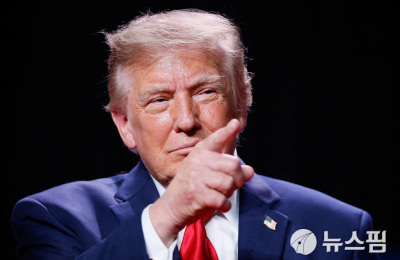
Donald Trump stood in Clarksville, Tennessee, on October 10 and told a crowd that a Democratic victory in November would unleash a 1929-style Depression. Then he pivoted to something more specific: a Korean metals company building a smelter in his home state.
Korea Zinc, he said, is investing over $6 billion to create 740 jobs across Montgomery and Smith counties. It would be the first new mineral smelter in the United States since 1979. Trump presented this not as coincidence — it was evidence. His tariff policy, he insisted, was doing exactly what it was designed to do: force foreign manufacturers to relocate production to American soil.
What Trump was really selling, though, was something subtler. He was linking Korean industrial capital directly to his own electoral fate. Lose the midterms, and the policy architecture that made that investment rational could unravel. Win, and the precedent hardens.
The timing of the speech itself carried weight. Early voting in Tennessee begins October 14 — four days later. This was not a generic campaign stop. It was calibrated political geography: a rally in a deeply red state, delivered to an audience that included local officials, construction workers, and residents who would see the smelter as tangible proof of economic revitalization. The speech lasted roughly forty-five minutes. The Korea Zinc reference occupied the central portion, positioned deliberately between the macroeconomic warnings and the energy segment.
The Timeline Is the Trap
Korea Zinc announced its full commitment in December 2024 — a $7.4 billion integrated smelter targeting commercial production starting in 2029. That timeline matters. Trump is running a campaign this fall against a project that won’t produce a single ton of zinc for another three years. He is asking voters to reward him for a decision made by a Seoul-based boardroom under assumptions about US trade policy that may not survive a different political outcome.
This is the new geometry of the US-South Korea alliance. It is no longer defined primarily by security commitments or free-trade agreements. It is defined by location decisions — where factories go, where refineries rise, where jobs are counted. And those decisions are increasingly hostage to American electoral cycles.
The project’s scope extends beyond a single facility. Korea Zinc’s announcement included plans for a zinc oxide production line, a sulfuric acid recovery system, and ancillary infrastructure that will require sustained federal and state permitting through at least 2027. Any shift in the regulatory environment — whether from a change in administration or congressional opposition to continued tariff coverage — introduces a variable that no corporate forecast model fully accounts for.
Why Tennessee, Why Now
Trump chose Tennessee deliberately. He won the state by roughly 30 percentage points over Kamala Harris in 2024. Federal and state races there lean heavily Republican. This is not persuasion territory — it is mobilization territory. The speech was aimed at energizing the MAGA base ahead of early voting that begins October 14.
But the Korea Zinc mention was not filler. By naming a specific Korean company, Trump transformed an abstract tariff argument into a visual one. A factory under construction. Jobs on paper. A headline his supporters could point to and say: this is what winning looks like.
For Korean industry, the implication is uncomfortable. The same policies that incentivized this investment — tariffs on imported metals, promises of domestic processing incentives — are now being weaponized in a domestic political fight. If Democrats gain ground, the policy certainty that justified billions in capex evaporates. If Trump wins decisively, the precedent locks in and other Korean firms face the same choice: adapt or lose access.
Clarksville itself sits in a region with a manufacturing history stretching back to Civil War-era arms production and mid-twentieth-century textile mills. The arrival of a modern zinc smelter represents something rare in post-industrial Middle Tennessee: a heavy industry project that draws its rationale from international trade policy rather than domestic demand. That distinction matters because it makes the project inherently politically contingent.
The Energy Shadow
Trump also addressed energy prices, claiming he had lowered all costs and that oil would drop sharply once the Iran conflict ends. He framed the nuclear deal as resolved and the war as nearing termination. American diesel prices, however, have reportedly hit record highs — a fact his campaign spoke around rather than against.
This tension between promise and price is characteristic. Korean manufacturers watching this calculation understand something American political commentators often miss: energy costs are the hidden variable in every factory decision. A zinc smelter in Tennessee is not just a tariff play — it is an energy bet. If Trump’s Iran strategy fails and prices stay elevated, the economics of that $7.4 billion project grow stranger by the quarter.
Zinc smelting is among the most energy-intensive industrial processes. The Electrolytic Zinc Refining (EZR) method Korea Zinc employs consumes approximately 110 to 130 megawatt-hours per ton of output. At prevailing Tennessee wholesale electricity rates of roughly $35 to $50 per megawatt-hour, energy alone accounts for nearly a third of the project’s operating cost structure. Any compression of those margins through tariff adjustments or subsidy reversals reshapes the entire financial model.
Who This Framing Hurts
The most significant casualty of Trump’s approach may not be policy but predictability. When investment decisions worth billions are publicly cited as political trophies, the recipient companies enter an awkward position. They benefit from the attention. They also become entangled in a partisan narrative they did not write.
Korea Zinc’s management has every incentive to stay silent and let the project proceed. But the broader message to Seoul-based industrialists is clear: your American operations are now political assets. That makes them political liabilities, too.
South Korean policymakers face a compounding problem. Their security umbrella comes from Washington. Their export prosperity depends on it. Their newer industrial investments — battery materials, semiconductors, refined metals — increasingly locate in American territory to circumvent trade barriers. Each relocation deepens dependence on a political system where policy certainty is cyclical, not structural.
The Korean chaebol system has historically excelled at long-horizon planning based on stable policy frameworks. The current environment forces a recalibration: decisions once made on the basis of market fundamentals now require embedded political risk assessments that resemble sovereign lending analysis more than corporate strategy.
Second-Order Effects
What Trump’s Clarksville speech set in motion extends well beyond the zinc smelter itself. The framing establishes a template: foreign direct investment in America becomes a direct metric of presidential success, which in turn makes that investment a bargaining chip, a campaign prop, and potentially a target for congressional scrutiny.
Other Korean firms already evaluating US entry — LG Energy Solution’s Alabama battery plant, Samsung’s expanding semiconductor presence in Texas — now face a revised calculus. The question is no longer simply whether tariffs make domestic production viable. It is whether the political wind that made viability possible will still be blowing when those projects reach commissioning.
There is also a signaling effect on non-Korean allies. Japan, Europe, and even India are watching to see whether this treatment of Korean capital represents an exception born of alliance proximity or a generalizable model. If the latter, the incentive structure for all foreign manufacturers operating in or entering the US market shifts toward deeper political entanglement.
What Comes Next
The midterms in November will determine whether Trump’s tariff framework survives intact or faces congressional pressure to moderate. Either outcome carries consequences for Korean industry already committed to US production. A Democratic gain would not automatically unwind existing investments — Korea Zinc’s smelter is too far along — but it would signal that the protectionist logic driving those decisions is losing favor.
A Republican hold or gain would accelerate the pattern. More Korean firms would face the same calculation: enter the US market through capital expenditure or risk tariff exposure. The alliance’s commercial dynamic shifts from trade to territory.
The long arc here is worth tracking. Korea Zinc’s 2024 decision to build in Tennessee arrived six months after the Biden administration’s Inflation Reduction Act created similar incentives for critical minerals processing. Both parties have converged on the same conclusion: strategic industrial capacity belongs on American soil. The difference is that Trump is making that case explicitly through electoral threat, while the Democratic framework relies on tax credits and grant structures. Both approaches tie foreign investment to domestic political outcomes. Both create the same dependency.
Trump’s Clarksville speech was campaign rhetoric dressed as economic analysis. But the underlying linkage — Korean factory money, American electoral math, tariff policy as destiny — is real. It will outlast the rally. What remains to be seen is whether Korean industry continues to treat the US political system as a reliable anchor for capital deployment, or begins to price that risk more aggressively into every future location decision.