Trump Called Musk to Unlock Ukraine War Comms
When Trump personally called Musk to lift speed restrictions on Ukraine's Starshield network, he revealed a new reality of modern warfare — one where a private CEO controls the communications backbone of a nation's military operations.
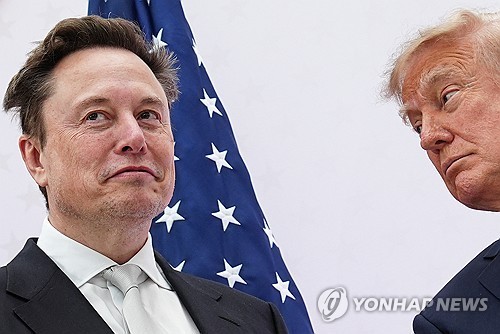
The call that changed how you understand the war
On October 22, the Wall Street Journal reported something most Western readers will read once and file away without grasping its full weight: Donald Trump called Elon Musk and asked him to lift speed restrictions on Starshield — SpaceX’s military-grade satellite communications network — in Ukraine.
The restriction was set at 100 miles per hour. That sounds arbitrary until you understand what it does. Ukrainian attack drones and interceptor aircraft moving faster than that couldn’t maintain the data throughput they need to navigate, target, and strike in real time. Russia’s air defenses, by contrast, faced no such bottleneck. The result was a lopsided battlefield advantage that appeared overnight, not because of any Russian innovation, but because a CEO in California chose to throttle a wartime communications link.
Trump was not happy about this. He reportedly told his staff the same thing repeatedly during the week prior: he wanted the restriction reversed.
That sequence alone — a sitting U.S. president lobbying a private entrepreneur to restore functionality to a military asset — is the story. Everything else is detail.
Who controls the comms backbone of a modern war
This is the non-obvious implication that most coverage is missing: Ukraine’s ability to conduct precision drone strikes, coordinate air defenses, and maintain battlefield communications is no longer determined solely by Pentagon procurement cycles or NATO supply chains. It is determined by a company with one major shareholder who answered to no elected body.
Starshield is not a civilian product. It is the hardened, encrypted, military-orbit version of Starlink — the same physical architecture, different service tier. When Ukraine called for satellite support in 2022, Musk essentially granted it. When he later imposed speed restrictions, he withdrew part of that support unilaterally. No congressional hearing preceded either decision.
The WSJ reported that Musk gave the order to restrict speeds. But here is where the signal gets even more interesting: SpaceX and the White House are now giving contradictory accounts of whether Musk acted independently or followed White House direction. If the administration pushed for restrictions, Trump would not have needed to call Musk to reverse them. If Musk acted on his own, the president of the United States had to personally plead with a foreign-operated satellite CEO to restore a capability the Ukrainian military depends on for survival.
Either way, the dynamic is newly transparent.
Why 100 mph matters more than it sounds
A 100-mile-per-hour speed cap on a satellite uplink is not a rounding error. It is a selective degradation of a specific class of platform. Ukrainian fast-moving drones — the type used for strike missions against Russian logistics and command nodes — cannot stream the volume of telemetry and targeting data required at higher velocities. Interceptors chasing those same targets face the same problem. Slow-moving assets like artillery spotter drones or stationary relay nodes are largely unaffected.
So the restriction does not harm the network equally. It harms the offensive edge. Russia, which has been adapting its electronic warfare tactics to exploit known Starlink limitations, can adjust to a capped uplink. Ukraine, which has built its operational tempo around rapid drone swarms and precision intercepts, loses its speed advantage almost immediately.
Ukrainian officials have since acknowledged that Starshield is working faster than during the restriction period, but not yet at full capacity. The system has partially recovered. The question is whether the precedent has been set — and whether future restrictions could be deeper, broader, or permanent.
The second-order effects no one is discussing
Beyond the immediate tactical impact, the call revealed structural dynamics that will shape conflicts for years. First, there is the question of precedent. When a private company can selectively degrade a wartime communications network based on factors opaque to democratic oversight, every future adversary gains a blueprint. They do not need to build their own satellite networks or develop sophisticated cyber weapons. They need only acquire leverage over the companies that provide critical infrastructure — through investment, regulation, or political influence.
Second, there is the alliance fragility this exposes. Ukraine fought with equipment, training, and intelligence supplied by dozens of nations. Its combat effectiveness depended on integration — not just of weapons systems, but of the communications layer that made those systems work together. When that layer sits outside government control, the entire architecture of alliance-based defense becomes vulnerable to a single corporate decision. NATO members have spent decades building redundant communication systems precisely to avoid this kind of dependency. Starshield has effectively undone that redundancy by creating a new bottleneck that no treaty can address.
Third, there is the domestic political dimension. Trump’s phone call to Musk was not conducted in public view. It was a private conversation between two powerful men, resolving a military dispute that should have gone through established channels — the Department of Defense, the National Security Council, or at minimum a classified briefing for congressional leadership. The fact that it bypassed all of those institutions reveals how normalized extra-institutional decision-making has become at the highest levels of American power.
What happens next
The immediate outcome is clear: Trump got his way. Starshield speeds improved. The phone call worked. But the longer-term implications are harder to pin down.
First, there is the accountability gap. When a government runs communications infrastructure, restrictions can be challenged in parliament, reviewed by inspectors general, or debated in public. When a private CEO does it, the only check is reputation — and reputation is something Musk has shown willingness to spend freely. This call proves that. Trump needed him. Musk knew it.
Second, there is the operational question. If the U.S. government cannot guarantee that a Ukrainian ally retains uninterrupted access to a communications system owned and operated by a third-party corporation, then the alliance itself has a structural vulnerability. No amount of defense spending solves that. Only contractual or regulatory frameworks can, and neither exists today.
Third, and perhaps most consequential, other countries are watching. China is building its own low-earth-orbit constellations. Russia has tested anti-satellite capabilities. Iran and North Korea are investing in asymmetric space countermeasures. If the Ukraine conflict demonstrated that a single commercial satellite CEO can functionally dictate the tempo of a nation’s air defense operations, every adversary now has an incentive to develop equivalent leverage — whether through their own satellites, cyber capabilities, or political influence over companies that provide similar infrastructure.
The closer picture
What makes this story endure beyond the daily news cycle is that it is not really about Ukraine, or Starshield, or even Trump and Musk. It is about a transfer of sovereignty that happened quietly, without legislation, without public debate, and almost without notice. The authority to enable or disable military communications for a sovereign nation now resides — in practice, if not in law — with a private corporation headquartered in Texas.
The phone call was the moment that transfer became visible. Before October 22, most observers assumed that wartime infrastructure decisions flowed through conventional channels: Pentagon requests, contractor fulfillments, congressional appropriations. The call disproved that assumption in a single conversation.
Trump called. Musk listened. The restrictions lifted. No hearing, no vote, no public explanation beyond a newspaper report days later. The entire mechanism of how modern warfare is sustained — who authorizes it, who can interrupt it, who answers to anyone for the consequences — passed in silence.
That silence is the story. The war in Ukraine will eventually be documented in histories and analyzed in policy papers. But the deeper transformation it revealed — the shift from state-controlled to privately-controlled military infrastructure — will take years to fully register. By then, the precedent will be too entrenched to reverse.
Private space infrastructure is no longer a commercial side bet. It is a strategic asset. And the question of who controls it — and by what authority — remains uncomfortably unanswered.