Trump Named a Lake After America. Apple Is the Test Case.
Trump ordered Apple to rename Lake Ontario on its maps — and Google already folded. The real question is whether a tech platform can resist a president who bypasses protocol and calls you personally.
The call Apple didn’t want to take
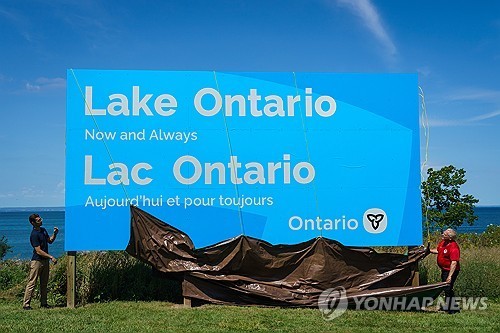
Donald Trump did not send a memo to Apple. He did not route his demand through the State Department or the Interior Secretary’s press office. He called the company directly, according to Interior Secretary Doug Burgum, who confirmed the conversation on Fox Business last month. The request: rename Lake Ontario on Apple Maps to “Lake America.”
Burgum said he is confident Apple will comply. That confidence rests on a pattern Google has already walked.
The incident looks like political theater — a president flexing on a tech CEO over a body of water — but it is something more consequential. It is the first clear case of a sitting U.S. president treating a private mapping platform as an arm of federal sovereignty enforcement, and doing so through a personal phone call rather than through statutory authority or formal rulemaking. There is no statute that compels Apple to change its cartographic display. There is no regulation that grants the president direct authority over private map labels. What there is, apparently, is a phone number.
How Google already folded
Google complied with the same order almost immediately. Its Maps application now displays “Lake America” for U.S. users, citing the U.S. Geological Survey’s Geographic Names Information System as the source. For Canadian users, Google still shows “Lake Ontario.” In third countries, it displays both names side by side: “Lake Ontario (Lake America).”
That tri-zone approach is the template Trump expects Apple to follow. It is also the template that reveals the structural tension at the heart of this confrontation. Google acknowledged the executive order while preserving a facade of geographic neutrality by deferring to GNIS, the federal database that Trump’s order implicitly privileges. Apple has not yet explained how it would replicate that maneuver — and its silence is notable. Unlike Google, which has a Maps business embedded in a broader search-and-advertising ecosystem where political accommodation has become routine, Apple has positioned itself as a company that guards user trust above market access. The conflict between those two brand commitments is now on display.
The machinery behind the name
GNIS is not a neutral body. It is an administrative repository maintained by the USGS under the Department of the Interior. Its naming conventions reflect decades of U.S. federal priorities. Indigenous place names were systematically replaced or romanized under colonial and post-colonial policy. “Ontario” derives from the Wendat word ontariariio, meaning “great lake,” and has marked the waterway for more than four centuries before European cartographers adopted it. GNIS records that history when it suits the data schema — and erases it when an executive order overrides it.
The legal mechanism behind this is worth noting. Trump’s executive order directing the renaming of several geographic features cited federal statute 5 U.S.C. § 301, which authorizes agency heads to prescribe regulations for the conduct of their departments’ affairs. Critics in the legal community have argued that this provision does not grant authority to compel private companies to alter their proprietary products. The order was directed at federal agencies, not at Alphabet or Apple. Google’s compliance was voluntary. That distinction matters — not because it protects Apple, but because it reveals the true structure of power at work. When a president can achieve through a phone call what he cannot achieve through statute, the law becomes a decorative margin rather than a governing constraint.
What a Korean reader would miss
South Korean coverage of this story — as reported by Yonhap News — frames it as a diplomatic spat between Trump and Canada, rooted in the tariff row that has dominated headlines. That reading is not wrong. Canada has objected formally through diplomatic channels, and the renaming has been woven into the broader trade negotiation dynamic. But it misses the structural shift underneath the news cycle.
The Korean press treats the renaming as leverage in a trade dispute. The more significant dynamic is the normalization of executive pressure on private platform architecture. When a president can call a CEO and demand a cartographic change, the boundary between government authority and platform autonomy dissolves. Google’s compliance proves the mechanism works. Apple’s decision — or refusal — will set the next boundary.
This is also the latest step in a sequence that began with Trump’s order to rename the Gulf of Mexico as the Gulf of America and Mount Denali as Mount McKinley. Each command tests the same question: how far can a president go in rewriting geography through executive fiat, and what happens when the rewriting runs through a private company’s product? The sequence matters because each act lowers the threshold for the next. A president who has successfully renamed a gulf and a mountain is not starting from zero when he requests that a lake change its name. The bureaucratic and legal resistance has already been tested and found surmountable — at least by companies that have chosen compliance.
The Canadian calculus
Canada’s response has been diplomatically pointed but structurally limited. Foreign Affairs Minister Mélanie Joly called the renaming “disrespectful” and raised the issue in bilateral discussions. Ottawa has not pursued legal action, nor has it imposed countermeasures tied to the mapping dispute specifically. That restraint is rational — Canada’s leverage in the broader trade relationship is significant, but escalating over a lake name would risk the much larger negotiations on tariffs, energy, and the auto sector. Still, the quiet acceptance of Google’s compliance sends a message to other nations whose toponymy might be subject to similar U.S. executive whims. If Ottawa can do little, what can Japan, Germany, or India expect when a feature they consider internationally established is rebranded on a platform used by billions?
Who wins, who loses, who blinks next
Trump wins if Apple complies without condition. It would validate the strategy of personal persuasion over bureaucratic process and signal that no major tech platform is immune to direct presidential pressure on cultural and geographic symbolism. The victory is symbolic but structurally important: it establishes that the president’s informal channels are as effective as formal ones, and possibly more so, because they operate outside the visibility of judicial review.
Apple wins if it resists or pushes back publicly. A refusal would establish a principle of platform independence that extends beyond this administration. But resistance carries a cost that Apple’s leadership is clearly weighing. A president who has already called you once may call again, through other channels — antitrust scrutiny, app-store policy changes, legislative pressure on data localization, or any of the levers that sit between a tech company and regulatory risk. Apple’s market position makes it uniquely exposed. Unlike Google, which can absorb political friction as a cost of doing business in certain markets, Apple’s brand premium depends on an image of privacy and independence that compliance would undermine internally even if it went unnoticed externally.
Google loses credibility in markets outside the U.S. The dual-label strategy looks like damage control, not principled neutrality. Canadian users receive courtesy; everyone else receives a lesson in conditional compliance. Over time, that erosion compounds. Every future renaming order benefits from Google’s precedent — the path is already cleared.
Indigenous communities lose regardless of Apple’s choice. Whether the lake is called Ontario or America on a screen, the erasure of Wendat toponymy is already encoded in the federal system that Trump’s order activates. This is not new — the same process replaced Indigenous names across the continent for generations — but the executive acceleration makes it visible in a way that bureaucratic inertia never does.
Second-order effects
The ripple effects of this episode extend well beyond cartography. Platform governance is the unstated battleground. If a president can dictate label changes on a mapping app, the logical extension is that he can demand similar changes across other product categories — search results, social media categorization, even algorithmic ranking adjustments. The legal doctrine here is thin, but the practical precedent is thickening with each compliance. European regulators watching this development are likely to draw their own conclusions about the vulnerability of their digital infrastructure to non-European political pressure. The argument for data sovereignty and platform localization gains traction when a single foreign executive order can alter what billions of users see on a daily basis.
There is also a domestic political effect. The renaming campaign functions as a domestic signal as much as an international one. It tells Trump’s base that the president is asserting American identity against what he frames as foreign encroachment — in this case, a Canadian name on a body of water that straddles an international border. The policy substance is secondary to the ritual. But rituals become habits, and habits become institutional practice. Once the expectation is established that mapping platforms must reflect the president’s preferred nomenclature, the next president inherits that expectation even if his priorities differ.
What happens next
Apple has not publicly responded. The company’s silence is itself a signal — it is buying time, or calculating exposure, or possibly both. Whatever Apple decides, the precedent is already set. Future administrations will inherit the playbook: identify a place name, issue an executive order, call the platform directly. The novelty has worn off. The mechanism is proven.
The next test will not be a lake. It will be something that cuts closer to Apple’s commercial interests, or a demand that cannot be partitioned by user geography. A search result reordering, perhaps. A content classification shift. A feature roll-out decision. When that moment arrives, the question will not be whether Apple can resist. It will be how much it is willing to risk to show that it can.
The map is never neutral. But the moment a president treats a private map as a sovereign instrument — and a CEO answers to a phone call instead of a policy manual — the map stops being a representation of geography and becomes a record of power. The lake’s name has always been contested. What is newly contested is who gets to settle the contest.