Trump Weighed Giving Up Denuclearization for Kim Jong-Un Talks
Reports suggest Trump explored dropping North Korea denuclearization demands to arrange a summit with Kim Jong-Un — a potential strategic pivot that, even as a rejected proposal, forces Seoul and Tokyo to recalibrate their deterrence thinking.
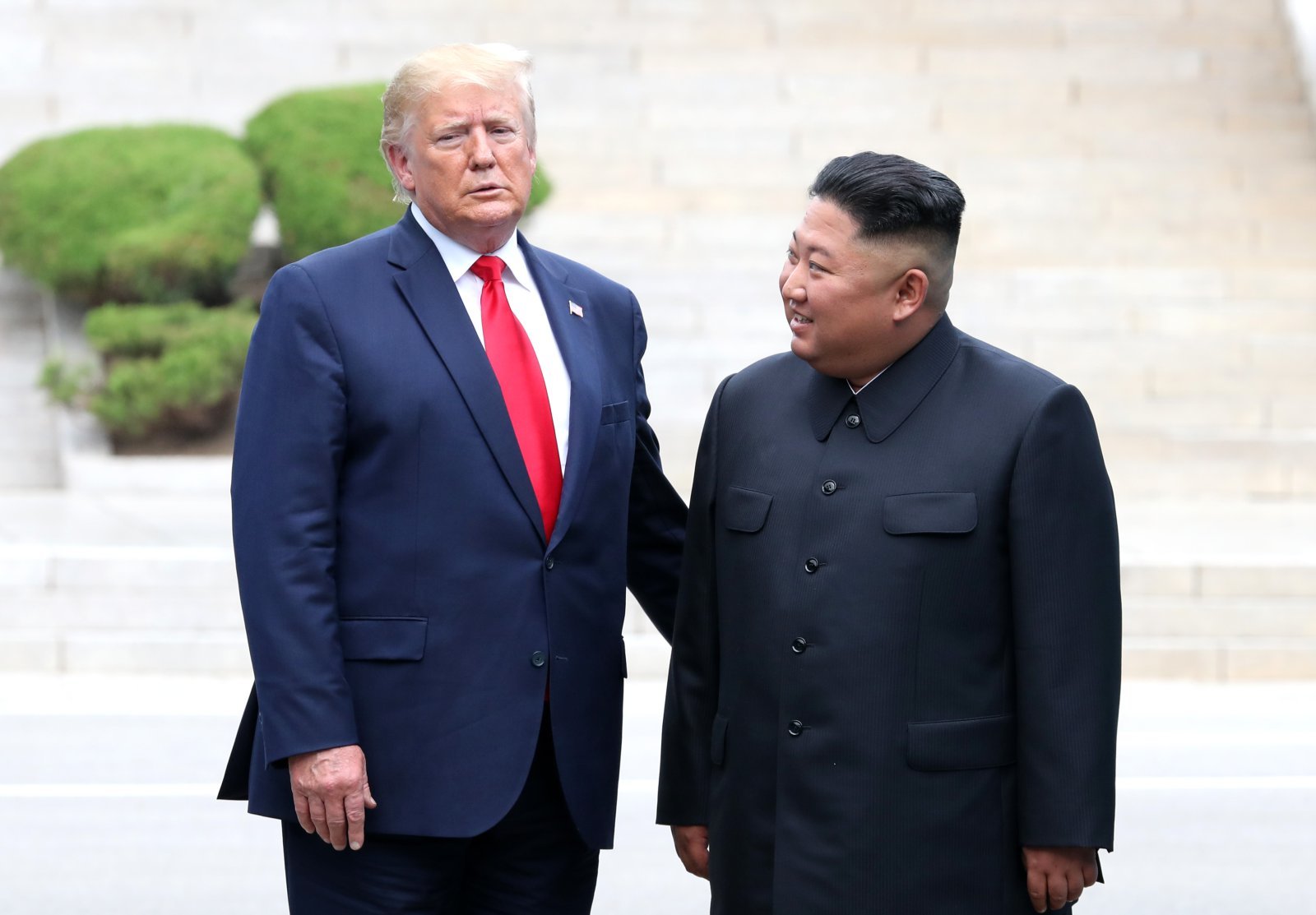
The Proposal That Never Was
Donald Trump considered offering Kim Jong-Un a sweeping set of concessions — no demand for denuclearization, a formal end to the Korean War armistice, and even a bilateral liaison office — in exchange for a face-to-face meeting, according to a Wall Street Journal report published November 21. The talks fell apart after Pyongyang presented conditions the Americans found unacceptable. Neither side has confirmed the details.
What makes this report unusual is not the substance alone but its timing and its provenance. Trump is in the awkward political space between terms, having suffered a significant midterm setback that weakened his party’s standing. He entered his recent Asia trip publicly signaling openness to restarting summits with Kim, whom he met three times during his first term but has not seen since returning to office. The WSJ said Trump pressured his staff to pursue a deal before leaving the continent. His White House pushed back, with an administration official telling the journal that no such efforts were made.
This is diplomacy by rumor. But rumors of this shape carry weight precisely because the author of the rumor is a president whose instincts favor personal deals over institutional guardrails.
What Was on the Table
Let us reconstruct the anatomy of the contemplated shift. According to the report, Trump floated at least three interrelated positions:
First, a Joint Statement omitting any mention of North Korea’s nuclear disarmament. This would not amount to formal recognition of Pyongyang as a nuclear-armed state, but the practical effect would be nearly identical. It would mark a departure from every US position since the 2005 Six-Party Talks commitment to CVID — complete, verifiable, irreversible denuclearization.
Second, a declaration ending the Korean War formally. The Armistice of 1953 halted active fighting but never produced a peace treaty. A Trump-Kim declaration would close that legal gap — something Seoul has long wanted diplomatically, though always conditional on concrete steps toward denuclearization.
Third, opening a liaison office in each capital, modeled roughly on the arrangements the two Koreas maintain. This would normalize communications without upgrading to full embassy-level relations.
Taken together, these constitute a fundamental restructuring of the post-Armistice order. Not because any single element is radical — Seoul has discussed some version of an armistice termination for years — but because stripping denuclearization from the equation changes everything else.
Why Kim Rejected the Terms
The WSJ reported that North Korea put forward “conditions the United States could not accept” during the September Shenzhen APEC window. What those were remains undisclosed, and that silence matters.
Pyongyang’s standard ask includes the withdrawal of US troops from South Korea and the dissolution of the US-ROK Combined Forces Command. These are non-starter positions for Washington and have been since the early 2000s. If Kim’s terms align with this pattern, then the talks likely collapsed along lines that should surprise no one who followed the 2019 Hanoi summit implosion.
But the fact that North Korea entertained negotiations at all is notable. During Trump’s first term, Kim came to the table when he thought he had leverage — after a successful missile test or a favorable shift in US domestic politics. The 2025 midterms may have triggered the same calculation. Pyongyang appears to have sensed Washington’s vulnerability and tested whether Trump would offer more than usual for less than ever.
He did — at least in theory. The question is whether he still would, quietly, through other channels.
The Seoul Problem
South Korea was not consulted about these proposals, according to available reporting. That is the most consequential detail in the entire story.
A US president contemplating the reversal of five decades of non-proliferation policy toward North Korea — while simultaneously negotiating within earshot of Chinese and Russian leaders — without briefing the closest ally on the peninsula reflects either a reckless disregard or a deliberate strategy of bilateral escalation. Either reading is dangerous for Seoul.
The practical implications are immediate. If Washington signals willingness to treat North Korea’s nuclear arsenal as a bargaining chip rather than a line in the sand, Seoul faces a stark choice: absorb a degraded US guarantee or move toward strategic autonomy. Tokyo faces the same equation, amplified by its closer exposure to Chinese and North Korean missile trajectories.
Kyoto may accelerate its own deliberations on nuclear sharing arrangements or expanded missile defense infrastructure. Beijing will watch either response with interest.
Signals Already Visible
Even before this report surfaced, the administration had taken steps that readers outside Korea barely noticed but inside the region interpreted as directional.
In August, joint military exercises between the United States and South Korea were suspended after six days under orders traced to the White House. In November, the US cast its first abstention in decades on the UN General Assembly resolution condemning North Korea’s human rights record — a vote traditionally upheld without dissent by Western nations. Each action alone admits an alternative explanation. Together, they trace a pattern.
Trump also raised Korean Peninsula security during the trilateral conversation with Chinese President Xi Jinping and Russian President Vladimir Putin in Washington on November 19. The context — discussed immediately after remarks about Iran’s nuclear program — strongly implies North Korea was on the agenda. Details were withheld.
What Comes Next
None of this confirms that the US has adopted a new policy toward North Korea’s nuclear weapons. The White House denies efforts to meet Kim. Pyongyang’s stated terms remain opaque. The report rests on anonymous sources.
But the underlying dynamic is real regardless of whether this specific episode materializes. Trump’s political situation rewards dramatic achievements. North Korea offers a stage. The barriers to a face-saving summit are lower than they have been at any point since 2019 — partly because Kim himself faces growing constraints from economic pressure and isolation.
The next move belongs to Seoul. If the report proves accurate, even in fragment, the ROK government needs to establish clearly what red lines remain inviolable and communicate that to Washington before another backchannel produces a fait accompli. Japan deserves the same courtesy.
The alternative is waking up to a news cycle that tells you your alliance partner has quietly rewrote the rules, and realizing too late that the rewriting happened before anyone in your capital was invited to the table.
That moment may not come tomorrow. But the mechanics that enable it are already in motion.