Trump Puts AI Superintelligence on Par With Security in China Talks
Trump's public framing of the Xi meeting around 'superintelligence' signals Washington's growing conviction that AI dominance is a national security issue on par with traditional military threats—and Asian allies are watching closely.
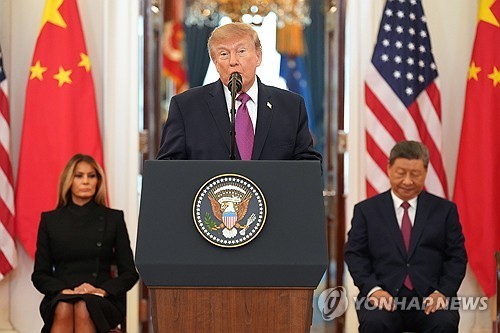
Trump’s New Equation: AI + Security = Survival
When Donald Trump told reporters before Xi Jinping’s arrival that he would discuss “security and superintelligence” at their summit, he didn’t just pick up a trendy phrase. He reframed the entire architecture of the US-China relationship around a single, uncomfortable truth: artificial intelligence is no longer just an economic sector. It is a strategic domain equal to nuclear weapons, alliance networks, and territorial control.
The word Trump chose—“superintelligence”—carries its own baggage. It evokes the Singularity, the hypothetical moment when machines surpass human cognition. But in the context of a state visit and a welcoming ceremony at the White House, it functions as something more blunt: a signal to every capital watching that the United States views AI supremacy as an existential question, not a market debate.
The implication for Asian allies is immediate and uncomfortable.
What Seoul and Tokyo Should Hear
South Korea and Japan are caught in the middle of a technology war they did not start and cannot opt out of. Both nations host critical nodes in the semiconductor supply chain. Samsung and SK Hynix dominate global memory chip markets. Taiwan, though not mentioned in Trump’s remarks, produces the vast majority of advanced chips. Every US export control on Chinese access to high-end silicon reverberates through these economies.
Trump’s public equation of superintelligence with security tells these allies something clear: Washington will not separate economic competition from national defense. The CHIPS Act, the export bans on advanced GPU sales to China, the restrictions on Equipment, Software, and Technology (SET) sharing—all of it will be justified under the same logic Trump invoked Tuesday. AI competition is national security competition. Period.
That framework benefits Washington. It gives the White House legal and political cover to restrict technology flows without appearing protectionist. But it also raises the stakes for Seoul and Tokyo. If the US treats AI as a security matter, it gains the authority to dictate terms to allies in ways that free-trade arguments cannot counter. A trade dispute is negotiable. A security alliance is not.
The Friendship Theater
Trump spent considerable time at the welcome ceremony showcasing his personal rapport with Xi. He named Germany, Argentina, Japan, South Korea, Beijing, and Palm Beach as places where they’ve spent time together. He invoked the Flying Tigers and the Second World War. He described a bond forged across oceans and differences.
This performance serves a purpose beyond style. By framing the relationship as personal and historical, Trump attempts to insulate the summit from institutional criticism. Domestic hawks in Congress can point to Trump’s friendship with Xi as either a bridge or a liability, depending on their instincts. But publicly, the narrative is one of connection transcending structural rivalry. That narrative matters because it shapes what kind of deal is thinkable.
A transactional trade agreement is possible without warmth. A comprehensive tech and security compact requires at least the appearance of trust. Trump is building that appearance in real time, in front of cameras, before a single negotiating session has taken place.
The Trade Committee and What It Reveals
Trump also referenced the US-China trade committee formed during his May visit to Beijing, which is reportedly coordinating the rollback of $30 billion in tariffs on non-sensitive goods from each side. This detail is significant because it shows the deal-making architecture is already operational. The summit is not a blank slate. It is an escalation point for negotiations that began months ago.
The $30 billion figure sounds large. In the context of a bilateral trade relationship measured in hundreds of billions, it is a fractional adjustment. But it signals something important: the two sides are already managing down tension in specific, quantified increments. The question is whether that incremental logic extends to the harder questions—semiconductor restrictions, AI governance standards, military transparency around dual-use technologies.
Those are the questions superintelligence belongs to. And they are far harder to solve with tariff schedules.
The Historical Mirror
Trump’s references to World War II—Flying Tigers, the Kunho industrial cooperatives—were not accidental. They served as a metaphor for the kind of partnership he wants to project: adversaries turned allies, separated by geography and system, united against a common challenge. The metaphor is elegant. It is also historically imperfect. The US and China were allies against fascism, not against each other’s ambitions. Today’s rivalry is not with an invading empire but with a peer competitor whose technological capabilities threaten to upend the existing order.
Invoking the past does not change the present. But it shapes the emotional temperature of the negotiations. When two leaders frame their relationship as a renewal of historical friendship, it becomes harder for hardliners on both sides to argue that confrontation is inevitable.
Who Wins, Who Loses, What Comes Next
The immediate winner of this framing is the United States, which gets to define AI as a security issue on its own terms. The loser is the principle of open technology markets, which recedes further under the weight of strategic competition.
For South Korea, the risk is acute. Samsung and SK Hynix depend on access to both the US market and Chinese demand. Washington’s security frame gives it leverage over Seoul’s trade policy. If the US decides that limiting China’s AI progress requires pressuring allies to restrict their own exports, Seoul has limited room to resist.
Japan faces a parallel calculation. Its semiconductor equipment industry, dominated by companies like Applied Materials and Tokyo Electron, profits from the very export controls Trump is reinforcing.
The summit’s outcomes will determine whether the US-China AI dynamic becomes managed competition or open confrontation. Trump’s choice of language suggests he is already thinking in strategic terms. The question for allied capitals is whether they can preserve their economic interests while accepting the security framework Trump is constructing.
Superintelligence is not just a technology. It is a geopolitical claim. And Trump is making it publicly, deliberately, and with considerable theatrical force.
The allies watching from Seoul and Tokyo should note the precision of the framing. It will shape the rules of the next decade.