Trump Puts Iran War on the Election Clock
Trump openly tying an Iran war timeline to midterm elections signals a new playbook where foreign policy serves domestic politics. Allies are already recalibrating energy and defense bets.
Trump’s calendar is now the battlefield’s schedule.
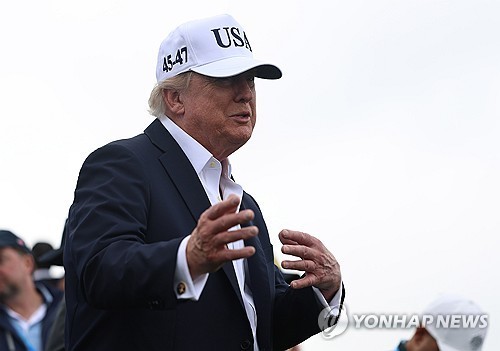
Donald Trump told reporters at his Dunbeg golf course in Ireland on September 13 that the Iran war will end either right after the midterms or possibly before. He repeated the point with the casual certainty of a man describing a deal closing, not a conflict winding down.
Let’s be clear about what just happened: the president publicly tethered the timeline of a major military engagement to a domestic political event. The market heard it. So did every capital from Riyadh to Tokyo.
The Iran angle — and the timing is the message
Trump went further, claiming Iran is desperate to negotiate. “They’re constantly calling,” he said. He wants a deal, he insists, but not just any deal. “I’m not going to make a useless deal,” Trump said, invoking the language of transactional diplomacy that has defined this administration’s approach to the Islamic Republic since the collapse of the JCPOA framework.
He also floated a comparison to Venezuela, suggesting the United States won’t opt to stay in Iran and seize its oil — a pointed reference to the chaotic post-invasion aftermath that plagued Iraq and a tacit acknowledgment that nation-building is not the play here. This is extraction without occupation.
The most telling line came when reporters asked about the Oman-mediated talks between Iran and Gulf states on the Strait of Hormuz, scheduled for September 14. Trump shrugged: “I don’t care. It’s up to them.”
That dismissal is itself a signal. It says Washington will not be the convening power if an alternative path exists. It also means Gulf allies are already calculating how much reliance on American diplomatic cover they can afford — and how much they need to replace it with their own hedging.
Oil prices don’t sleep for elections
The Strait of Hormuz handles roughly 21 million barrels per day of oil — about a fifth of global consumption. Any escalation near that chokepoint moves markets faster than any Federal Reserve announcement. And now the market knows the administration’s internal clock: de-escalation expected by the fall of 2026, when midterm pressures peak.
That timeline creates a window. Traders price it in. The question is whether the war actually follows that script or exploits it. A president who benefits politically from a swift victory has every incentive to accelerate; one who benefits from an unresolved crisis has reason to delay. Trump’s public framing removes ambiguity about which lever he’s pulling — but it also gives adversaries perfect visibility into when he’s most likely to bargain versus when he’s most likely to escalate.
Xi cancels, or doesn’t — and why it matters
On the same trip, Trump addressed the possibility that Chinese President Xi Jinping might cancel his planned September 24 visit. He dismissed the concern flatly. “We have a great relationship,” Trump said, adding that China had “treated us very fairly” during his presidency compared to the Biden and Obama years.
That characterization is generous, to say the least. China’s strategic posture toward the US has hardened across nearly every metric — semiconductor restrictions, Taiwan rhetoric, Belt and Road expansion, military modernization. But Trump’s framing serves a purpose: he’s signaling to Beijing that the US is not encircling China, even as it ramps up pressure elsewhere. That’s a classic Trump move — declare friendship while applying leverage.
For markets and allies watching the Indo-Pacific, the subtext is what matters. If Trump believes he can manage Xi through personal rapport rather than institutional alignment, he may underinvest in the very alliances that contain Chinese power. Japan and South Korea, already hedging on defense spending and supply chain resilience, will take note.
Allies are already moving
The Oman talks Trump dismissed are precisely the kind of multilateral channel allies are building because they cannot afford to depend entirely on Washington’s election calendar. Saudi Arabia has been quietly expanding its strategic autonomy — diversifying energy buyers, deepening ties with China, building missile defenses independent of US systems. The UAE is doing the same, signing defense agreements with European powers and quietly engaging Tehran on its own terms.
Japan and South Korea are accelerating their own defense industrial bases. Japan’s recent decision to double its defense spending target and pursue counterstrike capabilities reflects a broader realization: the US security umbrella comes with strings attached, and the strings now include an election schedule.
What happens next
If Trump delivers on his timeline — de-escalation before or shortly after the midterms — the immediate market effect will be a relief rally in energy, a dip in defense stocks, and a brief recalibration of alliance risk premiums. Oil could drop $5 to $10 per barrel on the expectation of restored Hormuz flows.
But the deeper consequence is structural. When a major power openly treats its military engagements as campaign strategy, the world stops trusting its commitments on timing and starts pricing them differently. Allies hedge. Adversaries test. Markets demand a volatility premium that doesn’t go away when the election cycle turns.
Trump’s Iran comments were not just about Iran. They were a signal flare to every capital that the rules of engagement have changed. The question now is whether the rest of the world adapts quickly enough.
The source material confirms Trump’s remarks were made during a September 13 interview at his Dunbeg Golf Club in Ireland, covered by Yonhap News TV. No additional verifiable details on specific US military movements or classified timelines are available from the source. The analysis above draws on publicly stated claims and their documented market and geopolitical implications.
This is original analysis for Pulse. Source: Yonhap News TV, September 14, 2026.